World news and discussion on TalkFuse.
Trump killed the Digital Equity Act, but US was forced to bring part of it back
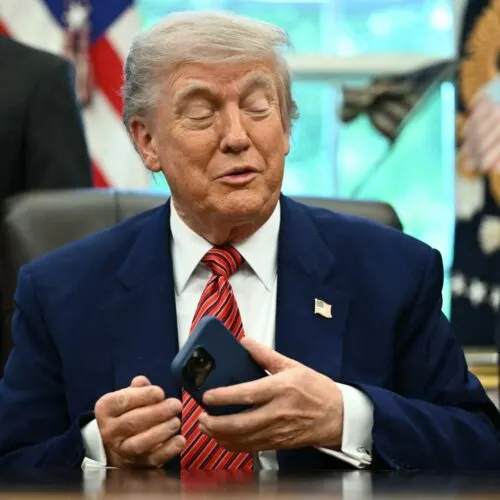
The Trump administration has agreed to reinstate a federal broadband grant programme after a court ruling blocked its attempt to fully scrap the Digital Equity Act, a 2021 law aimed at closing gaps in internet access. Trump had moved in May 2025 to end the grant schemes, calling the law itself racist and unconstitutional, prompting a lawsuit from the National Digital Inclusion Alliance (NDIA), which had been due to receive $25.7 million before funding was cut. The ruling matters because it forces the administration to partially restore federal support for broadband access, even as it secures a win by stripping out race-based eligibility criteria.
The Digital Equity Act allocated $2.75 billion across three grant programmes; the Biden administration had already distributed $60 million in planning grants and begun processing applications for the rest before Trump intervened. Judge John Bates, a Bush appointee, ruled the government cannot allocate funds based on race or ethnicity but can still use factors such as income, age and disability. The government says it will reopen applications for the $1.25 billion Digital Equity Competitive Grant Program in December, though NDIA must reapply from scratch; a separate $1.44 billion programme for states, not covered by the lawsuit, shows no sign of being restored.
In short
- Court forces Trump administration to partly revive Digital Equity Act broadband grants
- Race/ethnicity can no longer be used as grant eligibility criteria
- $1.25bn competitive grant programme reopens in December; $1.44bn state programme stays cut
Steelman: both sides, in good faith
The strongest fair case each way — we don't pick a winner.
The case for
Those defending the original Digital Equity Act argue that targeted programmes addressing documented disparities in broadband access are constitutionally sound and necessary to remedy systemic inequalities rooted in historical disinvestment. They contend that race-conscious approaches are justified when responding to ongoing structural disadvantage, and that programmes designed to reach those most excluded serve legitimate government interests. They emphasise that Congress democratically authorised the law and that removing such programmes in the name of colourblindness ignores the reality of unequal outcomes.
The case against
Those supporting the narrowing of the Act argue that federal spending should not be allocated on the basis of race or ethnicity, as this conflicts with constitutional principles of equal protection and the requirement that individuals, not racial groups, are the proper focus of law. They contend that income, age and disability-based targeting can effectively reach disadvantaged populations without the constitutional complications of race-based criteria, and that this approach respects individual rights whilst still advancing broadband access. The court ruling itself endorsed this framework.
Explained simply
The Digital Equity Act is a 2021 US law intended to help people who face barriers to getting reliable internet. It set aside $2.75 billion for grants, including money for community projects and state plans; some grants had been distributed or were being processed before the Trump administration moved to end the programmes.
The National Digital Inclusion Alliance is a non-profit group that works to widen access to internet services. It sued after its expected $25.7 million grant was cut, and the dispute went to federal judge John Bates. The law and grant programmes involve the federal government, states and local organisations that apply for funding.
The case concerns how public money can be targeted to address gaps in internet access. The court said grants cannot use race or ethnicity as eligibility factors, while allowing factors such as income, age and disability; this affects which communities and projects may qualify for support.