Trump leaves stage mid-speech to embrace parents of 12-year-old killed by stray bullet in the Bronx
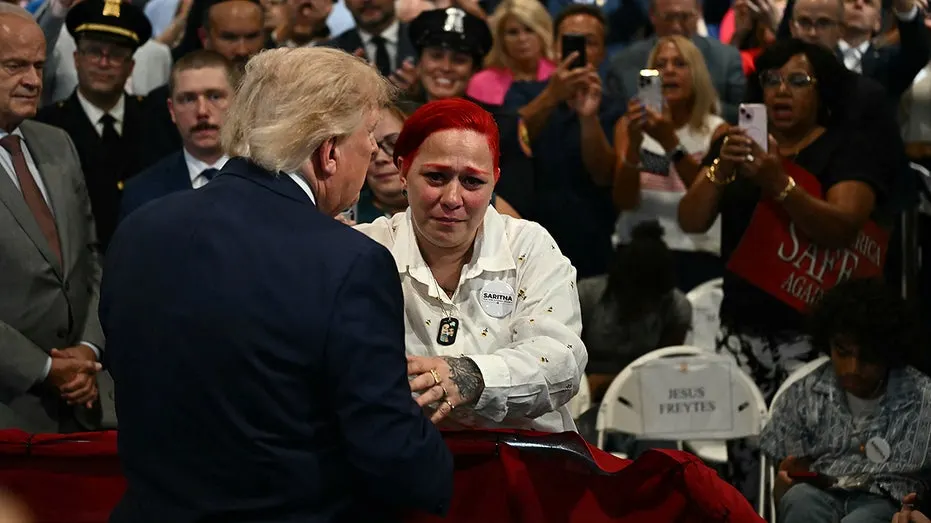
President Donald Trump briefly left the stage during a speech at the Nassau County Police Academy on Friday to embrace the parents of Jacob Freytes, a 12-year-old boy killed by a stray bullet in the Bronx. The moment came as Trump addressed law enforcement and promoted his administration’s approach to tackling crime, using the family’s loss to underscore his argument.
Jacob Freytes was killed after being struck by a stray bullet allegedly fired by a repeat offender, according to the article. Trump mentioned the boy during his remarks before walking over to comfort his grieving parents, who were present at the event.
- Trump embraced the parents of a Bronx boy killed by a stray bullet.
- The moment occurred during a New York speech on crime.
- Jacob Freytes was 12 years old.
New here? Start with this
A stray bullet is fired at one person or target but hits someone else. Such shootings can put people nearby at risk, including children, and can leave families and communities dealing with sudden loss.
Jacob Freytes was 12 when he was killed in the Bronx. The article says the bullet was allegedly fired by a repeat offender; the allegation concerns who fired it and does not, by itself, establish guilt.
Trump was speaking to law enforcement at the Nassau County Police Academy, where he promoted his administration’s approach to crime. The case sits within wider debate about public safety, repeat offending and how best to prevent gun violence.
Both sides, in good faith
The strongest fair case each way — we don't pick a winner.
The case for
Those defending Trump's action argue he demonstrated genuine compassion by leaving the stage to embrace grieving parents, recognising the real human cost of violent crime. Whilst acknowledging the political setting, they contend that highlighting Jacob Freytes's death can serve to motivate meaningful action against repeat offenders; moreover, the family's apparent consent to participate at the event suggests they felt his focus on law-and-order was aligned with their own concerns about preventing such tragedies.
The case against
Critics contend that regardless of Trump's sincere intent, staging such consolation during a political speech inevitably instrumentalises the family's grief. They argue there is a meaningful distinction between private support and public performance; incorporating a child's death into campaign messaging to strengthen law-and-order positioning risks subordinating the family's healing and dignity to the politician's electoral interests, even if unintentionally.