World news and discussion on TalkFuse.
Trump orders missile strikes on Iranian military sites
Developed over time first seen 3 months ago
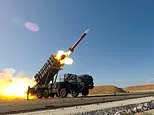
Donald Trump has ordered a fresh wave of ballistic missile strikes on Iran, marking a major escalation just after US embassies across the Middle East issued fresh security warnings to American citizens in the region. The renewed offensive follows the collapse of a ceasefire agreed in June, and comes despite Trump previously claiming Iran's military capabilities had already been destroyed, raising questions over why radar and military assets were being targeted again months later. Iran responded with a claimed missile strike on a US base in Jordan, though the Pentagon has not confirmed this, heightening fears of a broader regional conflict.
Around a dozen strikes hit Iranian radar systems and military sites along a 300-mile stretch of the Strait of Hormuz on Tuesday, with explosions reported on Qeshm Island and in the port cities of Bandar Abbas and Chabahar. Trump warned Iran against retaliating further, threatening an even larger attack, while US embassies in Qatar, Israel and Jordan urged Americans to remain vigilant amid possible flight cancellations and airspace closures. The June ceasefire, mediated by Pakistan, collapsed after fighting resumed and the 60-day negotiating window expired on 17 August with no talks ongoing; Brent crude rose 4% to $94 a barrel as tensions escalated, while Washington continues to demand Iran surrender its enriched uranium stockpile and dismantle its nuclear programme.
- Sources
- 2
- Outlets
- 2
- Left · Centre · Right
- 0 · 0 · 2
In short
- Trump orders new missile strikes on Iran, escalating conflict sharply
- Iran claims retaliatory strike on US base in Jordan
- Ceasefire collapsed in August; oil prices jump on fears
How this story developed
- 3 months ago Fuller reporting has since pinned the toll at around a dozen strikes on Qeshm Island, Bandar Abbas and Chabahar, tying the assault to Iranian attacks on US bases in Jordan and Revolutionary Guard strikes on two commercial vessels, while Trump threatened Iran's near-total destruction and Treasury Secretary Scott Bessent vowed to "economically asphyxiate" Tehran with a new "economic D-Day" of sanctions.
- 3 months ago Early reports confirmed the strikes and the citizen warnings but offered no specifics on targets or casualties, leaving key details of the operation still unverified.
- 3 months ago Trump has ordered fresh ballistic missile strikes on Iran, hitting radar and military sites along the Strait of Hormuz after the June ceasefire collapsed and US embassies issued fresh security warnings.
Steelman: both sides, in good faith
The strongest fair case each way — we don't pick a winner.
The case for
Supporters of the strikes argue that Iran's Revolutionary Guard has been the one escalating matters, striking US bases in Jordan and attacking commercial vessels in the strait, and that a firm military response is necessary to restore deterrence rather than invite further aggression. They contend that an Iranian regime allowed to keep an enriched uranium stockpile and blockade a critical global shipping route poses a direct threat to regional allies, international commerce and non-proliferation norms, and that only credible, overwhelming force and severe economic pressure can bring Tehran back to the table on serious terms. From this view, hesitancy or half-measures after the collapse of the ceasefire would simply signal weakness and embolden further attacks on US forces and interests.
The case against
Critics warn that this represents a dangerous and unauthorised escalation with no clear endpoint, launched without congressional approval for what amounts to an act of war, and that maximalist rhetoric about leaving "very little left of the Islamic Republic" forecloses any diplomatic off-ramp rather than seeking one. They argue that strikes on such a wide stretch of coastline risk drawing the region into a wider conflict, spiking global oil prices and harming ordinary people on all sides, while a strategy of economic "asphyxiation" has historically tended to entrench hardliners and punish civilians more than it changes regime behaviour. From this perspective, renewed diplomacy and a return to negotiated terms, however difficult, would be a more responsible and less catastrophic path than further military escalation.
Explained simply
Tensions between the United States and Iran have been building for months, centred on Iran's nuclear programme and control of the Strait of Hormuz, a narrow waterway through which much of the world's oil shipping passes. A ceasefire brokered by Pakistan in June had briefly calmed matters, but it broke down in August without any follow-up agreement, and the two sides remain far apart: Washington wants Iran to hand over its stockpile of enriched uranium and dismantle its nuclear programme, while Tehran wants the US to lift its naval blockade and restore Iranian control over the strait.
Donald Trump, the US president, has taken an increasingly hawkish line towards Iran, while Iran's government has responded with strikes of its own, including on American bases and on commercial shipping. The Revolutionary Guard Corps is Iran's elite military force and has been central to these actions. Because the Strait of Hormuz is so important to global oil supplies, any disruption there tends to affect fuel prices worldwide.
The dispute matters beyond the two countries directly involved, since it touches on nuclear proliferation, the safety of shipping and air travel in the Middle East, and the wellbeing of Americans and other foreign nationals living or travelling in the region.
Coverage · 2 sources
Bias meters
From 2 rated sources.
Read the full article at the source →
Originally published by Daily Mail as “Trump orders huge wave of missile strikes on Iran in major escalation as chilling warning is issued to US citizens”.