Trump rally descends into chaos as screaming protesters are dragged from Ohio stadium
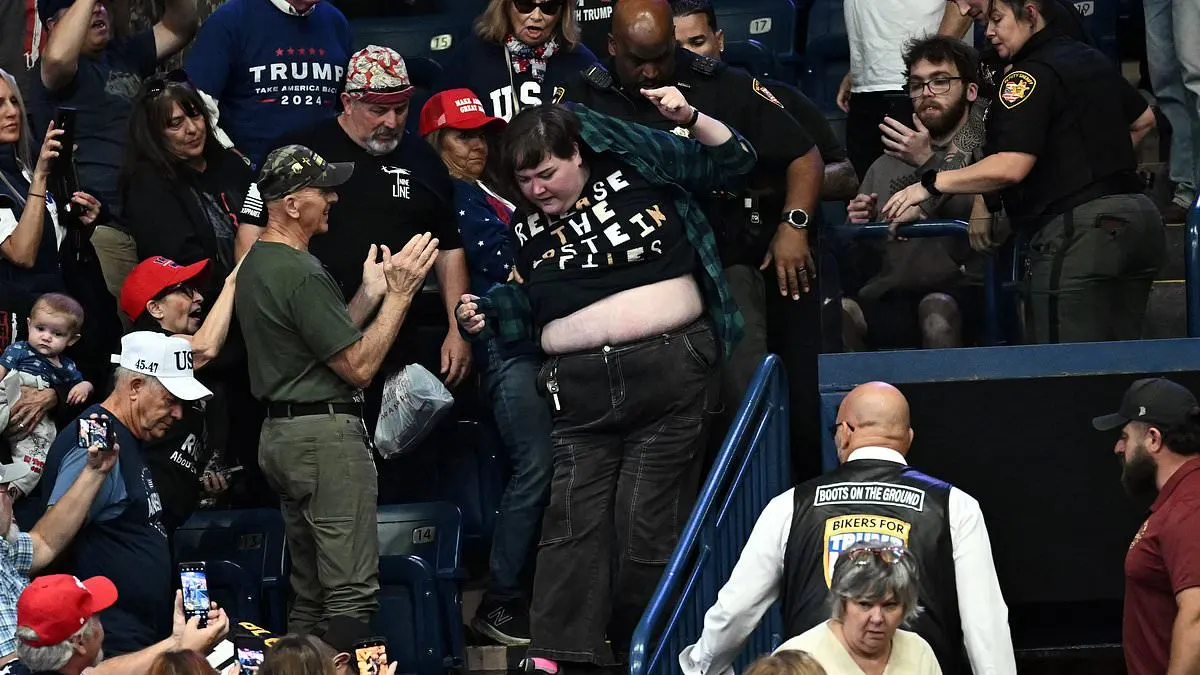
Multiple protesters were forcibly removed from Donald Trump's campaign rally in Ohio on Monday night, with at least one physical altercation occurring before removal. The disruptions illustrate the increasingly contentious atmosphere at Trump's campaign events as he campaigns to support Republican candidates ahead of the midterm elections.
A protester wearing a 'Release the Epstein Files' shirt was punched and dragged from the venue whilst Trump was speaking. An earlier confrontation during Ohio Senator Jon Husted's remarks involved a man and woman being removed, with a punch reportedly thrown. Trump dismissed the protesters as 'paid' operatives and mocked one protester's appearance, saying he needed to 'go on a diet.' The rally featured Trump's endorsement of two struggling Ohio Republicans: Senator Husted competing against former Senator Sherrod Brown, and gubernatorial candidate Vivek Ramaswamy competing against former health director Amy Acton, who is unexpectedly competitive despite Ramaswamy's fundraising advantages.
- Multiple protesters forcibly removed from Trump's Ohio rally, with at least one violently ejected
- Trump called protesters 'paid operatives' and mocked one's physical appearance during remarks
- Rally supported two embattled Ohio Republicans: Senator Husted and gubernatorial candidate Ramaswamy
New here? Start with this
Midterm elections in the United States are held every two years between presidential elections. They determine which party controls Congress and state offices, and are widely viewed as a referendum on the sitting president.
Donald Trump is campaigning to support Republican candidates ahead of the 2026 midterms. In Ohio, he is backing two Republicans in closely contested races: Senator Jon Husted, running for re-election against Democrat Sherrod Brown, a former senator, and Vivek Ramaswamy, campaigning for governor against Democrat Amy Acton, a former state health official.
Campaign rallies are central to American politics, allowing candidates to build enthusiasm among supporters and secure media coverage. Trump's rallies have become notable for their adversarial atmosphere, often attracting protests and opposition that reflects broader political divisions across the country.
Both sides, in good faith
The strongest fair case each way — we don't pick a winner.
The case for
Those defending the rally's handling would argue that campaign events are private functions where organisers are entitled to maintain order and security, that protesters who deliberately disrupt accept the consequences of removal, and that characterising them as coordinated outside agitators is reasonable given the recurring pattern of disruptions at political rallies. They would contend that physical force is proportionate when protesters resist lawful ejection and that Trump's dismissal of their motives reflects legitimate security concerns rather than inappropriate conduct.
The case against
Critics would argue that whilst organisers may have the right to remove disruptive attendees, the use of physical violence including punching raises serious concerns about the proportionate application of force at political events. They would contend that Trump's public mocking and characterisation of protesters as 'paid operatives' reflects contempt for political dissent rather than democratic tolerance, setting a troubling tone that may discourage legitimate forms of political expression and participation.