Trump says he will privately fund presidential policy adverts after criticism
Developed over time first seen 17 hours ago
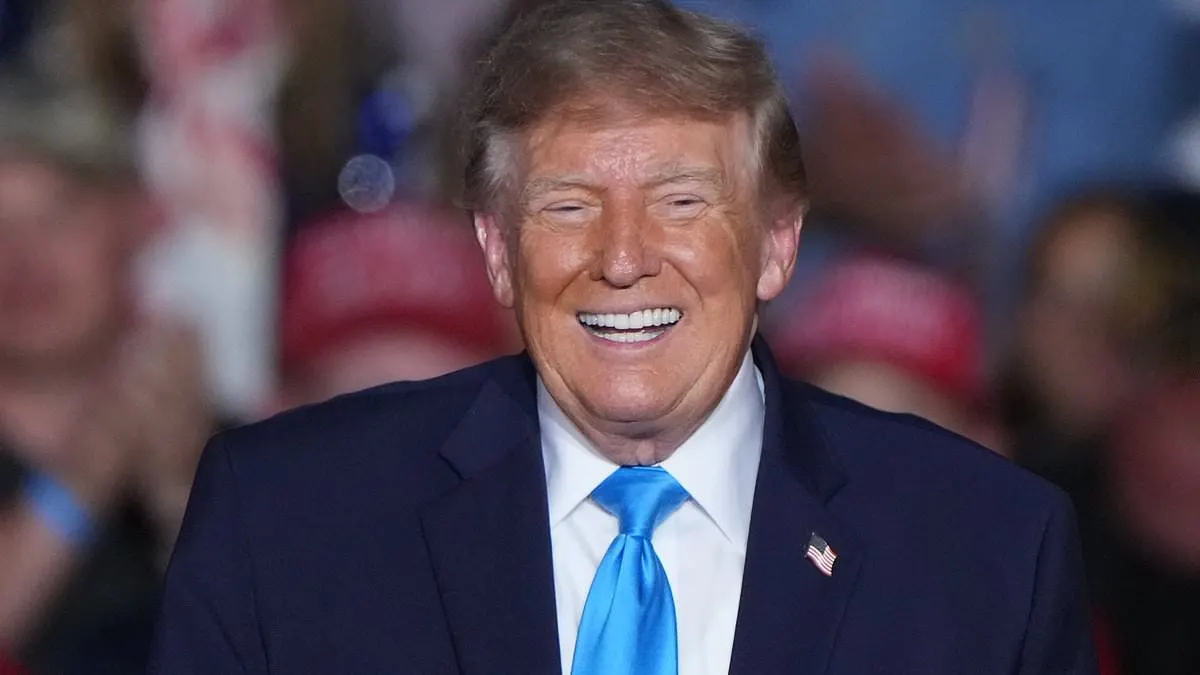
President Donald Trump said he would stop using US taxpayer money to pay for television advertisements featuring him, after lawmakers from both parties questioned the spending. He said he would fund the “Patriotic Ads” himself and with money raised by his MAGA Inc super PAC, reversing course amid criticism over whether government funds can be used to promote a president and his policies.
More than a dozen ads aired in recent weeks, praising Trump’s tax cuts, manufacturing and law-and-order policies, while some attacked perceived political opponents. The White House described them as educational public service announcements, but legal experts said earlier government advertising generally addressed public health or emergencies. Republican Senate Majority Leader John Thune and other lawmakers said taxpayer money should not fund promotional ads; a measure introduced by Democratic Senator Maggie Hassan was blocked by a Republican.
- Trump says he will privately fund the ads.
- More than a dozen taxpayer-funded ads drew bipartisan criticism.
- Lawmakers and legal experts questioned their purpose and propriety.
New here? Start with this
American government agencies sometimes use federal funds to produce and broadcast television advertisements informing the public about policies and programmes. In this case, the Department of Homeland Security spent approximately $5.5 million on commercials featuring patriotic imagery and promoting the administration's policy achievements, which raised concerns because these adverts prominently featured the president.
The core debate concerns whether government-funded advertising that features the sitting president serves a legitimate public information purpose or functions as campaign promotion at taxpayer expense. This distinction becomes particularly significant around election time, when many people question whether their tax money should be used to promote any politician's image or policies.
Lawmakers from both major parties criticised the spending, suggesting the issue transcends traditional political divisions. The cross-party opposition reflects deeper concerns about whether such spending represents an appropriate use of public resources.
Both sides, in good faith
The strongest fair case each way — we don't pick a winner.
The case for
Governments have a legitimate obligation to communicate policies and accomplishments to citizens through effective channels. Dismissing all government advertising as 'campaign promotion' sets an impossibly restrictive standard that would prevent genuinely informative public communication campaigns. If the content serves authentic informational purposes—explaining departmental work, promoting public safety, or describing policy benefits—then taxpayer funding represents a reasonable investment in democratic communication, provided the messaging remains factual and policy-focused rather than explicitly electoral.
The case against
The fundamental principle is that taxpayers should not finance political promotion of any elected official, regardless of administration. When federal resources underwrite advertisements prominently featuring the president during an election cycle, the public reasonably questions whether genuine information needs justify the expense or whether this constitutes improper political advantage. The distinction between 'government communication' and 'campaign advertising' becomes untenable when the primary message celebrates the administration's accomplishments and the president is the focal point. Political promotion should be funded through campaign budgets, not public coffers.
Full account
President Donald Trump has announced plans to finance television advertisements independently following criticism over the use of public money to fund promotional content portraying his presidency. The advertisements, which commenced airing in late September on networks including Fox News, had been financed through the Department of Homeland Security, consuming approximately $5.5 million in taxpayer resources.
After facing pushback across the political spectrum, Trump declared via social media that he would assume personal financial responsibility for the commercials. He characterised the decision as a voluntary measure rather than forced retreat, contending that whilst using government funds for such advertising constituted standard governmental practice, he had chosen to finance the spots personally and through campaign money raised by his MAGA Inc super political action committee.
The advertising campaign comprises more than a dozen television spots broadcast over recent weeks, featuring patriotic imagery, footage from Trump's presidency, and messaging regarding American values and security. Several advertisements reference Trump's tax policies, domestic manufacturing initiatives, and law enforcement approaches, whilst others employ more pointed language denouncing communism and critiquing political adversaries and media organisations Trump views unfavourably.
The White House had previously defended the advertisements as educational public service announcements rather than political promotion, emphasising their patriotic character and assertion that they served to remind Americans of national pride. However, legal specialists have contested this framing, noting that historical government-funded advertising campaigns have typically addressed public health concerns or genuine emergencies rather than presidential promotion.
The advertisements provoked disapproval from lawmakers belonging to both major political parties. Democratic Senator Maggie Hassan introduced a Senate measure condemning the expenditure, though Republican colleagues blocked its progress. Significantly, prominent Republican figures, including Senate Majority Leader John Thune, acknowledged agreement with the message content whilst questioning whether taxpayer funding should support such efforts.
The campaign's timing assumes particular relevance approaching November's midterm elections, during which Democrats seek to capture control of one or both congressional chambers amid reports of declining presidential approval ratings. The White House cited historical precedent by referencing previous administrations' funded advertising campaigns, specifically Obama-era healthcare promotion and Biden-era Covid-19 vaccination messaging.
Where outlets differ
Source 1 emphasises DHS funding mechanisms and contract specifics; Source 2 prioritises political context regarding midterm elections and presidential approval ratings
Source 1 highlights White House's patriotic defence; Source 2 includes legal expert critique questioning legitimate government purpose
Source 2 explicitly names Republican senators (Thune, Kennedy) expressing criticism; Source 1 implies Republican concerns without specific attribution
Source 1 details production elements (Mount Rushmore, JMSN song dispute); Source 2 provides specific ad rhetoric content (communists, Marxists, fascists)
Source 1 mentions $20 million contract value; Source 2 references precedent from Obama and Biden administrations
Source 1 emphasises Trump's framing of criticism as coming from 'radical left'; Source 2 presents bipartisan concern as genuine policy objection
Coverage
- Daily Mail — Trump makes dramatic U-turn and promises not to use taxpayer money to fund fawning ‘Love Me’ TV ads
- BBC World — Trump pledges private funding for adverts after cross-party criticism
Americas Art Culture Entertainment Government Politics TV World