Trump confirms security threat prompted bombers’ withdrawal from RAF Fairford
Developing story first seen 1 hour ago
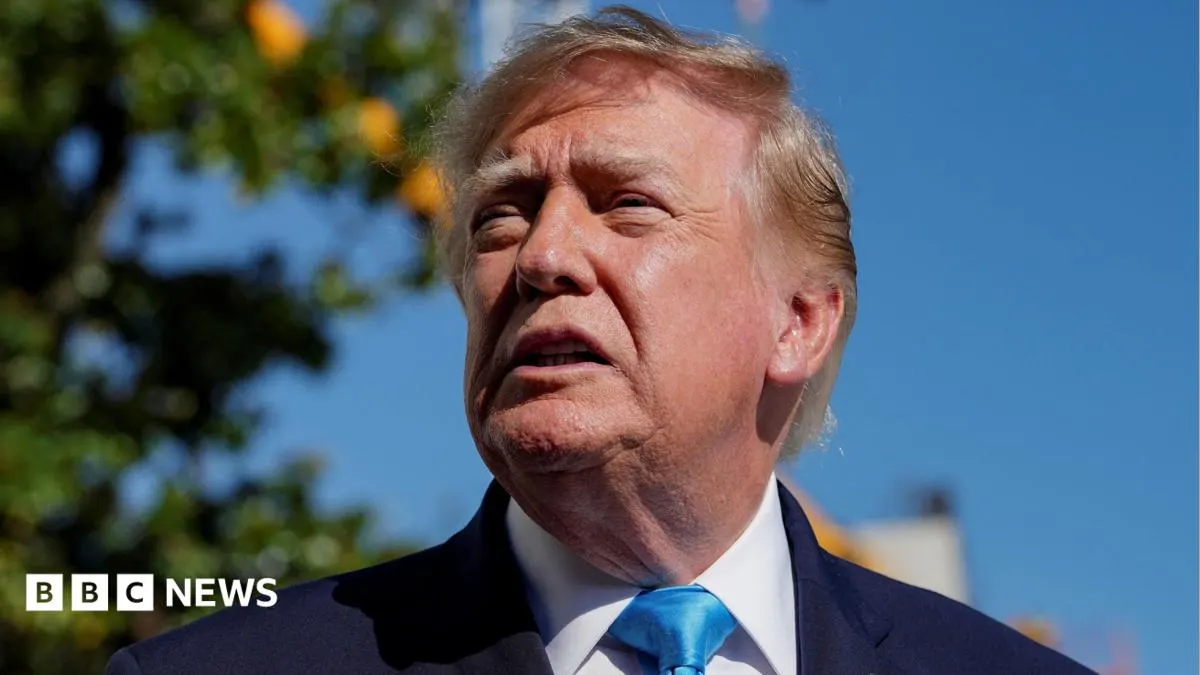
Trump has publicly confirmed that a security threat prompted the US to move its bombers from RAF Fairford, saying the aircraft “didn’t fly out by accident”. His comments add weight to reports linking the withdrawal to a recent incident at the Gloucestershire base, though the nature of the threat and who made it remain unclear.
The Pentagon moved about a dozen B-1 bombers to their home stations in the US. Police are investigating after three suspicious vehicles were reported near Fairford on 27 September; six men were arrested on suspicion of terror offences and released on bail. Vice-President JD Vance said the move was made out of caution, while Secretary of State Marco Rubio described the movement of military assets as routine and said the US retained confidence in the security of its bases.
- Trump says a threat led to the bombers’ withdrawal.
- About a dozen B-1s left RAF Fairford for the US.
- The threat’s source and nature remain unclear.
New here? Start with this
RAF Fairford is a United States Air Force base in Gloucestershire, southwest England. It hosts American military aircraft and serves as a key hub for US defence operations across Europe.
The base was home to about a dozen B-1 bombers, which are large military aircraft capable of long-range bombing operations. On 27 September, police responded to reports of three suspicious vehicles near the base entrance.
Six men were arrested on suspicion of terror offences following the incident and released on bail pending investigation. The US military subsequently withdrew all the B-1 bombers and returned them to bases in the United States, with the move linked to the security concern at RAF Fairford.
Both sides, in good faith
The strongest fair case each way — we don't pick a winner.
The case for
President Trump and Vice-President Vance's direct confirmation that threats precipitated the withdrawal deserves credence, particularly given the gravity of removing expensive strategic assets like B-1 bombers and the counter-terrorism investigation triggered by the September 27 incident. The arrest of six individuals, including a UK-Iranian national, lends substance to genuine security concerns, and the military would reasonably prioritise protecting such valuable aircraft from potential sabotage or drone attacks, as witnessed in Ukraine.
The case against
Secretary of State Marco Rubio's characterisation of the withdrawal as routine redeployment reflects the reality that military bases regularly move aircraft for operational, strategic, or maintenance reasons wholly unrelated to specific threats. Without confirmed details of imminent danger, attributing any military movement following an incident to that incident risks conflating correlation with causation; maintaining clear distinction between routine operations and genuine threat responses proves essential for credible emergency communications.
Full account
United States military aircraft have been removed from RAF Fairford in Gloucestershire following confirmation of a security concern. The Pentagon announced on Monday that B-1 bombers stationed at the Cotswolds installation have been sent back to American bases. The decision comes approximately one week after law enforcement responded to an incident at the facility on 27 September involving dubious vehicles entering the site. Six people have been taken into custody as part of an investigation into an alleged terrorist plot against the airbase, with five British nationals subsequently freed pending further proceedings, accompanied by a second arrestee holding UK-Iranian citizenship.
President Trump revealed on Monday that security hazards motivated the aircraft's relocation when addressing reporters departing the White House. Trump asserted the aeroplanes' departure was not coincidental and that the American government had detected tangible risks to the facility. The president noted that authorities had identified those behind the threat without disclosing their identities. Vice-President JD Vance echoed this stance by highlighting apparent external dangers. However, Secretary of State Marco Rubio offered a notably different perspective, suggesting the aircraft movement represented standard military rotation procedures rather than a response to the recent incident.
Analysis of the underlying threat has focused on potential sabotage operations or direct strikes against the expensive aircraft, particularly in scenarios involving future hostilities with Iran. Washington-based sources have drawn parallels to Ukraine's recent covert operations against Russian military installations, illustrating how adversaries might pose dangers from distant locations. Intelligence officials reported to major American news organisations that the decision accelerated after additional threat assessments materialised during the preceding weekend.
British Government officials sought to assuage public concerns regarding the airbase's safety. The Prime Minister's office affirmed the base remained secure and referenced longstanding defensive measures in place across military installations. The UK Defence Secretary referenced established security frameworks without directly addressing the contemporary situation. This measured British reaction contrasted with the more forthcoming American leadership on the threat's reality, though both governments expressed confidence in their respective security arrangements.
Where outlets differ
SOURCE 1 specifies 'about a dozen B-1s' whilst SOURCE 2 does not quantify aircraft numbers
SOURCE 1 provides extensive threat speculation including sabotage, Iran conflict scenarios, and Ukraine's Operation Spiderweb precedent; SOURCE 2 omits these details
SOURCE 2 emphasises sharp temporal contrast by stating Rubio spoke 'only hours earlier'; SOURCE 1 presents divergence less temporally
SOURCE 2 includes Vance's reference to Iran's '49 years' of state terrorism; SOURCE 1 does not
SOURCE 1 clearly identifies second arrestee as 'UK-Iranian national'; SOURCE 2 refers generally to 'six individuals'
SOURCE 2 attributes redeployment decision to 'New York Times' reporting; SOURCE 1 attributes to unnamed 'Washington sources'
SOURCE 1 concludes with incomplete Whitehall reference; SOURCE 2 provides complete Prime Minister's spokesman statement
More coverage
Read the full article at the source →
Originally published by BBC World as “Trump says ‘threat’ led US to pull bombers from RAF Fairford”.