Politics news and discussion on TalkFuse.
Trump signs proclamation he says will prevent future changes to Oval Office and Cabinet Room
Developing story first seen 2 hours ago
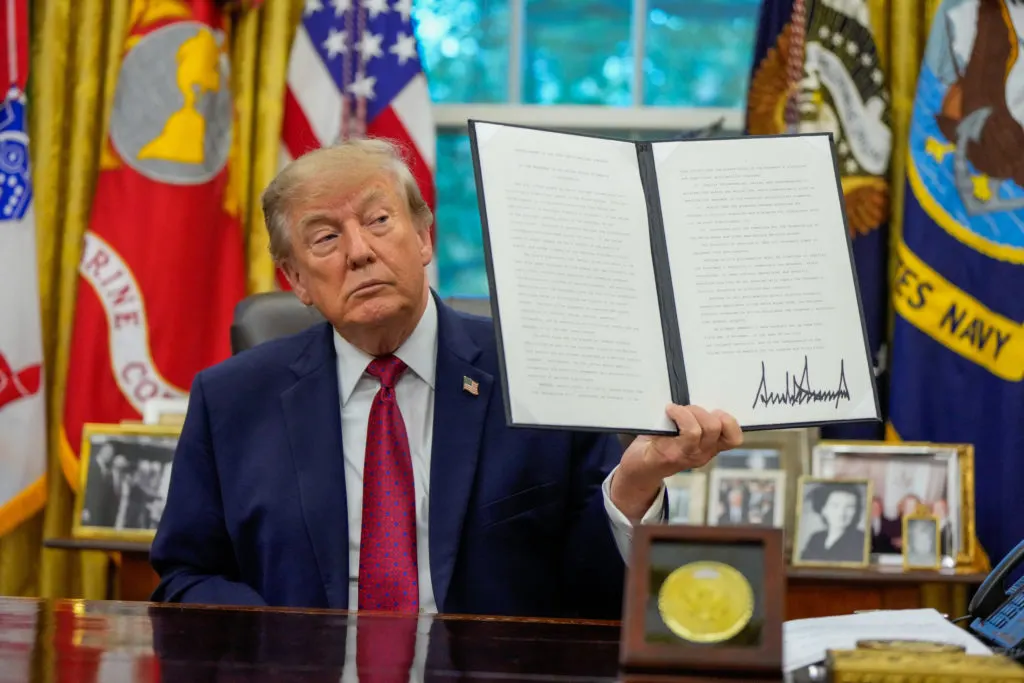
The new coverage confirms Donald Trump signed a proclamation on Thursday to establish what he called an “Oval Office National Monument”, saying it would stop future changes to the Oval Office and Cabinet Room. The move follows voters’ rejection of his economic policies, which gave Democrats control of Congress, and comes during a week in which Trump has repeatedly discussed Washington projects.
Since returning to the White House, Trump has overseen design changes to several rooms. The Oval Office now includes more portraits, a copy of the Declaration of Independence and golden accents; the article does not explain how the proclamation would legally prevent future alterations.
- Sources
- 2
- Outlets
- 2
- Left · Centre · Right
- 0 · 2 · 0
In short
- Trump signed a proclamation to protect his White House redesigns.
- He says the Oval Office and Cabinet Room cannot be changed.
- The article gives no details on the proclamation’s legal effect.
How this story developed
- 54 minutes ago President Donald Trump signed a proclamation establishing what he called an “Oval Office National Monument”, saying it would prevent future changes to the Oval Office and Cabinet Room.
- 1 hour ago The new coverage confirms Donald Trump signed a proclamation on Thursday to establish what he called an “Oval Office National Monument”, saying it would stop future changes to the Oval Office and Cabinet Room.
Steelman: both sides, in good faith
The strongest fair case each way — we don't pick a winner.
The case for
Supporters could argue that the Oval Office and Cabinet Room are historically significant public spaces, and that formal protection would preserve their character for future administrations and visitors. A national monument designation may also underscore the symbolic importance of the presidency and make substantial changes harder to undertake casually.
The case against
Critics could argue that presidential workplaces need to adapt to changing practical needs and that design choices should remain subject to ordinary administrative decisions. Without details about the proclamation’s legal force, they may also question whether it meaningfully protects these rooms or mainly makes a political statement, while potentially limiting future presidents’ discretion.
Coverage · 2 sources
Bias meters
From 2 rated sources.