World news and discussion on TalkFuse.
Trump challenges European plans to fund Ukraine as leaders demand a role in peace talks
Developed over time first seen 1 day ago
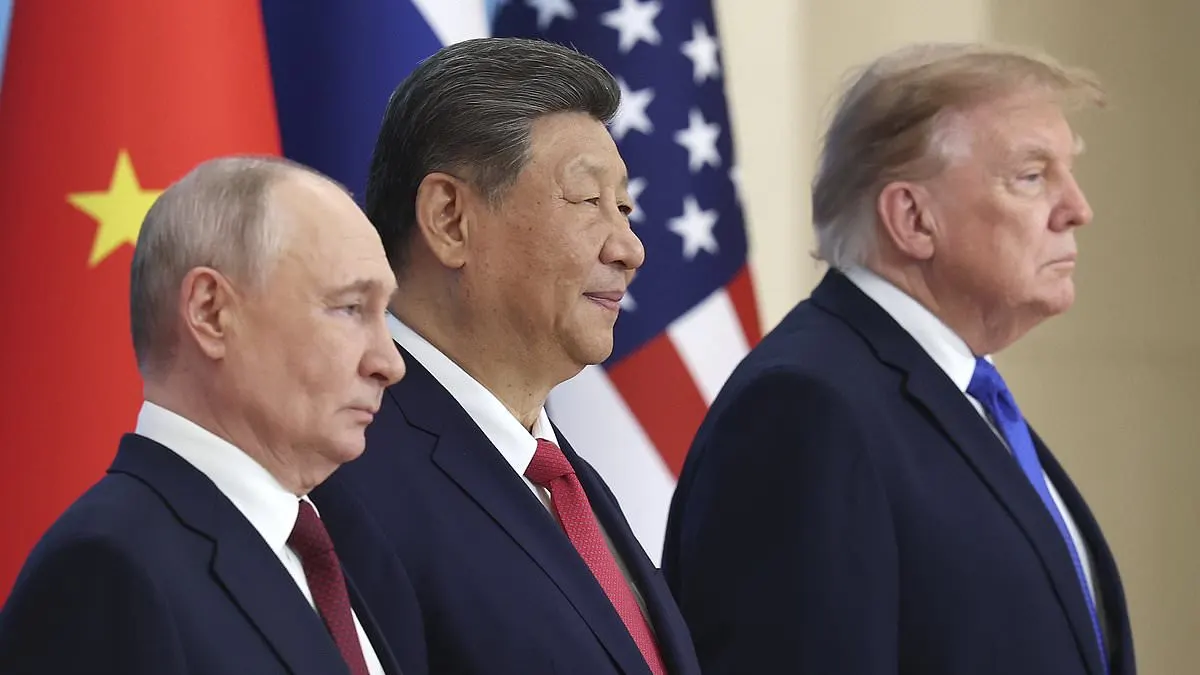
US President Donald Trump criticised European plans to keep funding Ukraine during a call with the 34-country Coalition of the Willing, hours after meeting Vladimir Putin and Xi Jinping in Shenzhen. His reported objections, alongside the China summit, prompted European leaders to stress that Ukraine and Europe must be included in any negotiations to end Russia’s war.
Sources said Trump questioned a proposal to help cover Ukraine’s €70 billion (£58.7 billion) financing gap by 2027, while arguing that ending the war could save countries money. He reportedly said Putin wanted peace and urged Europe to focus on ending the conflict; US officials described him as positive about a negotiated settlement. In Berlin, German Chancellor Friedrich Merz compared the Shenzhen meeting to the 1945 Yalta summit and said peace talks could succeed only with Ukraine and Europe involved.
- Sources
- 4
- Outlets
- 4
- Left · Centre · Right
- 1 · 1 · 1
In short
- Trump questioned European plans to fund Ukraine.
- Merz said Ukraine and Europe must join peace talks.
- The Coalition of the Willing reaffirmed support for Kyiv.
How this story developed
- 18 hours ago Further coverage said Merz made the comparison at a Berlin gathering co-hosted by Germany, France and Britain, where Coalition participants received pieces of the Berlin Wall as leaders signalled continued support for Kyiv.
- 1 day ago German Chancellor Friedrich Merz sharpened that criticism by calling the China summit a “photo op” and comparing its format with the 1945 Yalta conference.
- 1 day ago The account placed Trump’s objections hours after his China meeting with Vladimir Putin and Xi Jinping, prompting European leaders to insist that Ukraine and Europe must be included in any peace negotiations.
- 1 day ago Donald Trump reportedly questioned European plans to help cover Ukraine’s €70 billion funding gap by 2027 during a call with the Coalition of the Willing, arguing that ending the war could save money.
- DW European leaders present united front in push for peace in Ukraine
- Meduza Trump tells European leaders that Putin wants to end the war in Ukraine, but Putin says Moscow won’t negotiate with Kyiv after Crimean Bridge strikes
- Daily Mail Trump challenges European plans to fund Ukraine as leaders demand a role in peace talks
- Al Jazeera European leaders unite in Berlin to reaffirm support for Ukraine
Full account
Donald Trump joined the Berlin meeting of the Coalition of the Willing by phone from Air Force One on Thursday, after talks in China with Russian President Vladimir Putin and Chinese President Xi Jinping. Reports say he told European leaders that his conversation with Putin had gone well and that the Russian leader wanted to end the war. Trump also argued that countries could save money if the fighting stopped, while questioning European plans to provide billions of euros in further support for Ukraine.
Accounts differed in how they characterised Trump’s intervention. One described it as an angry tirade against European funding; another said he spoke in general terms about the deaths and costs of the war. Officials quoted in one report said he spoke positively about a negotiated settlement. Trump’s envoy Jared Kushner, who attended in Berlin, said Trump had sent a strong message about wanting peace and was keen to engage with both Putin and Xi. A separate report said Trump would not make final decisions about Ukraine without President Volodymyr Zelensky.
The Berlin meeting, hosted by leaders from Germany, France and the UK, reaffirmed support for Kyiv and called for Europe to be involved in any future peace negotiations. A joint statement by Germany, France, the UK and Ukraine condemned Russian attacks on civilians and infrastructure, and pledged long-term support, including priority for Ukraine’s air defences. The leaders also backed sanctions and pressure on Russian energy revenues, called for legally binding security guarantees for Ukraine after a ceasefire, and urged Russia to accept an energy truce over winter.
German Chancellor Friedrich Merz criticised the summit in China as a photo opportunity and invoked the 1945 Yalta conference, arguing that a settlement could not be made without Ukraine and Europe. The Berlin statement called for direct dialogue between Kyiv and Moscow with US and European participation. Putin, speaking after the China meeting, said he had considered a limited ceasefire but had abandoned the idea after strikes on the Crimean Bridge, and declared Russia would not negotiate following those attacks.
Where outlets differ
From the full account, which is AI-written from the sources:
The first report foregrounds Trump’s criticism of European funding and describes his remarks as a tirade, while the third presents them as a more general appeal to stop spending money as people die. The second focuses on the Berlin leaders’ joint commitments and security proposals, with Kushner portraying the talks as evidence of European unity. The third adds Trump’s reported position that he would not decide Ukraine’s future without Zelensky and Putin’s comments about the Crimean Bridge; these details are absent from the other accounts. The first report highlights Merz’s comparison with Yalta and the ‘photo op’ criticism, while the second centres on the joint statement and proposed guarantees.
Left-leaning outlets 1
Only here: unite, berlin, reaffirm, support
Centre outlets 1
Only here: present, united, front, push
Right-leaning outlets 1
Only here: trump, challenges, plans, fund, demand
Every side used: european, leaders, ukraine
Headline columns compared word for word; nothing in them is AI-written.
Steelman: both sides, in good faith
The strongest fair case each way — we don't pick a winner.
The case for
Trump’s emphasis on negotiations reflects the view that the war should be brought to an end as soon as possible, and that continued large-scale funding carries significant financial costs. If Putin is prepared to negotiate, supporters may argue, European countries should test that possibility and avoid commitments that could prolong the conflict without a clear path to peace.
The case against
European leaders argue that Ukraine and the countries bearing the consequences of the war must have a voice in any settlement, and that funding helps Ukraine negotiate from a position of strength. They may also see close coordination among allies as essential to ensuring that talks produce a durable peace rather than terms shaped chiefly by Russia or by a meeting from which Europe and Ukraine are absent.
Explained simply
Russia’s full-scale invasion of Ukraine began in 2022, and the war has since become a major security and funding issue for Ukraine and its European allies. European countries have provided money and other support, while debates continue over how long that help should last and how to bring the war to an end.
Donald Trump, the US president, has argued for negotiations with Russia. European leaders including German Chancellor Friedrich Merz have said Ukraine and Europe need a part in any peace talks, because decisions could affect Ukraine’s territory and Europe’s security. The discussion matters because US and European policies can influence both Ukraine’s ability to defend itself and the terms on which a settlement might be reached.
Coverage · 4 sources
Bias meters
From 3 rated sources, 1 unrated.
- Daily MailRightTrump challenges European plans to fund Ukraine as leaders demand a role in peace talks
- DWCentreEuropean leaders present united front in push for peace in Ukraine
- MeduzaTrump tells European leaders that Putin wants to end the war in Ukraine, but Putin says Moscow won’t negotiate with Kyiv after Crimean Bridge strikes
- Al JazeeraLeftEuropean leaders unite in Berlin to reaffirm support for Ukraine
Read the full article at the source →
Originally published by Daily Mail as “Trump’s ‘angry tirade’ over European funding for Ukraine as EU leaders condemn his ‘photo op’ trilateral meeting”.