World news and discussion on TalkFuse.
Judge broadens protection for US-born children from Trump’s citizenship restrictions
Developing story first seen 3 hours ago
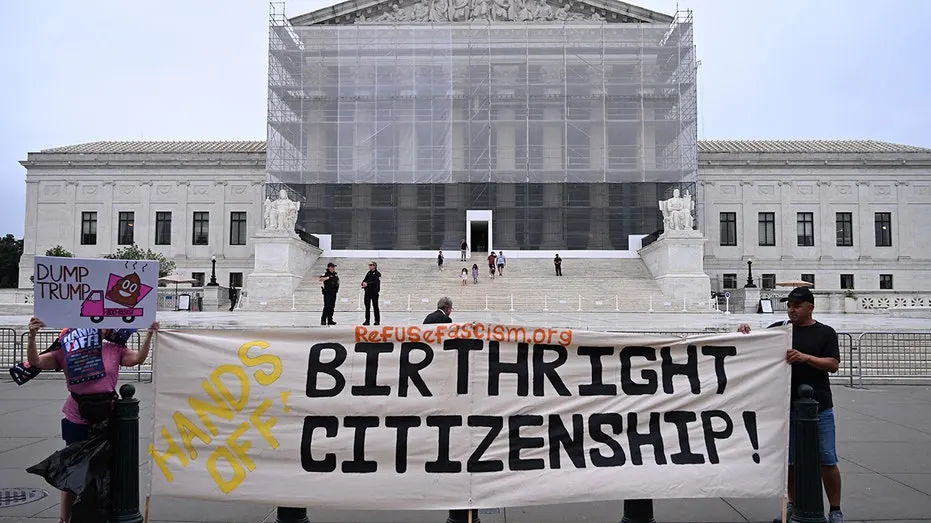
Judge Christopher Cooper has expanded the block on Donald Trump’s second attempt to restrict birthright citizenship, protecting additional groups of children born in the United States. His 67-page ruling says the president cannot create new exceptions to citizenship for US-born children who are subject to US law.
The August order targeted children whose parents were suspected terrorists or gang members, as well as children born through commercial surrogacy to foreign parents. A Maryland judge had already partially blocked it on 2 September; Cooper’s ruling extends protections to children of some foreign officials and people the administration classifies as “alien enemies”. He said terrorist-group membership alone does not meet the narrow exception for children born to enemy forces occupying US territory.
- Sources
- 2
- Outlets
- 2
- Left · Centre · Right
- 0 · 0 · 2
In short
- A DC judge broadened protections against Trump’s citizenship restrictions.
- The ruling covers additional groups of US-born children.
- The court said terrorist-group membership alone is not enough to create an exception.
How this story developed
- 2 hours ago Cooper extended the block to children of some foreign officials and people classified by the administration as “alien enemies”, finding that terrorist-group membership alone did not meet the narrow exception for children born to enemy forces occupying US territory.
- 2 hours ago Judge Christopher Cooper ruled that Donald Trump’s August order could not add exceptions to birthright citizenship for US-born children whose parents were suspected of terrorism or gang membership, or for children born through commercial surrogacy to foreign parents.
Steelman: both sides, in good faith
The strongest fair case each way — we don't pick a winner.
The case for
Supporters of the restrictions argue that birthright citizenship should follow the constitutional principle of allegiance to the United States, and that Congress and the executive should be able to clarify its limits in cases involving parents who lack lawful status or owe allegiance elsewhere. They may also contend that the government should prevent citizenship rules from being used to secure benefits for children born through commercial arrangements or in circumstances involving serious security concerns.
The case against
Opponents argue that the Fourteenth Amendment grants citizenship broadly to people born in the United States, subject only to narrow, historically recognised exceptions, and that suspected gang or terrorist ties do not place a child outside that rule. They stress that changing such a settled constitutional guarantee requires a sound legal basis and that extending exceptions could leave children’s citizenship uncertain based on their parents’ status or conduct.
Explained simply
Birthright citizenship is the principle that most people born in the United States become US citizens, regardless of their parents’ nationality or immigration status. It is rooted in the US Constitution’s 14th Amendment, which says people born or naturalised in the country and subject to its jurisdiction are citizens.
Donald Trump’s administration has sought to limit that principle for some children born in the US, including those whose parents lack permanent legal status. The dispute is about whether the president can make such exceptions, and how the Constitution’s wording applies to children whose parents have particular legal or official status.
The case involves the federal government and families affected by the restrictions, with judges deciding whether the policy can take effect. Its outcome could shape which US-born children are recognised as citizens and how far a president can change the rules without an amendment to the Constitution.
Coverage · 2 sources
Bias meters
From 2 rated sources.
Read the full article at the source →
Originally published by Fox News as “Trump’s birthright citizenship restrictions struck down again by DC federal judge he called ‘hater’”.