World news and discussion on TalkFuse.
US intelligence chief defends Trump’s “friend” label for Putin’s summit meeting
Developing story first seen 6 hours ago
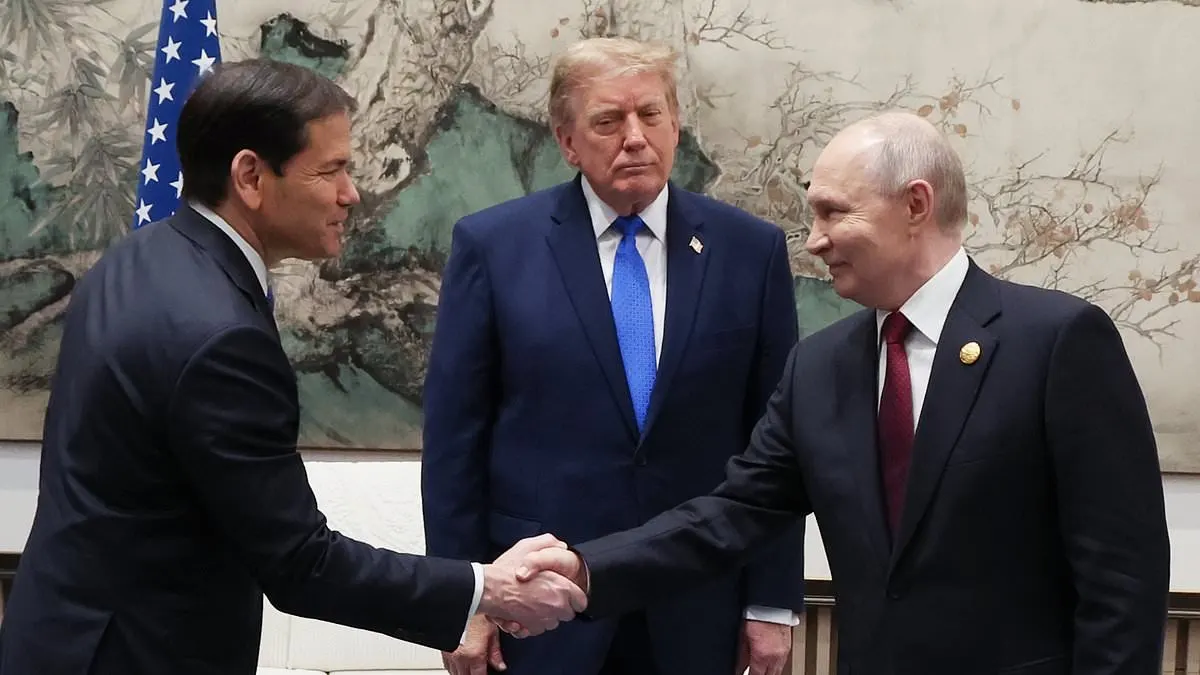
The developing report adds that US Director of National Intelligence Jay Clayton also defended President Donald Trump’s description of Vladimir Putin as a friend in a CNN interview, saying he trusted Trump’s choice of language. Clayton maintained that Putin is not a friend to the United States, particularly over Russia’s war in Ukraine, drawing a distinction between that relationship and the context of the leaders’ meeting.
Trump shared a photograph with Putin captioned “My friend” after meeting him and Chinese President Xi Jinping for talks among the three nuclear powers. Clayton said the summit’s discussion of avoiding nuclear escalation made the wording appropriate; a joint declaration said nuclear war cannot be won and must not be fought, and pledged dialogue on reducing nuclear risks and preventing proliferation.
- Sources
- 2
- Outlets
- 2
- Left · Centre · Right
- 0 · 0 · 1
In short
- Clayton says Putin is not a friend to the US.
- He defended Trump’s use of “friend” in the summit context.
- The three leaders pledged to discuss reducing nuclear risks.
How this story developed
- 1 hour ago Clayton reiterated that Putin was no friend to the United States, underscoring the contrast between Trump’s personal description and the intelligence chief’s view of Russia’s actions in Ukraine.
- 1 hour ago US Director of National Intelligence Jay Clayton defended Donald Trump’s description of Vladimir Putin as “my friend”, saying the leaders’ talks on nuclear risks made the wording appropriate, while stressing Putin was no friend to the United States over Russia’s war in Ukraine.
Full account
US Director of National Intelligence Jay Clayton said Vladimir Putin was not a friend of the United States, while defending President Donald Trump’s decision to call the Russian leader a friend after a summit in China. Asked on ABC News whether Putin could be considered America’s friend, Clayton replied that he was not a friend “in Ukraine”.
Trump had used the description during a meeting with Putin and Chinese President Xi Jinping, then repeated it in a social media post showing the two men shaking hands. Clayton said the summit brought together three major nuclear powers to discuss avoiding escalation and maintaining communication. In that setting, he said, Trump’s use of the word “friend” was appropriate, and he trusted the president’s judgement on foreign policy.
The reports describe a trilateral meeting in Shenzhen on 19 November, lasting about an hour and a half, and say the leaders adopted a declaration on subjects including nuclear deterrence. One report characterises their discussion as nuclear disarmament talks and highlights a pledge that nuclear war cannot be won and must not be fought. The other also notes declaration references to UN reform and oil exports, as well as criticism of the International Criminal Court.
The outlets frame Clayton’s comments somewhat differently. One emphasises his blunt distinction between Putin’s conduct in Ukraine and the diplomatic context for Trump’s wording, and also recounts a separate CNN interview in which he praised the summit. The other focuses on the ABC exchange and adds details about Trump’s earlier response to reporters, the meeting’s duration and the declaration’s broader topics.
Where outlets differ
From the full account, which is AI-written from the sources:
The first report includes Clayton’s comments on CNN as well as ABC and gives more weight to the declaration’s nuclear language; the second centres on the ABC interview and supplies additional details about the summit and declaration.
The first describes the meeting as historic nuclear talks and says the leaders discussed nuclear disarmament. The second lists a wider range of declaration topics, including UN reform, oil exports and criticism of the International Criminal Court.
Steelman: both sides, in good faith
The strongest fair case each way — we don't pick a winner.
The case for
Trump’s use of “friend” can be understood as personal or diplomatic language intended to keep communication open with a major nuclear power. Supporters may argue that direct, cordial engagement can help reduce the risk of escalation and make talks on arms control more productive, without implying agreement with Putin’s actions.
The case against
Calling Putin a friend risks blurring the distinction between pragmatic dialogue and trust in a leader whose government is waging war in Ukraine. Critics may argue that the language weakens a clear account of Russia’s conduct and could undermine confidence among allies, even when the stated aim is to discuss nuclear risk.
Explained simply
The United States and Russia are major nuclear powers, and their relationship has been strained by Russia’s invasion of Ukraine. The US intelligence chief oversees agencies that assess threats to the country, including the actions of foreign governments.
Vladimir Putin has led Russia for much of the past two decades, while Donald Trump is the US president. The US president’s personal descriptions of foreign leaders can differ from the assessments made by officials responsible for national security.
Talks between leaders of nuclear-armed countries can matter because misunderstandings or escalation could have serious consequences. Agreements to keep dialogue open aim to reduce nuclear risks, though they do not resolve wider disagreements.
Coverage · 2 sources
Europe Government Politics World
Read the full article at the source →
Originally published by Daily Mail as “Trump’s Director of National Intelligence squirms as he is pressed over whether Putin is ‘a friend’ to the USA”.