Trump envoys meet Putin before Kyiv peace mission
Developed over time first seen 2 months ago
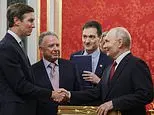
Jared Kushner and Steve Witkoff spent over three hours in closed-door talks with Vladimir Putin at the Kremlin on Saturday, as part of the Trump administration's renewed push to end the four-year war in Ukraine. Putin called the conflict a "complicated situation" but praised Trump for persisting with efforts towards a settlement, and both he and Ukrainian President Volodymyr Zelensky agreed to pause strikes on each other's capitals for the duration of the discussions. The two envoys, who last met Putin in Moscow in January, went on to visit Kyiv on Sunday, marking their first trip there as part of the peace process.
Putin's adviser Yuri Ushakov described the talks as "constructive, frank and useful", saying Moscow had given a "comprehensive assessment" of the battlefield situation while also discussing "large, mutually beneficial" economic projects with the US, though no specific outcomes were disclosed. Trump said his "great negotiators" were carrying a fresh proposal to end the war, adding there was "a good chance" of progress. The diplomatic push came despite Russian strikes on Ukrainian airports in Kyiv and Boryspil, which Zelensky said were "deliberate" and possibly linked to preparations for a US aircraft to land in Ukraine, and against a backdrop of a deputy Russian foreign minister warning that the current battlefield situation favoured Moscow.
- Kushner and Witkoff held over three hours of Kremlin talks with Putin.
- Russia and Ukraine paused strikes on each other's capitals during the talks.
- Envoys travelled on to Kyiv, their first visit, to continue peace efforts.
New here? Start with this
Talks between Vladimir Putin and two of Donald Trump's closest envoys, Jared Kushner and Steve Witkoff, are the latest step in a renewed American effort to end the war in Ukraine, a conflict that has dragged on for years since Russia's invasion. Kushner, Trump's son-in-law, and Witkoff, a veteran negotiator, have become the president's preferred channel for direct dealings with Moscow, working alongside figures such as Russian investment envoy Kirill Dmitriev.
The diplomatic push had stalled in recent months as US attention shifted elsewhere, notably to the conflict involving Iran, leaving the war in Ukraine largely unresolved on the battlefield. Ukraine's president, Volodymyr Zelenskyy, has continued to lead his country's side of any negotiations, while Russia has signalled that progress depends on how far Washington is willing to go to secure a lasting settlement.
The talks matter because any US-brokered deal could reshape the course of a war that has caused huge loss of life, displaced millions and strained relations between Russia and the West. Both sides have taken some steps, such as pausing strikes on each other's capitals, to create space for negotiation, though deep disagreements over the terms of any settlement remain unresolved.
Both sides, in good faith
The strongest fair case each way — we don't pick a winner.
The case for
Supporters of this diplomatic push would argue that after four years of grinding war and immense loss of life, any serious effort to open direct channels between Washington and Moscow at the highest level is worthwhile, since only a negotiated settlement, rather than continued attrition, is likely to end the killing. They would point to the tangible, verifiable outcome of a mutual pause on strikes against Kyiv and Moscow as evidence that pragmatic, transactional diplomacy involving trusted presidential envoys can extract real concessions where formal diplomatic channels have stalled, and that engaging Putin directly, however distasteful some find it, is preferable to an indefinite stalemate.
The case against
Critics who share the goal of ending the war would nonetheless argue that entrusting such consequential negotiations to envoys without traditional diplomatic or Russia expertise risks Moscow negotiating from a position of strength, extracting economic and territorial concessions while offering only a temporary, easily reversible pause rather than a durable peace. They would note that Zelensky was not present for the Kremlin talks and has separately accused Russia of striking Kyiv airports on the very eve of the meeting, suggesting Moscow may be using the appearance of negotiation to shape battlefield and political conditions in its favour, and that any settlement reached without full Ukrainian ownership risks legitimising aggression rather than resolving it justly.
Full account
Two of Donald Trump's senior envoys, his son-in-law Jared Kushner and special envoy Steve Witkoff, held more than three hours of closed-door talks with Vladimir Putin in Moscow on Saturday, as Washington attempts to revive efforts to end the war in Ukraine. The pair flew into the Russian capital in the morning and were taken to the Kremlin by Kirill Dmitriev, Putin's investment envoy, before sitting down with the Russian president at his official residence. Welcoming the delegation, Putin offered a brief assessment of the conflict, describing the situation as difficult, while thanking Trump for persisting with peace efforts despite the scale of the challenge. Putin's foreign policy adviser, Yuri Ushakov, later told reporters the discussion had been constructive and candid, though he gave few specifics on what, if anything, had been agreed.
According to Ushakov, the conversation ranged well beyond the battlefield, taking in economic issues and the potential for substantial joint Russian-American ventures. He said Moscow had set out its own assessment of the war, noting what he called tangible Russian gains on the ground, and that both sides recognised any settlement would need to address the underlying causes of the conflict rather than simply halting the fighting. Neither side offered detail on the shape of a possible deal, though the White House said the two men had discussed substantive next steps with Putin, with a fuller announcement expected in the coming weeks.
As the talks took place, Moscow and Kyiv agreed a limited, temporary halt to strikes on each other's capitals. The Kremlin said Putin had ordered a three-day suspension of attacks on Kyiv from midnight, while President Volodymyr Zelensky said Ukraine would refrain from striking Moscow through to Monday, on the understanding that Russia would reciprocate. Putin was explicit, however, that this arrangement did not amount to a wider ceasefire, and that fighting elsewhere in Ukraine would continue. Zelensky said he had spoken with the American delegation after their arrival in Moscow and that preparations were already under way for their visit to Kyiv.
Kushner and Witkoff, who last held talks with Putin in Moscow in January, are due to travel to Ukraine's capital on Sunday for what will be their first visit there as part of the peace process, with Zelensky saying he was ready for a substantive conversation. Trump described the two men as great negotiators who were carrying a proposal aimed at ending the war, adding that there was a decent chance of progress. The visit comes against a backdrop of continued heavy fighting: Russian forces have made only slow territorial gains despite severe losses and now hold roughly a fifth of Ukraine, while both sides have stepped up aerial attacks, with Ukraine struggling for interceptor missiles and concentrating its own strikes on Russian oil infrastructure.
Where outlets differ
The Daily Mail frames the trip as a 'top-secret' mission and gives most weight to Trump's own remarks praising Kushner and Witkoff as 'great negotiators', while also noting that the US peace push had lost momentum after months of focus on the Iran war.
The BBC report leans more heavily on direct quotations from Putin himself (describing the situation as 'not so easy' and saying he felt 'comfortable' and trusted working with the envoys), and gives more prominence to Ushakov's comments on Russian battlefield advances and the need to address 'root causes' of the conflict.
Coverage of the planned Kyiv leg varies: one account stresses that the White House described 'substantive plans for next steps' with an announcement expected within weeks, while also highlighting the logistical puzzle of how the envoys will reach Kyiv given Ukraine's closed airspace since 2022 — a detail not covered elsewhere.
Only one source explicitly states that Putin ruled out a wider ceasefire beyond the Kyiv/Moscow strike pause, a nuance not emphasised as clearly in the other accounts.
More coverage
- BBC World — US envoys meet Putin in Moscow for Ukraine talks
- BBC World — US envoys set for Ukraine talks after meeting Putin in Moscow
- NPR — US envoys Witkoff and Kushner set for talks in Kyiv after meeting with Putin in Moscow
- Daily Mail — Russia pounds Kyiv with fresh strikes despite promise to pause attacks – as Trump envoys Witkoff and Kushner to land in Ukraine ahead of talks with Zelensky
Americas Europe Government Politics World
Read the full article at the source →
Originally published by Daily Mail as “Trump’s envoys Jared Kushner and Steve Witkoff meet Putin and speak for more than three hours in top secret talks… as Russian president gives two-word summation of Ukraine war”.