Trump meets Irish political leaders whilst hosting secretive Dublin business gathering
Developed over time first seen 2 months ago
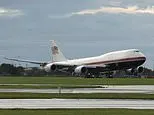
A journalist's first-hand account has detailed the tight secrecy and lengthy waits surrounding President Trump's visit to Ireland, focused on a private business gathering at Deerfield, the US Ambassador's residence in Dublin's Phoenix Park. Invited guests, including the reporter, were bussed to the venue in darkness before dawn on Saturday with scant notice of timings, reflecting security arrangements that ran through a broader trip combining meetings with President Catherine Connolly and Taoiseach Micheál Martin alongside a golf event at Trump's Doonbeg resort. The episode illustrates how closely guarded such presidential engagements are, even for well-connected attendees.
Around 200 guests gathered in a marquee at Deerfield after a roughly five-hour wait, entertained by musicians, comedian Alan Shortt as MC, a soprano singing the US national anthem, and dancer Michael Flatley, who also played the flute. The crowd drew senior figures from Microsoft, Amazon, CRH and the banking sector, alongside former politicians turned business consultants, including ex-Fine Gael ministers Simon Coveney, Brian Hayes and Lucinda Creighton, former TD John Deasy, and former Labour senator Lorraine Higgins.
- Sources
- 4
- Outlets
- 2
- Left · Centre · Right
- 0 · 2 · 2
In short
- Journalist recounts secretive, pre-dawn Trump business event in Dublin.
- Around 200 guests waited five hours at US envoy's Deerfield residence.
- Attendees included tech executives, bankers and ex-Irish politicians.
How this story developed
- 2 months ago Ahead of that Deerfield event, Trump's broader trip had already drawn scrutiny after analysts concluded his comments backing Irish reunification were aimed chiefly at American voters ahead of the midterms, even as one of Ireland's largest-ever security operations was mounted around his diplomatic meetings with Connolly and Martin and his golf outing at Doonbeg.
- 2 months ago A first-hand journalist's account has revealed the elaborate secrecy and lengthy security procedures surrounding a private business gathering Trump held at Deerfield during his two-day Irish visit, with roughly 200 guests, including executives from Microsoft, Amazon and CRH, waiting some five hours in a marquee before he appeared.
- Daily Mail Donald Trump lands in Dublin Airport at start of two-day trip to Ireland amid massive security operation
- BBC World Trump begins Ireland visit with government talks and golf
- Daily Mail Flatley playing the flute, An Taoiseach and Dermot Desmond chatting animatedly, and exactly why Trump called the Irish ‘vicious bastards’ – John Lee brings you behind the scenes at the Ambassador’s reception
- BBC World Trump’s comments on a united Ireland may have targeted audience across the Atlantic
Full account
US President Donald Trump used a two-day visit to Ireland to declare that he would like to see the island reunified, remarks that overshadowed the rest of his itinerary and prompted swift reaction from politicians on both sides of the Irish Sea. Trump arrived in Dublin on Saturday, where he was met by Finance Minister Simon Harris before travelling on to a series of engagements, including a courtesy call on President Catherine Connolly at Áras an Uachtaráin and talks with Taoiseach Micheál Martin at Farmleigh House in Phoenix Park. It was during the latter meeting, in response to a reporter's question, that Trump made the comments that would dominate coverage of the trip.
Sitting alongside Martin, Trump said he did not wish to stir controversy but that he would nonetheless love to see a united Ireland, describing it as something that would happen eventually and calling it a fantastic outcome that would reflect well on everyone involved. He suggested the Taoiseach was well placed to help move the process along, while acknowledging that the United Kingdom would inevitably have a view on the matter. He returned to the theme later that day in a lengthy address to Irish and Irish-American business figures at the US ambassador's residence, a speech that had been billed as lasting around twenty minutes but ran for roughly twice that, ranging across immigration, trade deals, defence manufacturing and renewed criticism of what he regards as insufficient British backing for American military action against Iran. Separately, he also commented on tensions between the UK and Argentina over the Falkland Islands, warning that any conflict there would be a disaster but suggesting he could help resolve it.
The reunification remarks drew a sharp response from unionist politicians in Northern Ireland. DUP leader Gavin Robinson insisted that Northern Ireland's constitutional future was a matter for its own electorate rather than for commentators in London, Dublin or Washington, and expressed confidence that the region would continue to choose to remain part of the United Kingdom. Traditional Unionist Voice leader Jim Allister accused Trump of meddling in affairs that were not his concern, while former DUP MP Ian Paisley, seen as close to the Trump family, remarked more mildly that everyone was entitled to an opinion even a mistaken one. By contrast, Sinn Féin leader Mary Lou McDonald welcomed the comments and said the Taoiseach should now begin preparing for the possibility of unity, and the SDLP's Claire Hanna was also reported to have responded positively. Downing Street, meanwhile, pointed to Prime Minister Andy Burnham's earlier assurance to the Commons that his government remained fully committed to the Good Friday Agreement, under which a border poll can only be called once there is clear evidence that a majority in Northern Ireland would back unification; Burnham had already described such a vote as off the table for now, even as Martin had called for greater clarity on the threshold needed to trigger one. Martin's own office said the president's remarks should surprise nobody, given his consistent past statements favouring unity as the outcome he sees as best.
Away from the headline-grabbing comments, the visit had a quieter, more secretive dimension. One reporter described being summoned before dawn to a rendezvous point beside the River Liffey, ferried by bus without confirmation of timing or destination to the ambassador's residence at Deerfield, where hundreds of guests, including serving politicians, waited in a marquee through heavy rain for Trump's appearance at a business-focused gathering. Analysts covering the trip cautioned against reading the reunification remarks as a shift in official US policy: a former Trump envoy to Northern Ireland and a Democratic congressman both stressed that support for the Good Friday Agreement remained bipartisan and unaffected. Some coverage also noted that more than ten thousand people marched through Dublin in protest against the visit, and speculated that Trump's extended remarks, delivered hours before dawn on the US East Coast, may have been aimed as much at an American audience ahead of the looming midterm elections as at his Irish hosts. The president's trip also included a visit to County Clare for the Amgen Irish Open golf tournament.
Where outlets differ
From the full account, which is AI-written from the sources:
The Mail-style report leads heavily on Trump's direct quotes and accompanying photographs of the airport arrival and Farmleigh meeting, and is alone in mentioning his separate comments warning of a 'disaster' over the Falkland Islands dispute between the UK and Argentina.
The broadcaster-style report gives the fullest account of the political fallout, including the scale of the Dublin protest (put at over 10,000 people), Downing Street's and Micheál Martin's official responses, and reaction from a wider spread of Northern Irish and Irish party leaders including Sinn Féin's Mary Lou McDonald and the SDLP's Claire Hanna.
The analysis piece focuses less on the remarks themselves and more on their ambiguity, quoting a former Trump Northern Ireland envoy and a US congressman to argue this was not a genuine US policy shift, and speculates the speech was partly pitched at a domestic American audience ahead of the midterms.
The first-person Irish Mail on Sunday account is unique in describing the secretive, invitation-only business gathering at the US ambassador's residence, offering behind-the-scenes colour (pre-dawn bus transport, security ambiguity, atmosphere among guests) not found in the other reports.
Centre outlets 2
- Trump begins Ireland visit with government talks and golfBBC World
- Trump’s comments on a united Ireland may have targeted audience across the AtlanticBBC World
Only here: begins, visit, government, talks, golf
Right-leaning outlets 2
- Donald Trump lands in Dublin Airport at start of two-day trip to Ireland amid massive security operationDaily Mail
- Flatley playing the flute, An Taoiseach and Dermot Desmond chatting animatedly, and exactly why Trump called the Irish ‘vicious bastards’ – John Lee brings you behind the scenes at the Ambassador’s receptionDaily Mail
Only here: donald, lands, dublin, airport, start
Every side used: trump, ireland
Headline columns compared word for word; nothing in them is AI-written.
Steelman: both sides, in good faith
The strongest fair case each way — we don't pick a winner.
The case for
Supporters of the visit's format would argue that pairing diplomacy with business promotion is a long-standing and legitimate function of statecraft, and that bringing together senior figures from Microsoft, Amazon, CRH and Irish banking alongside political leaders is precisely the kind of engagement that can encourage investment and strengthen US-Ireland economic ties. They would note that tight security and limited advance notice around a head of state's movements are standard practice rather than evidence of impropriety, and that hosting entertainment and cultural elements, such as traditional music and dance, reflects a genuine effort to celebrate the relationship between the two nations. On the reunification remarks, they might contend that a US president expressing goodwill towards Irish unity, whatever its domestic resonance, is a reasonable and even generous diplomatic gesture rather than a cynical one.
The case against
Critics would argue that a private, secretive gathering of roughly 200 business elites hosted by a sitting president, at a residence rather than a public venue, and with minimal transparency about attendees or purpose, raises legitimate questions about access, influence and the blurring of presidential duties with personal or commercial interests, particularly given Trump's own resort at Doonbeg featured in the same trip. They would point to the lack of advance itinerary even for invited journalists as symptomatic of a broader pattern of shielding such interactions from public scrutiny and accountability. On the reunification comments, sceptics would suggest that framing a sensitive and consequential position on Northern Ireland's constitutional future primarily as messaging for a domestic US midterm audience trivialises a serious diplomatic matter and risks treating Irish affairs as a prop for American electoral politics.
Explained simply
Trump's visit to Ireland has combined official diplomacy with a private business event, drawing scrutiny over how personal, commercial and political interests were mixed during a state visit. As US president, he met Ireland's head of state, President Catherine Connolly, and its head of government, Taoiseach Micheál Martin, while also attending a golf event at his own Doonbeg resort in County Clare and hosting a closed-door gathering at Deerfield, the US Ambassador's residence in Dublin.
The Dublin event brought together around 200 guests, among them executives from major companies such as Microsoft, Amazon and CRH, banking figures, and several former Irish politicians. The gathering was notable for its secrecy, with strict security arrangements and little information given to those invited, and it took place alongside light entertainment rather than formal proceedings.
The visit matters because it illustrates the overlap between Trump's roles as a national leader, a businessman with commercial ties abroad, and a politician gearing up for the US midterm elections. Comments he made about Irish reunification during the trip have been read by some observers as aimed more at audiences back home than at Irish politics itself.
Coverage · 4 sources
Bias meters
From 4 rated sources.
- Daily MailRightDonald Trump lands in Dublin Airport at start of two-day trip to Ireland amid massive security operation
- BBC WorldCentreTrump begins Ireland visit with government talks and golf
- BBC WorldCentreTrump’s comments on a united Ireland may have targeted audience across the Atlantic
- Daily MailRightFlatley playing the flute, An Taoiseach and Dermot Desmond chatting animatedly, and exactly why Trump called the Irish ‘vicious bastards’ – John Lee brings you behind the scenes at the Ambassador’s reception
Americas Art Cricket Culture Elections Geopolitics Government Politics Sport World