Trump’s nuclear deal with Saudis jettisons longstanding US demands
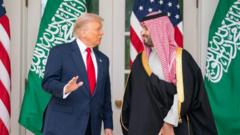
The Trump administration has signed a nuclear cooperation deal with Saudi Arabia that abandons a long-standing US requirement that Riyadh normalise relations with Israel before receiving American nuclear technology. The agreement marks a further departure from the traditional US approach to the Middle East, which had centred on Israel and a two-state solution, and instead reflects President Trump's more transactional, economically-driven foreign policy. Analysts say it signals that Washington wants to retain influence with regional allies, even at the risk of angering Israel, rather than lose them to competitors such as China.
Unlike a 2009 US-UAE nuclear pact, which included strict International Atomic Energy Agency inspections, the Saudi deal reportedly lacks robust enforcement measures and would allow Saudi Arabia to enrich uranium on its own soil, raising concerns among critics about a potential regional nuclear arms race. The agreement is seen as a major win for Crown Prince Mohammed bin Salman, who has long sought closer nuclear ties with the West and previously said Saudi Arabia would pursue nuclear weapons if Iran did. Experts say the deal could also help Saudi Arabia diversify its energy sector and reduce reliance on oil, while potentially laying the groundwork for a future weapons capability even without an immediate rush to develop one.
In short
- Trump drops US demand for Saudi-Israel normalisation in nuclear deal
- Pact lacks strict IAEA-style inspections and allows uranium enrichment
- Seen as win for MBS, but critics fear regional nuclear arms race
Steelman: both sides, in good faith
The strongest fair case each way — we don't pick a winner.
The case for
Those supporting the deal argue that the US must work with regional partners pragmatically rather than demanding preconditions that prove counterproductive. Rigid insistence on Israel normalisation as a prerequisite pushed Saudi Arabia toward competitors like China and Russia, weakening American influence. A transactional approach—using nuclear cooperation to maintain strategic leverage, enable civilian energy diversification, and secure the kingdom's alignment—represents mature statecraft that serves broader interests in managing great power competition and regional stability.
The case against
Critics contend that weakening non-proliferation safeguards undermines decades of international security architecture at significant cost. Unlike the robust 2009 UAE agreement, this deal permits domestic uranium enrichment without equivalent enforcement mechanisms, substantially raising the risk of a regional nuclear arms race that destabilises the Middle East. Surrendering longstanding leverage over Israel normalisation whilst extracting no reciprocal commitments on human rights or regional conduct represents a strategic retreat that trades genuine long-term security for short-term great power advantage.
Explained simply
Nuclear cooperation agreements allow the United States to help other countries develop nuclear technology for power generation and civilian purposes. Saudi Arabia has sought such an agreement for years, viewing it as a way to generate electricity from nuclear power and reduce its economic dependence on oil.
For decades, the United States has required countries seeking its nuclear technology to first establish normal diplomatic relations with Israel. This requirement was a central part of America's broader Middle East strategy. The Trump administration has now abandoned this requirement for Saudi Arabia, marking a significant departure from long-standing US policy and suggesting a shift towards prioritising economic and strategic interests over previous diplomatic conditions.
The new agreement has sparked concerns among observers because it gives Saudi Arabia greater autonomy over its nuclear programme and reportedly includes weaker international oversight than comparable agreements with other countries. Experts worry this could contribute to a nuclear arms race in the Middle East, where tensions between rival nations like Iran and Saudi Arabia already exist. The agreement reflects a strategic choice by the United States to maintain its relationship with Saudi Arabia, even if it means loosening conditions it previously considered essential.
Americas Government Middle East Politics World