Politics news and discussion on TalkFuse.
Trump’s ratings hit lowest-ever in brutal poll on eve of the election as Republicans privately blame the president for predicted bloodbath
Developed over time first seen 2 hours ago
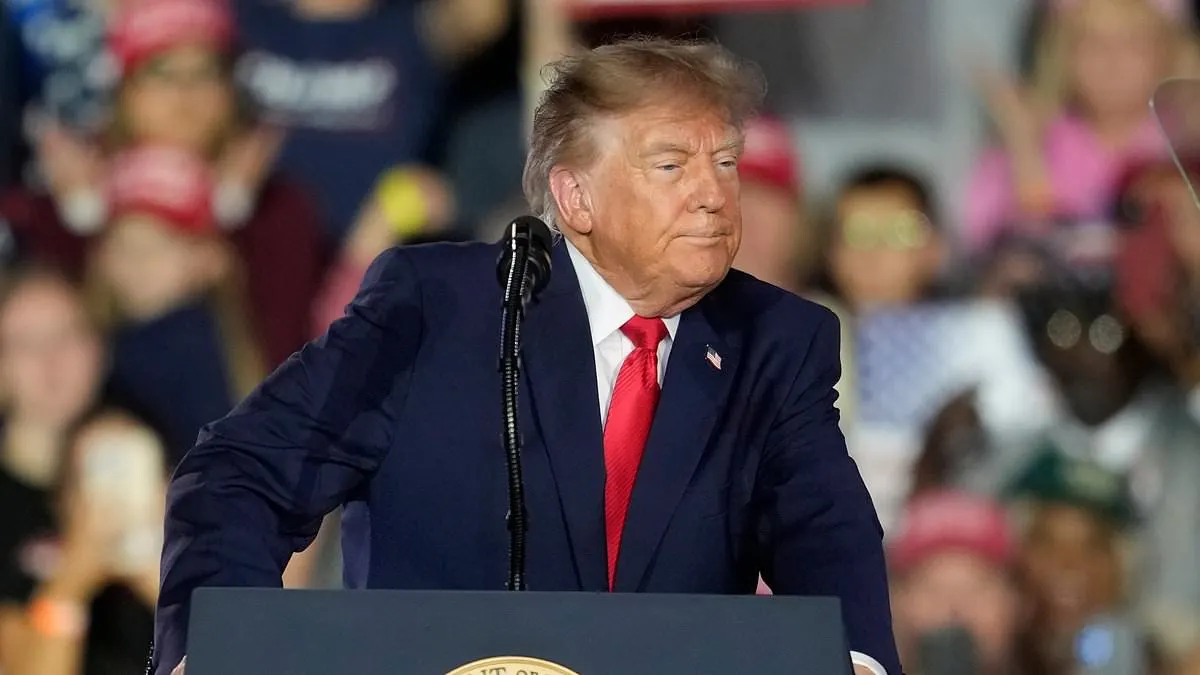
A Morning Consult poll found that 56 per cent of voters disapprove of President Donald Trump’s performance, against 41 per cent who approve, giving him a net rating of minus 15, the lowest of either term. The figures come ahead of the midterm elections and coincide with a seven-point Democratic lead among likely voters on the generic congressional ballot, raising concern among Republicans about the party’s prospects.
The poll also found that 46 per cent strongly disapprove of Trump, compared with 22 per cent who strongly approve. Republican confidence in the party’s direction has fallen to 68 per cent, from 82 per cent in early 2025, while voters say the administration is not giving enough attention to prices and housing costs. Some Republican lawmakers privately warn that a poor election result could weaken Trump’s influence, though others expect him to remain a force in the party.
- Sources
- 2
- Outlets
- 1
- Left · Centre · Right
- 0 · 0 · 2
In short
- Trump’s net approval rating is minus 15, his lowest in either term.
- Democrats lead Republicans by seven points among likely voters.
- Some Republicans fear election losses could reduce Trump’s influence.
How this story developed
- 32 minutes ago A Morning Consult poll found that 56 per cent of voters disapprove of President Donald Trump’s performance, against 41 per cent who approve, giving him a net rating of minus 15, the lowest of either term.
Full account
Donald Trump enters the final day before the US midterm elections with the weakest approval rating reported for either of his terms, according to a Morning Consult survey. It found that 41 per cent of voters approved of his performance and 56 per cent disapproved, a net rating of minus 15 points. Opposition was also more intense than support: 46 per cent strongly disapproved, compared with 22 per cent who strongly approved. The figures suggest a difficult political climate for Republicans, although a president’s approval rating cannot by itself establish the outcome of individual races.
Morning Consult found Democrats ahead by 50 per cent to 43 per cent among likely voters asked which party they would support for Congress. Its findings also point to unease within the Republican electorate. The proportion of Republican voters who thought their party was heading in the right direction had fallen to 68 per cent, from 73 per cent four weeks earlier and 82 per cent early in 2025. Meanwhile, 23 per cent said it was on the wrong track, up from 12 per cent. On household costs, voters saw a gap between their priorities and the administration’s: 72 per cent said lowering prices should be a top priority, while 49 per cent believed Washington was treating it as one. The equivalent figures for housing costs were 59 per cent and 39 per cent.
A separate final round of New York Times and Siena Research Institute polling showed Democrats leading in several closely watched Senate contests, including races in Michigan, Texas, Maine, Ohio, Kansas and Alaska. It put the Democrat one point ahead in Iowa. Some of the reported leads were narrow, and the Maine result was described as within the poll’s margin of error. The Times also drew attention to a challenge in interpreting its surveys: registered white Democrats responded at a substantially higher rate than registered white Republicans. The state polls therefore offer a picture of the contests immediately before voting, rather than a reliable forecast of which seats will change hands.
Trump has held rallies to encourage Republican turnout and has urged supporters to treat the election as consequential for the remainder of his presidency. Behind the scenes, Republicans appear divided over how much responsibility he would bear for a poor result. One report cites lawmakers who fear that losses in Congress could weaken his influence within the party; another quotes an adviser arguing that Trump has done all he can to help its candidates. Those competing assessments may become sharper after the votes are counted. For now, the national approval figures and the battleground surveys both give Republicans reason for concern, while leaving the scale and location of any losses unresolved.
Where outlets differ
From the full account, which is AI-written from the sources:
Source 1 concentrates on Trump’s national approval, voters’ financial concerns and reported doubts among Republican lawmakers about his influence. Source 2 concentrates on state Senate polling and campaign activity, and quotes a Trump adviser defending his efforts. Source 2 also highlights unequal response rates in the Times/Siena polls, a qualification absent from Source 1.
Steelman: both sides, in good faith
The strongest fair case each way — we don't pick a winner.
The case for
The poll suggests that voters’ dissatisfaction with Trump and concerns about prices and housing could put Republicans at a disadvantage, while the drop in Republican confidence may signal unease within the party. Republicans who fear a poor result could weaken Trump’s influence have reason to see the ratings as a warning about the party’s prospects.
The case against
A poll is a snapshot of opinion ahead of an election, not a prediction of its result, and voters may weigh candidates, local issues and turnout differently when they vote. Republicans who expect Trump to remain influential can argue that one poor polling period or election result would not necessarily determine his longer-term standing in the party.
Explained simply
In US midterm elections, voters choose members of Congress halfway through a president’s four-year term. All seats in the House of Representatives and about a third of the Senate are contested, and the results can affect which party controls Congress and how readily the president can pass laws.
Donald Trump is a Republican president, and Republicans currently hold power in Washington. The Democratic and Republican parties compete for seats in Congress; voters’ views of the president and of issues such as prices and housing costs can influence how they vote.
A party that loses seats may find it harder to advance its plans, while its leaders may face pressure to change course. Election results can also shape how much influence a president has within their own party, though that influence can continue after a setback.
Coverage · 2 sources
Bias meters
From 2 rated sources.
Elections Government Politics World