Politics news and discussion on TalkFuse.
Trump’s space transportation policy calls for new spaceport on federal land
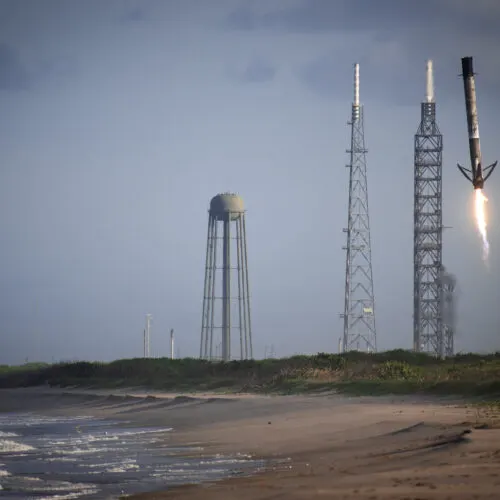
President Donald Trump has signed a new national space transportation policy calling for the construction of additional spaceports to cope with a forecast surge in launches and reentries, aiming to support more than 1,000 such operations annually by 2030. The memorandum replaces a 2013 policy from the Obama administration and reflects how dramatically the commercial launch industry has grown, with demand now driven by communications services, surveillance, military targeting and orbital data centres. It directs the Pentagon and NASA to jointly prioritise infrastructure investment at existing federal ranges and instructs the Department of the Interior to identify federal land for a new reentry site, reportedly to address concerns about capacity limits and resilience at current facilities.
There were 176 orbital launch attempts from US soil last year, almost ten times the 2013 total, with SpaceX alone responsible for 165 Falcon 9 launches plus five Starship suborbital tests. America's four federal spaceports are Cape Canaveral Space Force Station and Kennedy Space Center in Florida, Vandenberg Space Force Base in California, and Wallops Flight Facility in Virginia, though only the Florida and California sites can currently handle heavy-lift rockets. The policy also pushes for greater transparency by requiring regular publication of range schedules, and follows a Pentagon study — described by Air Force Secretary Troy Meink in May — concluding that a third heavy-lift site is needed, with Space Force officials projecting up to 700 combined annual launches from Cape Canaveral and Vandenberg by 2036.
In short
- Trump signs policy targeting 1,000+ US launches and reentries yearly by 2030
- Interior Department told to identify federal land for a new reentry site
- US launches nearly tenfold since 2013; only two sites handle heavy-lift rockets
Steelman: both sides, in good faith
The strongest fair case each way — we don't pick a winner.
The case for
The explosive growth in commercial space activity—from around 18 launches in 2013 to 176 last year—reflects genuine economic dynamism and strategic imperative. Pentagon assessments confirm that America's existing spaceports face genuine capacity limits, with heavy-lift capability concentrated at only two sites; expanding infrastructure on underutilised federal land is therefore a necessary investment to maintain American competitiveness and military resilience in an increasingly critical domain.
The case against
Whilst industry growth is real, the expansion of space infrastructure on federal land warrants caution regarding environmental impact and fiscal priorities. Each launch generates noise, emissions, and potential ecological disruption that merit rigorous environmental review and community consultation before proceeding. The substantial public investment required might alternatively support private commercial development of alternative solutions, and accelerating launch operations without addressing their environmental footprint sits uneasily with broader sustainability and climate objectives.
Explained simply
US spaceports are launch and landing sites for rockets and spacecraft. The main federal facilities are in Florida, California and Virginia, but only the Florida and California sites can currently handle the largest rockets. Commercial companies such as SpaceX now account for much of the rapid growth in US launches.
Demand comes from a range of uses, including communications, government and military missions, and plans for data centres in orbit. The new policy sets a goal of supporting more than 1,000 launches and returns a year by 2030, and calls for federal agencies to invest in existing ranges and identify federal land for a re-entry site.
The policy replaces one issued in 2013, when US launch activity was far lower. More launch capacity could help accommodate future missions and reduce reliance on a small number of sites; publishing range schedules is also intended to make it easier to plan operations.
Government Politics Space Technology