World news and discussion on TalkFuse.
Trump’s White House ballroom foes face ‘very tough argument’ at Supreme Court, legal experts say
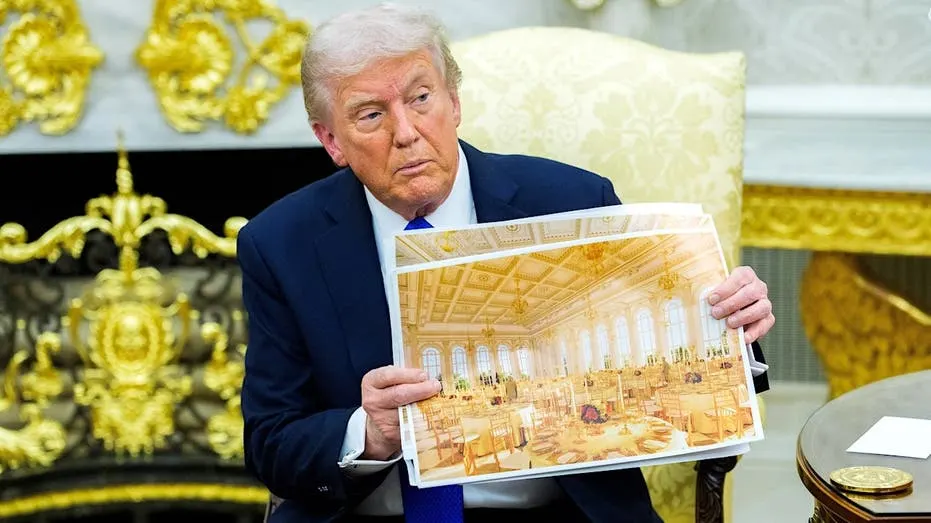
President Donald Trump has said he will take a legal dispute over his planned White House ballroom to the Supreme Court after the D.C. Circuit upheld a lower-court decision against the project. Two legal experts told Fox News that opponents may face a difficult argument because the Supreme Court could resolve the case on standing without deciding the wider constitutional question.
The article says Trump made the pledge in a lengthy social-media post on Friday. It presents the ballroom as the subject of a continuing construction and legal battle, with former administration official Stephen Miller describing the facility as a national-security necessity.
In short
- Trump plans to appeal the White House ballroom dispute to the Supreme Court.
- Legal experts say opponents may struggle to establish standing.
- The Court could avoid the broader constitutional issue.
Steelman: both sides, in good faith
The strongest fair case each way — we don't pick a winner.
The case for
Supporters of the ballroom project argue that the President requires operational authority to make necessary improvements to the White House as his residence and workplace, particularly when national security is cited as a justification. They contend that the President should not be impeded by procedural technicalities and standing doctrine from exercising legitimate executive functions, and that the focus on jurisdictional grounds rather than substantive merits represents an evasion of the real question of whether the President has reasonable authority to modernise presidential facilities.
The case against
Opponents argue that presidential power has constitutional limits and that legal procedures exist to constrain executive authority precisely because no official is above the law. They contend that the project either lacks proper authorisation, violates established procedures for such construction, or raises legitimate concerns about the deployment of resources, and that upholding lower court decisions protects institutional checks and balances that prevent potential abuse whilst maintaining the rule of law.
Explained simply
The White House is the official residence and workplace of the US president. Changes to its grounds and buildings can involve federal rules on historic preservation, public land and the president’s authority over the property.
A legal challenge can be brought only by people or organisations that meet the rules for standing, which generally require them to show that a decision has affected them in a direct and specific way. Courts may dismiss a case on that basis without ruling on the broader constitutional questions.
The dispute therefore concerns both the proposed building work and who is entitled to challenge it in court. Its outcome could affect how similar changes to the White House are reviewed and contested.