Tuchel Defends Tactics After England Semi Exit as Trump Joins Critics
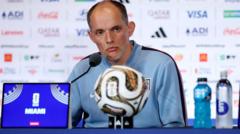
England manager Thomas Tuchel has stood by his tactical decisions following the World Cup semi-final loss to Argentina, accepting full accountability for the 2-1 defeat whilst expressing no regrets about his in-game choices. The manager framed the loss as a difficult moment for the team to move past, though his strategic adjustments—particularly shifting to a defensive five-at-the-back formation—have drawn criticism after England conceded twice following Anthony Gordon's early goal that had put them ahead.
Tuchel's decision-making has faced high-profile scrutiny, with US President Donald Trump amongst those questioning the tactical setup, specifically the deployment of striker Harry Kane into a defensive position as the match progressed. With England now preparing for the third-place play-off against France in Miami on Saturday, the episode underscores how closely elite football management decisions are examined, even at the highest political levels.
- England lost 2-1 to Argentina in the World Cup semi-final; Tuchel accepts responsibility but defends his tactical approach
- Critics including Trump questioned Tuchel's shift to defensive formation and Kane's repositioning after England's early lead
- England plays France for third place in Miami on Saturday
New here? Start with this
Tuchel took charge of the England men's team with the aim of ending the country's long wait for a major men's trophy, and this World Cup campaign was seen as the biggest test of his tenure so far. England reached the semi-finals before losing 2-1 to Argentina, a result that ended their run and prompted debate over the tactical choices made during the match, including a switch to a more defensive formation after taking an early lead.
The scrutiny of Tuchel's decisions has extended beyond football circles, with US President Donald Trump among the public figures to comment on his selections. This has added an unusual political dimension to what would normally be a purely sporting discussion, drawing wider attention to the manager's methods.
England now face France in the third-place play-off in Miami, a fixture that decides final placing at the tournament rather than the title itself, but one that will still shape perceptions of the team's overall performance and Tuchel's future direction.
Both sides, in good faith
The strongest fair case each way — we don't pick a winner.
The case for
Supporters of Tuchel's approach argue that protecting a slender 1-0 lead against a team of Argentina's attacking quality is orthodox and defensible game management, and that shifting to a back five was a reasonable attempt to shore up a defence under mounting pressure rather than a reckless gamble. They would note that hindsight bias makes any losing decision look foolish, that Tuchel has taken full personal responsibility rather than blaming players, and that a manager who trusts his read of the match state should not be judged solely on the outcome when the underlying logic – denying space and forcing Argentina to break down a compact side – was sound.
The case against
Critics contend that withdrawing attacking impetus, including repositioning Harry Kane defensively, ceded momentum and territory to Argentina at precisely the moment England should have pressed their advantage, and that conceding twice after going ahead suggests the change invited pressure rather than relieving it. They would argue that a manager's willingness to stand by a decision does not make it correct, that England had the players to see out the game in a more front-footed shape, and that the criticism reflects legitimate footballing judgement about risk management in a knockout semi-final rather than mere Monday-morning quarterbacking.
Coverage
- BBC Sport — Tuchel takes blame for England defeat, calls loss a lasting scar
- BBC Sport — ‘They made him a defensive player’ – Trump questions Kane role in semi