Uefa has formed a rare but fragile united front against Fifa in battle for football’s future | Nick Ames and Matt Hughes
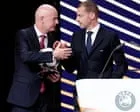
Uefa’s 55 member associations have united to threaten a boycott of Fifa tournaments unless Gianni Infantino abandons plans for private investment in the World Cup. The unusually broad agreement strengthens Uefa president Aleksander Ceferin’s position, but remains fragile as Fifa is expected to pressure individual associations before its September deadline.
Fifa has issued “clarifications” while maintaining its proposed 19 September timetable for the Fifa Forward Enterprise plan, which Uefa members believe was developed without proper consultation. European frustration was also heightened by Fifa’s intervention in Folarin Balogun’s suspension, reportedly following calls from Donald Trump, and by concern that financial incentives could divide smaller or mid-sized national associations.
- Uefa threatens Fifa tournament boycott over World Cup investment plans
- European unity is strong but vulnerable to pressure
- Balogun case intensified resistance to Infantino
New here? Start with this
Fifa is the world governing body for football, while Uefa governs the game in Europe and brings together 55 national associations. Fifa organises the men’s and women’s World Cups; Uefa runs European competitions and represents its members in discussions with Fifa.
The dispute concerns a Fifa proposal called the Forward Enterprise plan, which could bring private investment into the World Cup. Uefa says its members were not properly consulted, and some fear the plan could affect how football’s revenues and decision-making are shared between national associations.
Uefa president Aleksander Ceferin leads the European body, while Gianni Infantino is Fifa’s president. Their relationship matters because Fifa relies on national associations to take part in its tournaments, and disagreement between the organisations could affect how major competitions are governed and funded.
Both sides, in good faith
The strongest fair case each way — we don't pick a winner.
The case for
Uefa’s united threat can be defended as a way to protect football’s governing bodies from private investors gaining influence over the World Cup, and to insist that major changes receive proper consultation. A collective stance may also help smaller associations resist pressure to accept financial incentives that could weaken their independence.
The case against
Fifa could argue that private investment may provide funding and expertise to support the game, provided safeguards protect its integrity and the proceeds are shared fairly. It may also maintain that the Forward Enterprise plan should proceed on its stated timetable, while engaging with member associations through its clarifications rather than allowing a threatened boycott to dictate policy.