World news and discussion on TalkFuse.
UK and US condemn ‘cruel’ second jail term handed to Hong Kong activist Joshua Wong
Developed over time first seen 2 weeks ago
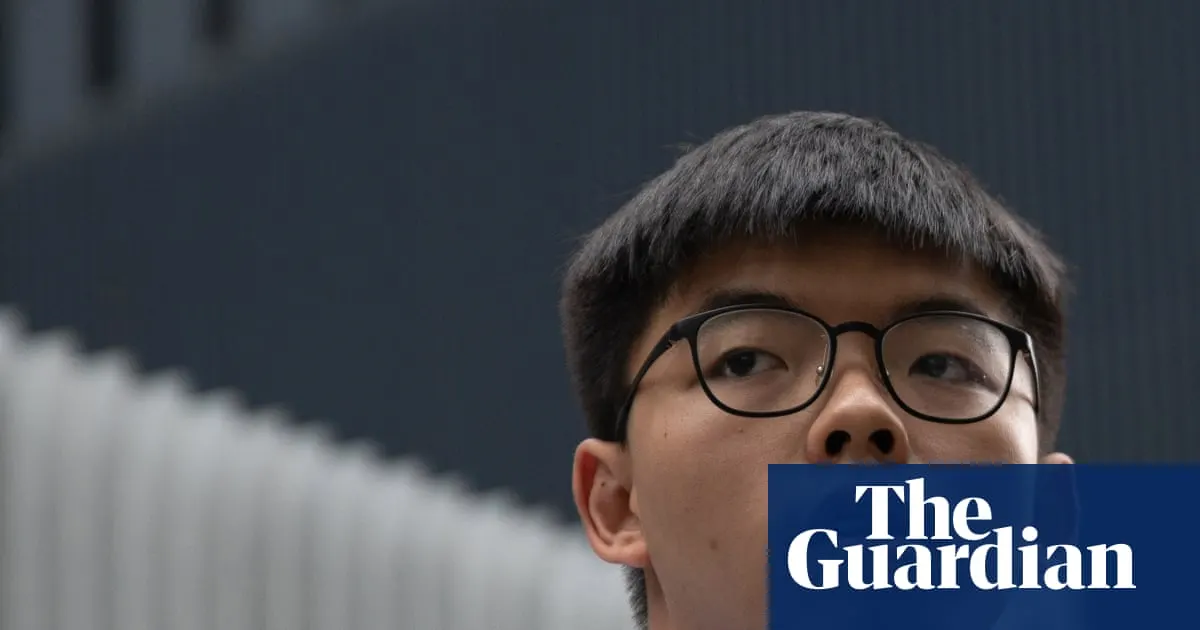
The UK and US have condemned a new 10-year prison sentence for Hong Kong pro-democracy activist Joshua Wong, calling for his release. Their statements renewed criticism that Hong Kong’s national security law is being used to punish political expression and dissent.
Wong, 30, pleaded guilty to foreign collusion and is the only person prosecuted twice under the law. He has spent six years in detention and had been due for release in January 2027, so the new sentence came months before that date. China urged foreign parties to stop commenting on Hong Kong judicial cases, while critics said the case underscored concerns about the city’s promised autonomy after its 1997 handover.
- Sources
- 2
- Outlets
- 2
- Left · Centre · Right
- 2 · 0 · 0
In short
- UK and US condemn Wong’s 10-year sentence.
- Wong has spent six years in detention.
- China urged foreign parties to stop commenting on the case.
How this story developed
- 2 weeks ago New reactions have emerged after Hong Kong activist Joshua Wong received a second jail term, with the UK and US condemning the 10-year sentence and calling for his release.
- 2 weeks ago The UK and US have condemned a 10-year prison sentence handed to Hong Kong pro-democracy activist Joshua Wong, calling for his release. The case has renewed criticism that Hong Kong’s national security law is being used to punish political expression and dissent.
- 2 weeks ago The UK and US have condemned a new 10-year prison sentence for Hong Kong pro-democracy activist Joshua Wong, calling for his release. Their statements renewed criticism that Hong Kong’s national security law is being used to punish political expression and dissent.
Full account
The UK and the US have condemned a further 10-year prison sentence imposed on Hong Kong democracy activist Joshua Wong under the territory’s national security law. Wong, 30, pleaded guilty to conspiring to collude with foreign forces. Critics say the law has been used to suppress political opposition.
The UK Foreign Office said the sentence showed the law was being applied to target political expression and participation. It called for an end to prosecutions it regards as unjust and urged authorities to uphold the rights and freedoms set out in the 1984 Sino-British Joint Declaration. The US consulate in Hong Kong also condemned the sentence and called for Wong’s immediate release, saying he had been imprisoned since December 2020. China’s government responded by telling outside parties to stop making what it called irresponsible comments on Hong Kong judicial cases.
Wong was already serving a sentence in a separate national security case and had been expected to leave prison in January 2027. The new conviction means he will remain in custody beyond that date. Amnesty International said the timing was particularly harsh because his release under the earlier conviction had been approaching. Human Rights Watch and other critics also described the sentence as unjust and argued that the case punished dissent.
The sentencing judge characterised the conspiracy as grave and said Wong had played a leading role. He set 13 years as the starting point, then reduced the term in light of Wong’s guilty plea and other mitigation. The judge said the sentence should reflect the seriousness of the offence and deter similar conduct. Wong appeared calm in court and thanked supporters before leaving. In a statement reported by the Associated Press, he said his political involvement was not motivated by hatred, that he had not advocated Hong Kong independence, and that he had spent his time in prison studying and reading.
The case has drawn renewed attention to the shrinking space for dissent in Hong Kong since the 2019 protest movement. The UK’s latest report on Hong Kong also cited Wong’s case as a sign of concern about the widening application of national security laws. Wong’s supporters have urged governments to press for his release.
The first report foregrounds the UK and US condemnations, reactions from human rights organisations and the dispute over Wong’s expected release date. The Associated Press gives more detail about the court’s reasoning, the calculation of the sentence and Wong’s statement from prison, as well as the courtroom response. The first report describes the new term as a second jail sentence under the law; the AP distinguishes it from Wong’s existing term in a separate national security case.
Steelman: both sides, in good faith
The strongest fair case each way — we don't pick a winner.
The case for
The UK and US can argue that condemning Wong’s sentence and seeking his release is justified because the case raises serious concerns about whether Hong Kong’s national security law is being used to penalise political dissent. The second term, imposed while he was already detained and before his expected release, may also be seen as deepening doubts about the autonomy and freedoms promised after the 1997 handover.
The case against
China can argue that Wong was convicted under Hong Kong law after pleading guilty to foreign collusion, and that the sentence is a matter for the courts rather than foreign governments to dictate. On this view, outside condemnation risks politicising judicial proceedings and intruding on China’s sovereignty, while national security rules are necessary to protect public order.
Explained simply
Hong Kong returned from British to Chinese rule in 1997 under an agreement promising it a high degree of autonomy for 50 years. It has its own courts and laws, while defence and foreign affairs are handled by China.
Joshua Wong became a prominent figure in Hong Kong’s pro-democracy movement, which has called for greater public influence over the city’s government. Beijing introduced a national security law for Hong Kong in 2020, covering offences including collusion with foreign forces. The law has led to prosecutions of activists and other people involved in political activity.
The case has drawn attention to how the law is applied and how much room remains for political dissent in Hong Kong. The UK and US have criticised the sentence, while China says foreign governments should not comment on Hong Kong court cases.
Coverage · 2 sources
Bias meters
From 2 rated sources.