UK Energy Bills to Hit Three-Year High as October Price Cap Rises 4%
Developed over time first seen 2 months ago
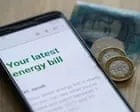
The government is not expected to offer further energy-bill support before October, when the price cap will rise by 4% and take typical household bills to a three-year high. Ministers have acknowledged the pressure on households but say they may consider more targeted help if another price shock occurs in January, while focusing on reducing energy costs over the longer term.
The October rise follows a 13% increase in July, attributed to higher global energy prices linked to the war involving Iran and disruption around the Strait of Hormuz. Removing VAT from domestic electricity bills is expected to save average households £45 a year; the Resolution Foundation has proposed support for households earning under £24,000, potentially reaching 40% of households and saving £175 on average, amid forecasts of a further rise of up to 9% in January.
- Energy bills will rise 4% in October.
- Further help may be considered for January.
- Thinktank urges targeted support for lower earners.
New here? Start with this
Rising bills stem from the energy price cap, a limit Ofgem sets on what suppliers can charge for a typical household's gas and electricity. The cap moves up or down roughly every three months based mainly on wholesale energy prices, meaning it does not stay fixed and can change repeatedly within a single year, as has happened again now.
Ofgem is the independent regulator responsible for setting this cap and overseeing the energy market on behalf of consumers. Wholesale gas prices, largely dictated by international markets and global events, are a major factor behind the cap's level, since the UK relies heavily on gas both for heating and for generating electricity.
This matters because the cap directly affects what millions of households pay for energy each year, and successive rises add pressure to already stretched household budgets. It also raises questions for the government about whether further support is needed, given that the underlying cause lies largely in global market conditions rather than domestic policy.
Both sides, in good faith
The strongest fair case each way — we don't pick a winner.
The case for
Those sympathetic to the Government's position argue that energy bills are overwhelmingly driven by global wholesale gas markets, not domestic policy, and that blaming ministers for price movements rooted in Middle East conflict and European heatwaves is fundamentally unfair. They point out that the Government has still delivered a genuine, if partial, offset through the electricity VAT cut, and that Andy Burnham's candid acknowledgement that the rise is "difficult" reflects honesty rather than evasion. On this view, the 2024 pledge to cut bills by £300 was a reasonable aspiration based on then-available forecasts, and it is unreasonable to hold any government responsible for subsequent geopolitical shocks and depleted winter gas stocks that no domestic policy could have prevented.
The case against
Critics argue that a specific, quantified election promise to cut bills by £300 was made to voters and should be judged against the outcome, not the excuses offered afterwards; bills have instead risen by nearly £400, a reversal too large to be waved away as bad luck. They contend that a modest £45 VAT cut arriving the same day as a £60 price rise looks like a token gesture that fails to address the underlying vulnerability of a gas-dependent energy system, and that repeated, foreseeable price shocks point to a deeper failure to reduce reliance on volatile wholesale gas markets. For consumer advocates and opposition politicians alike, the recurring pattern of promised relief followed by fresh increases justifies holding the Government to account for the growing burden on fuel-poor households, regardless of the external triggers cited.
Full account
Energy regulator Ofgem has confirmed that the price cap governing bills for around 22 million households in Great Britain will rise by 4% from 1 October, pushing the typical annual gas and electricity bill to £1,723 — its highest level in three years and roughly £60 more than the current quarterly cap, equivalent to about £5 a month. Around a third of households on fixed-rate tariffs will be unaffected by the change. The increase comes only three months after the cap jumped by 13% in July, meaning bills have now risen in consecutive quarters and sit some £350 to £400 higher than when Labour took office in 2024 pledging to cut typical bills by £300 by the end of the decade.
Ofgem and industry analysts attributed the rise chiefly to volatile wholesale gas prices linked to the ongoing conflict in the Middle East, with European heatwaves adding further strain by pushing up demand for gas-fired power to run air conditioning. Richard Neudegg of the comparison site Uswitch warned households face 'another difficult winter', with gas costs almost 27% higher than a year earlier just as the heating season begins, and cautioned that further increases could follow. Cornwall Insight, whose earlier forecast of roughly £1,729 proved close to the final figure, has predicted a further rise of around 9% when the cap is next reset in January, meaning the pressure on household budgets may not ease soon.
Ministers pointed to a cut in VAT on electricity bills, introduced from October and worth roughly £45 a year to a typical household, alongside the removal of around £150 in other costs earlier in the year, as evidence the government was cushioning the impact. Energy Secretary Miatta Fahnbulleh told the BBC's Today programme that people were 'under huge amounts of pressure' and pointed to wider cost-of-living support including capped bus fares, expanded free school meals and breakfast clubs, and childcare savings. She rejected the suggestion that net zero policies or green levies were to blame, arguing that Britain's vulnerability to global fossil fuel markets — exposed first by the war in Ukraine and now by the Middle East conflict — was the real driver, and made the case for accelerating homegrown renewable energy and grid investment as the long-term fix. She also acknowledged standing charges were a 'massive bug bear' and said Ofgem was reviewing how these costs are recovered fairly.
The renewed rise reignited calls for further government intervention. Clare Moriarty of Citizens Advice described it as part of a 'relentless erosion of living standards', while TUC general secretary Paul Nowak repeated calls for a windfall tax on bank profits to help fund support for struggling households — a proposal Fahnbulleh declined to endorse, saying taxation was a matter for the Chancellor, though she noted energy firms were already subject to taxes on excess profits. The response also split along party lines: Conservative shadow net zero secretary Claire Coutinho accused Labour of breaking its £300 pledge and presented scrapping green levies as an alternative 'cheap power plan', while government figures maintained that without the VAT cut and other measures the increase would have been steeper still.
Where outlets differ
The Guardian (Source 2) gives the most detailed statistical breakdown — unit rates for gas and electricity, the £150 previously removed from bills, and context on how Ofgem's revised 'typical use' assumptions affect the headline figure — and centres its criticism on Citizens Advice and the TUC.
The Daily Mail (Source 3) frames the story more critically of the government, calling the VAT cut 'token', emphasising the gap between Labour's £300 pledge and the actual ~£400 rise, giving prominent space to Conservative criticism from Claire Coutinho, and highlighting forecasts of a further 9% rise in January.
The BBC account (Source 1) is built almost entirely around Energy Secretary Miatta Fahnbulleh's own remarks, giving most space to the government's defence of its net zero strategy and wider cost-of-living measures, with no mention of Conservative criticism.
Source 3 quotes comments attributed to Andy Burnham on the rises being 'difficult' for families, whereas Sources 1 and 2 quote Fahnbulleh as the main government voice — suggesting the outlets drew on different spokespeople or appearances.
Sources differ slightly on the cause of the wholesale price rise: Source 2 refers to 'the war on Iran', while Sources 1 and 3 describe it more generally as Middle East conflict/crisis.
Coverage
- The Guardian — UK energy secretary says looking at ‘what more we can do’ as typical annual bill rises to £1,723 from October – business live
- The Guardian — Britons to face highest price cap in three years as energy bills rise 4% from October