UK households free to install plug-in balcony solar panels from end of August
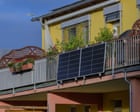
UK households will be legally allowed to buy and install plug-in "balcony solar panels" from 27 August, after the government changed the law to let major retailers sell them for the first time. Unlike conventional rooftop solar, these panels can simply be plugged into a standard wall socket to generate electricity from a balcony, terrace or shed roof, making them accessible to renters and flat-dwellers who lack rooftop access. The move is significant because it opens up cheap, self-generated power to millions of people previously excluded from home solar, at a time when energy costs are rising sharply.
Retailers including Currys, B&Q and Asda will be able to sell the systems, expected to cost at least £400 and cut energy bills by roughly £70–£110 a year, meaning a payback period of four to seven years. The panels, already common in Germany and Spain, typically have an 800-watt capacity, around a fifth of a standard rooftop system, so cannot power a home alone but can offset grid usage when the sun is out. The launch comes as record numbers of Britons install rooftop solar amid soaring global energy prices linked to the war in Iran, with 269,000 UK installations completed last year, and industry figures suggest the change could also pave the way for household plug-in battery storage.
In short
- Plug-in balcony solar panels become legal to sell in the UK from 27 August.
- Aimed at renters and flat-owners without rooftop access; costs from £400.
- Could save £70-£110 a year on bills, paying back in four to seven years.
Steelman: both sides, in good faith
The strongest fair case each way — we don't pick a winner.
The case for
Expanding renewable energy access to millions of renters and flat-dwellers fills a crucial gap in the UK's energy transition, whilst addressing cost-of-living pressures through accessible, affordable technology already proven safe in Germany and Spain. The government's decision to establish appropriate safety standards allows ordinary people to participate in decarbonisation without waiting for landlord approval or expensive installation, democratising solar energy in a way few other technologies can match.
The case against
Legitimate concerns persist about electrical safety when high-wattage generation is plugged into household circuits not historically designed for bidirectional power flow, particularly without robust oversight of installation standards in rental properties where tenants may lack technical knowledge or recourse. There is also a risk that lower-output balcony systems could reduce uptake of more efficient rooftop solar, and that rapid deployment may outpace grid management frameworks needed to ensure stability across thousands of small, unmonitored generation points.
Explained simply
Plug-in balcony solar panels are small solar systems that generate electricity by connecting directly to a household wall socket, rather than being permanently fixed to a roof. They can be placed on balconies, terraces or shed roofs, making them accessible to people renting their homes or living in flats. These systems appeal to renters and flat-dwellers because conventional rooftop solar requires property ownership or landlord permission, neither of which many renters can obtain.
Each panel typically costs around £400 and can reduce annual electricity bills by roughly £70 to £110, with a payback period of four to seven years. A single unit generates approximately 800 watts, roughly a fifth of a standard rooftop system, so whilst it cannot fully power a home, it meaningfully reduces the electricity drawn from the grid on sunny days. The modest output makes these panels suited to supplementing rather than replacing grid electricity.
Household energy bills have been rising sharply across the UK, making renewable energy and cost-reducing measures increasingly attractive to householders. Balcony solar panels are already established in several European countries including Germany and Spain, where they have proved particularly useful for residents of flats and terraced properties without suitable roof space. In the UK, millions of flat-dwellers currently have no practical way to install solar power, creating a significant gap in renewable energy access compared to homeowners with suitable roofs.
Business Government Middle East Politics Software Technology UK World