UK politics live: Government condemns ‘thuggish and intimidating’ far-right protesters in Portsmouth
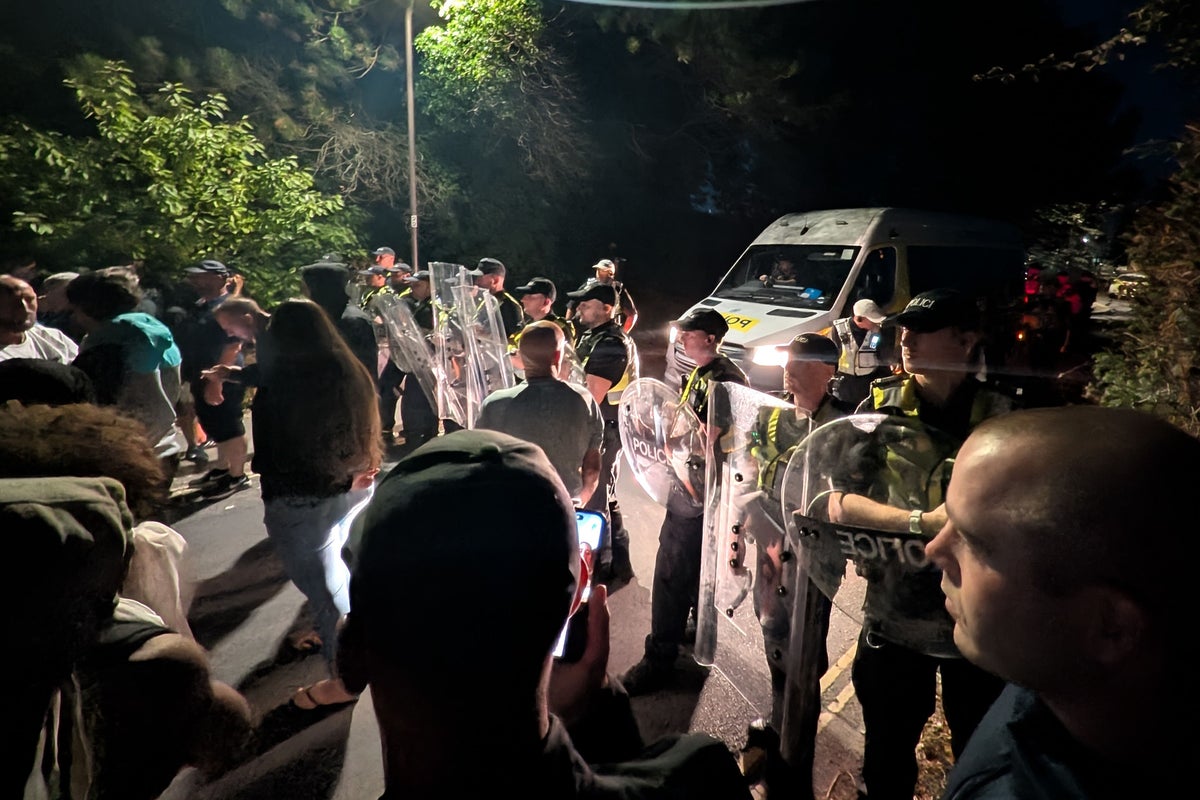
The government has strongly criticised far-right protesters who blocked roads and confronted riot police in Portsmouth over the weekend, branding their behaviour "thuggish and intimidating." The unrest erupted after around 140 migrants who had crossed the Channel in a small boat were brought ashore, drawing hundreds of demonstrators who chanted "stop the boats" and vowed to remain overnight. It follows a similar protest in Dover on Saturday, where masked protesters blocked a major road out of the port, and comes amid growing concern that people-smuggling routes are shifting away from Dover to other points along England's south coast.
Treasury minister Emma Reynolds told Sky News the protest had "crossed the line" of legitimate peaceful demonstration, while backing the right to protest in principle. Hampshire and Isle of Wight police and crime commissioner Donna Jones said mutual aid officers, including from the Metropolitan Police, had to be deployed to help hold back several hundred protesters, warning that "this is just the start" if the pattern continues, and that Portsmouth is "not set up" to handle such incidents as Dover has been. Separately, Chancellor John Healey is due to deliver a speech on Monday setting out an "active state" approach to economic growth ahead of next month's Budget, including a £150 million fund via the British Business Bank to back innovative firms in the North of England.
- Government condemns Portsmouth far-right protests as "thuggish and intimidating"
- Unrest followed arrival of about 140 Channel migrants; echoes Dover protest
- Police warn smuggling routes may spread beyond Dover along south coast
Both sides, in good faith
The strongest fair case each way — we don't pick a winner.
The case for
Supporters of the protesters' underlying grievance argue that mass demonstration, even when noisy and disruptive, is a legitimate democratic response to years of governments promising to control Channel crossings and failing to deliver. They contend that communities like Portsmouth had no say in becoming a new landing point for small boats, and that when people feel unheard through normal political channels, sustained public pressure, including blocking roads overnight, is a proportionate way to force the issue onto the national agenda. For them, the strength of feeling reflects genuine anxiety about border control and fairness, not simple bigotry.
The case against
Ministers, police and their supporters argue that confronting riot police, wearing masks and blockading roads crosses decisively from protest into intimidation and disorder, endangering officers, residents and the migrants who had just arrived. They point out that policing such crowds diverted significant resources, including mutual aid officers from London, and that a small town like Portsmouth is ill-equipped to absorb repeated incidents of this scale. They believe that defending the right to peaceful protest requires clearly condemning behaviour that tips into threats and lawlessness, both to protect public safety and to prevent such scenes recurring and escalating further along the coast.