Culture news and discussion on TalkFuse.
UK to get best eclipse since 1999 as Moon blocks out Sun across Europe
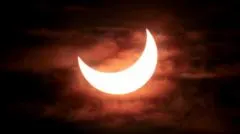
The UK will witness its fullest solar eclipse since 1999 on Wednesday evening, with the whole country experiencing the event and up to 96% of the Sun's disc obscured by the Moon in some areas. Experts describe it as the best eclipse the UK will see for the next 50 years, while parts of Europe including northern Spain, Russia, Greenland, Iceland and Portugal will witness a full total eclipse, drawing large crowds of enthusiasts.
The peak will occur between 18:58 and 19:15 BST in the UK, with Devon, Cornwall and western Pembrokeshire seeing the greatest coverage at 94-96%, while other regions including Wales, Northern Ireland and parts of the West Midlands and Scotland will see 92-94%. Weather looks set to be mixed, with clear skies expected across much of the UK but cloud and possible rain in parts of Scotland, Northern Ireland and northern England. In Spain, where roughly half a million visitors have gathered, totality will last around 100 seconds, with the next comparable UK eclipse not due until 2081.
In short
- UK to see its best solar eclipse since 1999 on Wednesday evening
- Up to 96% Sun coverage in UK; total eclipse visible in Spain, Russia, Iceland
- Next similarly strong UK eclipse won't occur until 2081
Explained simply
A solar eclipse happens when the Moon passes between Earth and the Sun, hiding some or all of the Sun from view. How much is covered depends on where you are: during a partial eclipse, a bright crescent of the Sun remains visible, while a total eclipse briefly blocks the Sun’s face.
The Moon’s shadow moves across Earth, so different places see different amounts of the eclipse and experience it at different times. In the UK, eclipses are partial; the path of totality, where the Sun is fully covered, crosses other parts of Europe.
Astronomers predict eclipses by calculating the movements of the Earth and Moon. These events matter to skywatchers because total eclipses are rare at any one place, and they also give scientists opportunities to study the Sun’s outer atmosphere.
Art Culture Europe Geopolitics Politics Science Space Technology UK World