Ukraine hits major Russian shopping hubs in huge drone attack as Andy Burnham makes first trip to Kyiv
Developed over time first seen 2 months ago
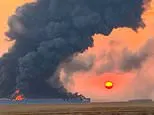
Ukraine launched a large-scale drone campaign against Russian targets to coincide with its Independence Day, striking three major logistics hubs belonging to Ozon, Russia's second-largest online retailer, after previously hitting 15 warehouses run by rival Wildberries. Kyiv accuses both firms of supplying components to the Russian military, and the strikes, which hit facilities that are far easier to reach than defended military sites, are reported to have cost Russia billions of dollars. The attacks coincided with a first visit to Kyiv by new UK Prime Minister Andy Burnham, who pledged continued British backing for Ukraine and unveiled plans to help produce long-range Scalp missiles, built on shared UK-French technology, inside Ukraine itself.
Drone strikes hit Ozon warehouses in Makhachkala, Krasnodar, Adygeysk and Nevinnomyssk in southern Russia, causing major fires and leaving several people wounded in Makhachkala, while a warehouse belonging to homeware firm Kuchenland was also hit in Krasnodar. Separately, NATO scrambled two Romanian F-16 jets and a helicopter after a suspected Russian drone crossed into Romanian airspace near Târgu Bujor having overflown Moldova. Burnham met President Zelensky alongside France's Emmanuel Macron, Germany's Friedrich Merz and the EU's António Costa as part of the Coalition of the Willing, while Russia recalled its ambassador from London, saying UK-Russia relations had sunk to "an unprecedentedly low level" over British-supplied drones being used to strike deep into Russian territory.
- Sources
- 2
- Outlets
- 2
- Left · Centre · Right
- 1 · 0 · 1
In short
- Ukraine hit Russian Ozon warehouses in a mass Independence Day drone campaign.
- New UK PM Andy Burnham visited Kyiv, pledged missile-tech support.
- Romania scrambled jets after a suspected Russian drone entered its airspace.
How this story developed
- 2 months ago New details have emerged on Ukraine's Independence Day drone campaign, including specific strikes on Ozon warehouses in Makhachkala, Krasnodar, Adygeysk and Nevinnomyssk in southern Russia, with several people reported wounded in the Makhachkala attack and major fires breaking out elsewhere, alongside a hit on homeware firm Kuchenland's Krasnodar warehouse.
- 2 months ago Ukraine launched a large-scale drone campaign against Russian targets to coincide with its Independence Day, striking three major logistics hubs belonging to Ozon, Russia's second-largest online retailer, after previously hitting 15 warehouses run by rival Wildberries.
- 2 months ago Ukraine marked its Independence Day with a co-ordinated drone campaign against major Russian logistics and shopping hubs, striking Ozon warehouses across southern Russia and reportedly attempting to hit a military cosmodrome, while also mounting a separate bid to strike Ozon, the country's second-largest online retailer, after weeks of attacks on rival Wildberries over claims it supplied components to Russia's military.
- 2 months ago New developments in the story include Russia recalling its ambassador to London, Andrey Kelin, after seven years in post, declaring UK relations at "an unprecedentedly low level", and NATO scrambling two Romanian F-16 jets after a suspected Russian drone crossed into Romanian airspace near Târgu Bujor having overflown Moldova.
- 2 months ago Ukraine launched a wave of drone strikes on Russia's Independence Day, hitting three major logistics hubs belonging to Ozon, Russia's second-largest online retailer, while also attempting to strike a military cosmodrome.
Where outlets differ
Left-leaning outlets 1
- ‘Who started the fire?’ Burnham challenges Putin on first trip to Ukraine as UK-Russia tensions growThe Independent
Only here: started, fire, challenges, putin, russia
Right-leaning outlets 1
Only here: hits, major, russian, shopping, hubs
Every side used: burnham, trip, ukraine
Headline columns compared word for word; nothing in them is AI-written.
Steelman: both sides, in good faith
The strongest fair case each way — we don't pick a winner.
The case for
Supporters argue that Ukraine has every right to strike infrastructure that helps fund and sustain Russia's war machine, including commercial logistics networks that keep the Russian economy and, by extension, its military effort running, especially given years of Russian strikes on Ukrainian homes, energy grids and civilians. They see continued and deepening British support, including sharing advanced missile technology, as a principled and necessary stand for Ukrainian sovereignty and international law, sending a clear signal that aggression carries a real and rising cost.
The case against
Critics caution that hitting retail logistics hubs and other civilian-linked commercial sites, even if loosely tied to the war economy, risks blurring the line between legitimate military targets and ordinary economic life, harming workers and civilians who bear little responsibility for state decisions. They also worry that closer British involvement, particularly the transfer of long-range missile technology, edges NATO states further towards direct confrontation with Russia, raising the risk of miscalculation or escalation, as underscored by incidents like the drone incursion into Romanian airspace, and may narrow rather than widen the path to a negotiated end to the war.
Explained simply
Ozon is Russia's second-largest online retailer, similar to Amazon, with warehouses and logistics hubs across the country. Ukraine has been striking such civilian-linked infrastructure for weeks, having previously targeted rival retailer Wildberries, as part of a wider campaign of long-range drone attacks intended to disrupt Russia's economy alongside its military and energy targets.
Andy Burnham became UK prime minister recently, and his trip to Kyiv marks his first foreign visit in the role, a signal of how the government intends to position itself on the war. Britain has been one of Ukraine's most consistent backers since Russia's full-scale invasion in 2022, providing weapons, funding and diplomatic support, and other Western leaders have made similar visits to demonstrate solidarity.
Relations between the UK and Russia have been deteriorating for years, particularly since 2022, and are now further strained by Britain's role in supplying and supporting Ukraine's military capabilities. Russia's recall of its ambassador from London reflects that tension. The wider conflict also continues to spill beyond Ukraine's borders, with NATO states occasionally reporting stray or suspected Russian drones entering their airspace, raising concerns about the war's potential to affect neighbouring countries.
Coverage · 2 sources
Bias meters
From 2 rated sources.