Ukraine says hacked alert app sent false radiation warnings to residents
Developing story first seen 2 hours ago
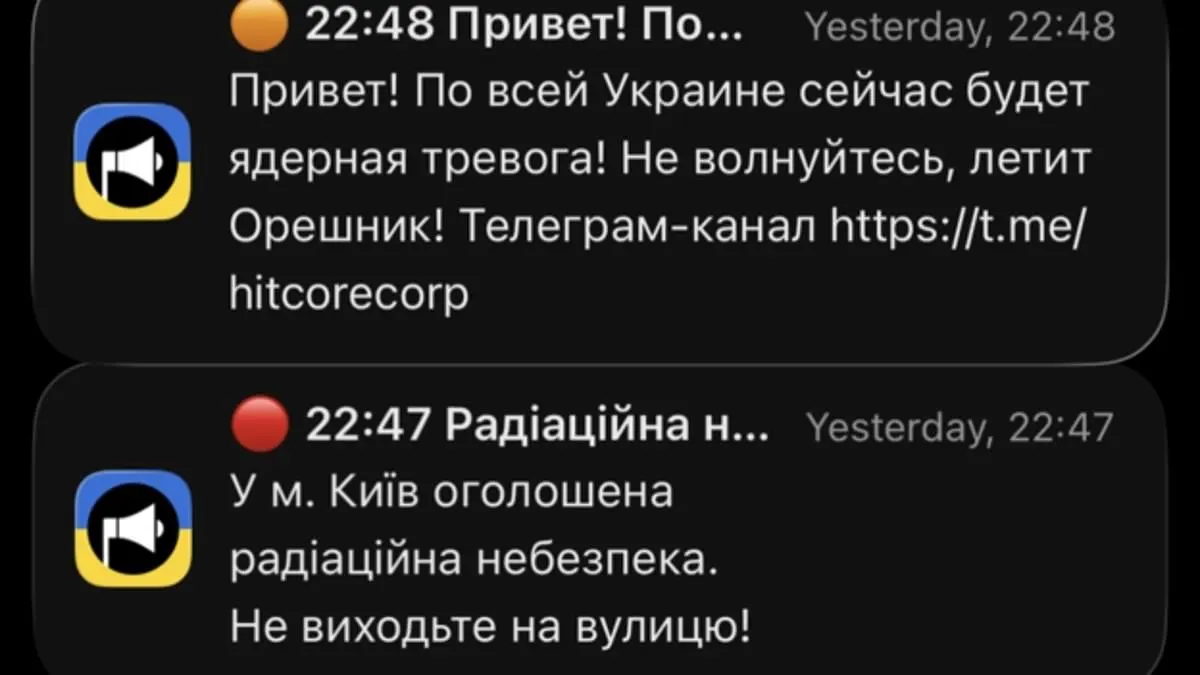
New details show the false notifications appeared in quick succession on Sunday night, beginning at about 10.47pm local time: they claimed radiation, nuclear, chemical and street-fighting threats. Ukraine’s Air Force confirmed the public alert app had been hacked and said there was no radiation threat, underlining the risk of false messages from a service people rely on to find shelter from Russian air strikes.
The alerts affected Kyiv and other areas, then were followed by multiple all-clear messages. Ukraine’s Centre for Countering Disinformation said the app’s threat information did not match reality, while Kyiv authorities said the capital’s separate alert app was working normally; Ukraine’s strategic communications centre blamed Russia. The incident came as a five-day ceasefire in the Kherson region ended, after allowing a humanitarian mission to Oleshky, where about 2,000 civilians were estimated to be living.
- Sources
- 2
- Outlets
- 2
- Left · Centre · Right
- 0 · 1 · 1
In short
- Ukraine confirmed its public air raid alert app was hacked.
- False radiation and other threat warnings appeared around 10.47pm.
- Kyiv’s separate alert app continued to work normally.
How this story developed
- 1 hour ago Ukraine’s Air Force said its public air raid alert app had been hacked after it sent false warnings of radiation, chemical and other threats in Kyiv and elsewhere.
- 1 hour ago New details show the false notifications appeared in quick succession on Sunday night, beginning at about 10.47pm local time: they claimed radiation, nuclear, chemical and street-fighting threats.
Full account
Ukraine’s air raid alert app issued a series of false warnings late on Sunday, including messages about radiation, a nuclear alert, a chemical attack and street fighting. The Ukrainian Air Force said the app appeared to have been interfered with and told people there was no radiation threat. Spokesman Yuriy Ignat confirmed to AFP that it had been hacked.
The alerts began at about 22:47 local time. One warned that radiation danger had been declared in Kyiv; another, written in Russian, referred to a nuclear alert across Ukraine and mentioned the Oreshnik missile. Further messages warned of a chemical attack and street fighting in the capital. A run of all-clear notifications followed, each cancelling one of the earlier warnings.
The Ukrainian Central Intelligence Agency described a failure in the app and advised people to check other official information about air threats. It also said the radiation warning had been broadcast over loudspeakers in the Lviv region, where there was no radiation danger. Vinnytsia’s governor, Natalya Zabolotna, called the incident a cyberattack and cautioned people against clicking a link in the message. Kyiv authorities said a separate alert app for the capital continued to work normally.
The app, supported by Ukraine’s Ministry of Digital Transformation, sends immediate notifications when air defence alerts begin and end. False warnings can cause particular alarm because residents may have only minutes to reach shelter during a real attack. The incident came on the night a local ceasefire in the Kherson region ended. Reports describe it as the longest pause in fighting of the war; Ukrainian officials said Russia declined to extend it. One report also said the truce enabled a humanitarian mission to occupied Oleshky.
Where outlets differ
From the full account, which is AI-written from the sources:
The first report says Russia was blamed for the hack by Ukraine’s Centre for Strategic Communications, while the second focuses on the Air Force’s account, the intelligence agency’s advice and the Vinnytsia governor’s warning. Neither report provides independent evidence establishing who carried out the intrusion.
The second report adds that the radiation signal was played over loudspeakers in Lviv and gives practical advice to rely on official sources and sirens. The first instead notes that Kyiv’s separate city app was unaffected and supplies more context about the Kherson ceasefire and the evacuation mission to Oleshky.
Both reports describe the alerts as occurring around 22:47 local time, but the first attributes the precise timing and message sequence to the BBC, while the second presents them directly in its account.
Centre outlets 1
- Ukraine air raid app apparently hacked as users receive false radiation threat, Air Force saysBBC World
Only here: raid, apparently, users, receive, threat
Right-leaning outlets 1
Only here: alert, sent, warnings, residents
Every side used: ukraine, hacked, false, radiation
Headline columns compared word for word; nothing in them is AI-written.
Explained simply
Ukraine’s air raid alert app is used to warn civilians when Russian attacks are expected, giving people time to reach shelters. Kyiv also has a separate alert app, and authorities said that service was working normally during the incident.
The Air Force and other officials said the warnings about radiation and chemical threats were false and that there was no radiation danger. Reliable alerts matter because people may have only minutes to respond to a real attack; false warnings can cause confusion and affect trust in the system.
Coverage · 2 sources
Bias meters
From 2 rated sources.
Cybersecurity Europe Software Technology World
Read the full article at the source →
Originally published by Daily Mail as “Ukraine’s air raid app ‘is hacked’: Kyiv and Lviv residents ‘get fake alerts about radiation threats’”.