Culture news and discussion on TalkFuse.
UK’s iconic Jodrell Bank telescope faces axe in science cuts
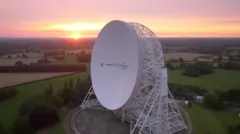
Jodrell Bank Observatory, which has housed the UK's most powerful telescope for nearly seven decades, faces permanent closure after the UK Research and Innovation agency decided to cut its £2.8 million annual budget. The funding body justified the decision as necessary to achieve financial sustainability, citing escalating laboratory research costs and prioritising projects with greater long-term commercial and strategic potential.
The decision threatens 28 direct positions and disrupts research for approximately 3,000 scientists who use the facility. Observatory officials and the scientific community have condemned the choice as scientifically unsound, and leadership committed to challenging the decision and exploring alternative funding sources. The announcement forms part of a wider contraction in UK astronomy, including the country's withdrawal from the James Clark Maxwell Telescope in Hawaii and a twenty percent reduction in support for the Vera Rubin Telescope project in Chile.
In short
- Jodrell Bank Observatory loses £2.8m annual funding from UK Research and Innovation; expected closure April 2028
- 28 staff and 3,000 researcher users affected; UK retreating from multiple major astronomy projects
- Scientists condemn decision as scientifically misguided; leadership pledges to seek alternative funding
Steelman: both sides, in good faith
The strongest fair case each way — we don't pick a winner.
The case for
The UK Research and Innovation agency faces genuine budgetary constraints and must allocate limited public resources strategically. With escalating laboratory research costs across the sector, directing funding toward projects with demonstrable long-term commercial and strategic potential represents responsible stewardship of taxpayer money. Difficult choices about opportunity cost are necessary when financial sustainability is at stake.
The case against
Jodrell Bank represents nearly seven decades of accumulated institutional expertise and unique research capability that cannot be easily replaced. The facility serves thousands of scientists and generates fundamental astronomical knowledge that, whilst not immediately commercially profitable, contributes to human understanding and maintains the UK's scientific standing. Withdrawing from major research infrastructure suggests short-term thinking that undervalues the foundational science underpinning future discoveries.
Explained simply
Jodrell Bank Observatory, located in Cheshire, is one of the world's most important astronomical research facilities and has been at the heart of British space research for nearly seven decades. The facility uses a powerful telescope to observe distant galaxies and other objects in space.
The observatory directly employs around 28 staff members but its work supports research conducted by approximately 3,000 scientists from universities across Britain and worldwide. It is regarded as a unique and essential resource for advancing human understanding of the universe.
Large scientific research facilities require sustained funding from government and research agencies to continue operating. The level of resources allocated to facilities like Jodrell Bank reflects a country's commitment to scientific research and its international competitiveness in this field.