Ultrahuman adds spot checks for ring users’ heart rhythms
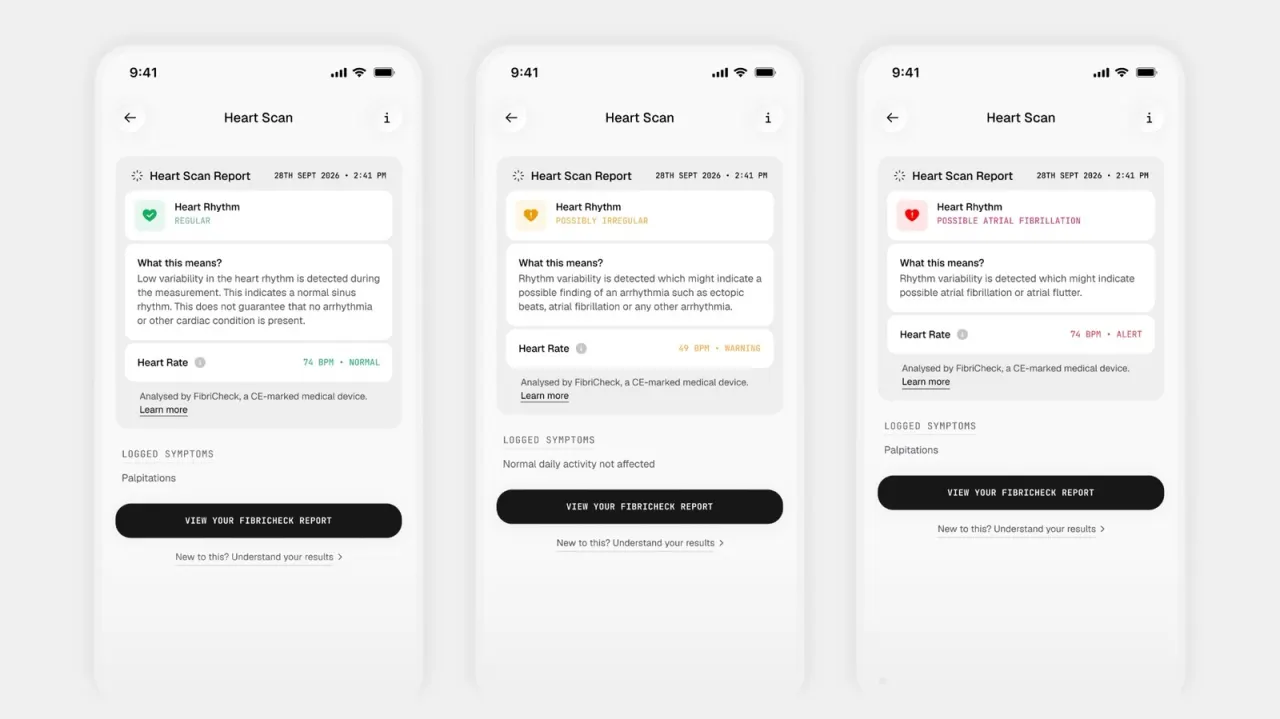
Ultrahuman has partnered with FibriCheck to launch Heart Scan, an on-demand heart rhythm check feature for Ring Air and Ring Pro users. This complements the company's existing overnight heart rhythm monitoring, enabling users to perform spot checks whenever they feel concerned, with results shareable directly with healthcare professionals.
The service requires a 60-second check using a smartphone camera to conduct an optical analysis. Results are generated as a PDF document for healthcare professionals to review. Available in supported markets across the UK, Europe, Middle East and Asia-Pacific, Heart Scan has been added to the existing Afib Power Plug subscription at no additional cost.
- Ultrahuman launches on-demand heart rhythm checks using smartphone camera technology.
- Results can be shared with healthcare professionals for clinical review.
- Feature included in existing subscription, rolling out in select markets.
New here? Start with this
Ultrahuman is a company that makes smart rings designed to track your health. Its Ring Air and Ring Pro devices monitor your heart rhythm, which can reveal potential health problems.
Irregular heart rhythms can indicate serious health conditions and benefit from early detection. However, many people do not realise they have heart problems because symptoms are often absent or subtle.
Health tracking devices have traditionally relied on continuous background monitoring, particularly at night. But users increasingly want the ability to check their vital signs on-demand whenever they feel concerned.
Both sides, in good faith
The strongest fair case each way — we don't pick a winner.
The case for
Early detection of arrhythmias like atrial fibrillation can be transformative for patient outcomes, and convenient technology like this encourages proactive health monitoring between clinic visits. The optical analysis method has established clinical applications, and crucially, results go directly to healthcare professionals rather than left to user interpretation. Making such screening free and accessible removes barriers that keep people from monitoring their health, particularly benefiting those at higher risk of undiagnosed irregular rhythms who might otherwise go unchecked.
The case against
The core concern is whether smartphone optical analysis has been rigorously validated against clinical standards for cardiac assessment. If accuracy is insufficient, users with negative results may be falsely reassured and avoid necessary medical evaluation, whilst false positives create unnecessary anxiety and healthcare burden. Consumer health technology that is convenient but unvalidated risks encouraging self-diagnosis and substituting for proper clinical assessment, potentially undermining rather than supporting overall health outcomes.
Read the full article at the source →
Originally published by Engadget as “Ultrahuman now offers on-demand heart rhythm scans”.