Business news and discussion on TalkFuse.
Unions demand Burnham acts over £72m ‘super-donations’ to Reform – but insist their own funding of Labour is fine
Developed over time first seen 2 months ago
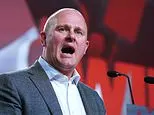
Nigel Farage has hit back at Labour's attempt to unwind two "super-donations" worth £72million to Reform UK, insisting the gifts from crypto billionaires Christopher Harborne and Ben Delo are "100 per cent compliant" with current law and expressing confidence they would survive even if the Government pushes through retrospective changes. The row escalated after TUC general secretary Paul Nowak urged Andy Burnham to intervene, warning of the "Americafication" of British politics, while simultaneously insisting trade union funding of Labour should not face the same scrutiny — a distinction Reform's Richard Tice and former PM Boris Johnson dismissed as hypocritical.
Proposed changes to political funding rules, still before Parliament, would cap foreign-based donors who gave money since 25 March at £100,000 a year, backdated even for those who have since returned to the UK, alongside a proposed one-year minimum residency period before the cap is lifted; both Harborne and Delo are believed to have moved back to the UK, though the exact timing remains unclear. Amid the row, Labour donor Dale Vince called for state funding of all political parties to remove private money's "hand on the wheel" of government, while Downing Street confirmed a new unit had been set up to examine further restrictions on political donations, leaving the dispute over the £72million unresolved.
- Sources
- 4
- Outlets
- 3
- Left · Centre · Right
- 3 · 0 · 1
In short
- Farage defends £72m Reform donations as fully legal under current law
- TUC urges crackdown on big donors but defends union funding of Labour
- Critics call for state funding of parties amid claims of Labour hypocrisy
How this story developed
- 2 months ago Nigel Farage has hit back at Labour's attempt to unwind two "super-donations" worth £72million to Reform UK, insisting the gifts from crypto billionaires Christopher Harborne and Ben Delo are "100 per cent compliant" with current law and expressing confidence they would survive even if the Government pushes through retrospective changes.
- 2 months ago Nigel Farage has hit back at Labour's attempt to unwind two "super-donations" worth £72million to Reform UK, insisting the gifts from crypto billionaires Christopher Harborne and Ben Delo are "100 per cent compliant" with current law and expressing confidence they would survive even if the Government pushes through retrospective changes.
- 2 months ago Nigel Farage has defended two "super-donations" worth £72million to Reform UK from crypto billionaires Christopher Harborne and Ben Delo after Labour ministers and trade union leaders demanded action over foreign-linked political funding.
- 2 months ago Angela Rayner has set out further detail on how new curbs on overseas political donations would work, saying any foreign-based donor who has given money since 25 March would be restricted to £100,000 a year, with the limit backdated even for those who have since returned to the UK.
- 2 months ago Trade unions are pressing Greater Manchester mayor Andy Burnham and the government to crack down on £72million in donations to Reform UK from crypto billionaires Christopher Harborne and Ben Delo, warning that such "super-donations" allow the super-rich to buy influence over British politics.
- The Independent Labour peer urges cap on all political donations after Reform row
- The Guardian As Reform celebrates £72m in donations, tell me this: are you ready to see two rich men buy our democracy? | Owen Jones
- The Guardian Unions intervene on political funding as TUC chief warns ‘super-rich’ threaten democracy
- Daily Mail Unions demand Burnham acts over £72m ‘super-donations’ to Reform – but insist their own funding of Labour is fine
Full account
Trade union leaders have called on the Labour government to take action over £72 million in donations made to Reform UK by two crypto-currency billionaires, even as they resist any suggestion that their own financial support for Labour should face similar restrictions. The gifts, £36 million each from Christopher Harborne and Ben Delo, disclosed over the weekend, are said to amount to roughly three-quarters of the total sum spent by all parties combined at the last general election, prompting renewed debate about the scale of money flowing into British politics.
Speaking at the TUC conference in Brighton, general secretary Paul Nowak said nobody could be comfortable with the prospect of the 'super-rich' effectively buying and selling British politics, describing the trend as an unwelcome 'Americanisation' of the country's political culture. He declined to say exactly what legal mechanism might be used to curb such donations retrospectively, but rejected any comparison with union funding of Labour, describing it as the 'cleanest, most transparent money in British politics' because unions are open, democratic organisations representing millions of working people. Unite general secretary Sharon Graham took a similar line, arguing that union donations bear no resemblance to 'two crypto millionaires waking up and giving £72 million'.
Not all Labour figures agreed that unions should be exempt. Peer and former home secretary Lord Blunkett, while calling the Reform donations a 'complete distortion of democracy', said he believed a cap on domestic political donations should apply broadly, including to trade unions, alongside business and wealthy individual donors, so as to protect ordinary members who sustain the party with small sums. Communities Secretary Angela Rayner has indicated that legislation still passing through Parliament to restrict overseas donations will be backdated, meaning expatriates who have given money since the end of March, including some who have since returned to the UK, would be capped at £100,000 a year; she has also spoken of wanting to stop people 'buying their way into democracy'. The proposals are expected to be debated in the House of Lords, where the government's Representation of the People Bill already contains a £100,000 annual limit on donations from overseas electors, though an earlier attempt by MPs to impose a general donations cap failed after ministers promised further official investigation.
Reform UK has strongly rejected the criticism. Deputy leader Richard Tice accused Labour of 'hyperventilating hypocrisy', while the party insists it is '100 per cent confident' both donations are legal and will not need to be returned, saying the money will fund its preparations for government and that the donors want nothing in return. Former prime minister Boris Johnson dismissed calls for new restrictions as 'absolutely pathetic' given Labour's own long-standing reliance on union funding. Campaign groups have weighed in on the other side of the argument: Spotlight on Corruption warned that the scale of the donations creates a risk that 'the game will be rigged in favour of those with the most cash', underlining why some are pushing for a broader cap rather than one targeted solely at overseas or foreign-linked money.
Where outlets differ
From the full account, which is AI-written from the sources:
The Daily Mail account foregrounds the political knockabout — Andy Burnham being pressed to act, Richard Tice's 'hyperventilating hypocrisy' jibe and Boris Johnson accusing Labour of 'troughing' on union cash for years — giving more space to Reform's and Johnson's rebuttals.
The Independent puts more weight on the scale of the donations (noting they equal roughly three-quarters of all parties' general election spending combined) and on the legislative process, detailing the Representation of the People Bill, the House of Lords debate, and the earlier failed cross-party attempt at a general donations cap.
Only the Independent quotes Unite general secretary Sharon Graham and the campaign group Spotlight on Corruption; the Mail does not mention either.
Only the Mail includes Boris Johnson's intervention and frames the story explicitly around pressure on Andy Burnham, who is not mentioned in the Independent's report.
Left-leaning outlets 3
- Labour peer urges cap on all political donations after Reform rowThe Independent
- As Reform celebrates £72m in donations, tell me this: are you ready to see two rich men buy our democracy? | Owen JonesThe Guardian
- Unions intervene on political funding as TUC chief warns ‘super-rich’ threaten democracyThe Guardian
Only here: political, rich, democracy, peer, urges
Right-leaning outlets 1
Only here: demand, burnham, acts, insist, fine
Every side used: labour, donations, reform, unions, funding, super
Headline columns compared word for word; nothing in them is AI-written.
Steelman: both sides, in good faith
The strongest fair case each way — we don't pick a winner.
The case for
Those who back extending caps to all political donations, including trade union funding of Labour, argue that fairness requires a level playing field: if vast sums from a handful of wealthy backers can distort democracy, then large affiliated fees channelled from union members to one party pose a similar risk of outsized influence, however lawfully raised. They contend that consistency matters more than the source of the money – a rule that stops foreign billionaires 'buying' influence but exempts domestic bloc donations looks like special pleading, and figures such as Lord Blunkett argue that genuine confidence in the system requires closing all major loopholes, not just the ones that embarrass your opponents.
The case against
Those who defend the current distinction argue that union donations are categorically different from the sort of donation the new rules target: they come from UK taxpayers, are built up in small increments from millions of individual members who can opt out, and are subject to long-standing transparency and reporting requirements overseen by the Electoral Commission. On this view, treating a domestically regulated, member-accountable funding stream as equivalent to concentrated money from overseas crypto entrepreneurs conflates two very different risks – foreign or opaque money buying access versus a century-old, transparent link between organised labour and a party it helped found – and risks weakening legitimate democratic funding models in the name of a false symmetry.
Explained simply
Christopher Harborne and Ben Delo, two crypto entrepreneurs, have together given Reform UK around £72million, the largest donations any party has received under current rules. This has put pressure on ministers, including deputy prime minister Angela Rayner and Greater Manchester mayor Andy Burnham, to explain how planned reforms to political donation rules would treat money of this kind, particularly where donors have lived or made their fortunes abroad.
The row also touches on how political parties are funded more broadly. Labour receives significant sums from trade unions, and union leaders, including the TUC's Paul Nowak, argue this money is different because it is transparent and comes from workers' subscriptions rather than a small number of wealthy individuals. Reform disputes any comparison with its own donations, saying they are legal and above board.
At the centre of the debate is the Representation of the People Bill, legislation currently going through the House of Lords that would tighten the rules on political donations, including from people living overseas. The outcome matters because it will shape who is allowed to fund British political parties and how much influence individual wealthy donors, whether linked to unions or private businesses, can have on elections.
Coverage · 4 sources
Bias meters
From 4 rated sources.
- Daily MailRightUnions demand Burnham acts over £72m ‘super-donations’ to Reform – but insist their own funding of Labour is fine
- The IndependentLeftLabour peer urges cap on all political donations after Reform row
- The GuardianLeftAs Reform celebrates £72m in donations, tell me this: are you ready to see two rich men buy our democracy? | Owen Jones
- The GuardianLeftUnions intervene on political funding as TUC chief warns ‘super-rich’ threaten democracy