Update to Google’s AI weather model improves forecast accuracy
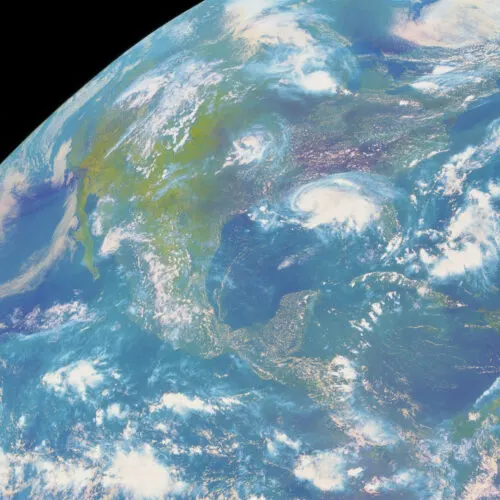
Google has released version 3 of its WeatherNext AI weather forecasting model, with the key upgrade being its ability to ingest raw satellite data rather than relying solely on "reanalysis" datasets. This reduces the lag between real-world conditions and forecast generation, allowing the model to update hourly instead of every six hours, and matters because AI weather models already offer forecasting performance close to traditional physics-based systems while needing far less computing power, making more frequent updates highly valuable.
Beyond the satellite data, WeatherNext 3 has higher spatial resolution, a larger machine-learning model, and a separate satellite-trained precipitation forecasting component. It also incorporates limited physical information, such as land/ocean status and surface elevation, to improve local temperature and dew point predictions. Google's white paper reports roughly a 5% improvement in upper-atmosphere accuracy over WeatherNext 2 (equivalent to about six extra hours of reliable forecasting) and up to a 30% improvement in surface temperature accuracy, generally outperforming the European Centre for Medium-Range Weather Forecasts' AI model, though some unexplained quirks remain, including weaker early-forecast accuracy for certain variables and visible grid-shaped artefacts in precipitation maps.
In short
- Google's WeatherNext 3 now uses raw satellite data, not just reanalysis
- Forecasts now update hourly instead of every six hours
- Accuracy gains include up to 30% better local temperature forecasts
Steelman: both sides, in good faith
The strongest fair case each way — we don't pick a winner.
The case for
WeatherNext 3’s use of live satellite observations could make forecasts more timely, while reported gains in accuracy and lower computing needs may help deliver useful updates more often. Supporters can argue that better local temperature and precipitation guidance would benefit people and services that rely on current forecasts.
The case against
The reported improvements come from Google’s own white paper, and the model still has weaknesses, including poorer early forecasts for some variables and grid-shaped artefacts in precipitation maps. A cautious view is that headline accuracy gains do not by themselves establish dependable performance across conditions, and that forecast users should value transparent, independently assessed reliability as well as speed and efficiency.
Explained simply
Weather forecasting traditionally relies on computer models that simulate how the atmosphere works. AI models such as Google’s WeatherNext use patterns learned from weather data to make forecasts, and can need less computing power than traditional systems.
Google develops WeatherNext, while the European Centre for Medium-Range Weather Forecasts (ECMWF) is a major international weather forecasting organisation with its own AI model. Forecast accuracy matters for decisions ranging from daily planning to preparing for severe weather.
WeatherNext 3 uses satellite observations alongside other weather information, helping it reflect current conditions more often. Its performance improvements could make frequent forecasts more useful, though tests also found some weaker results and map artefacts.