World news and discussion on TalkFuse.
Army reports no elevated lead readings after Iowa detonation, with further tests pending
Developing story first seen 6 hours ago
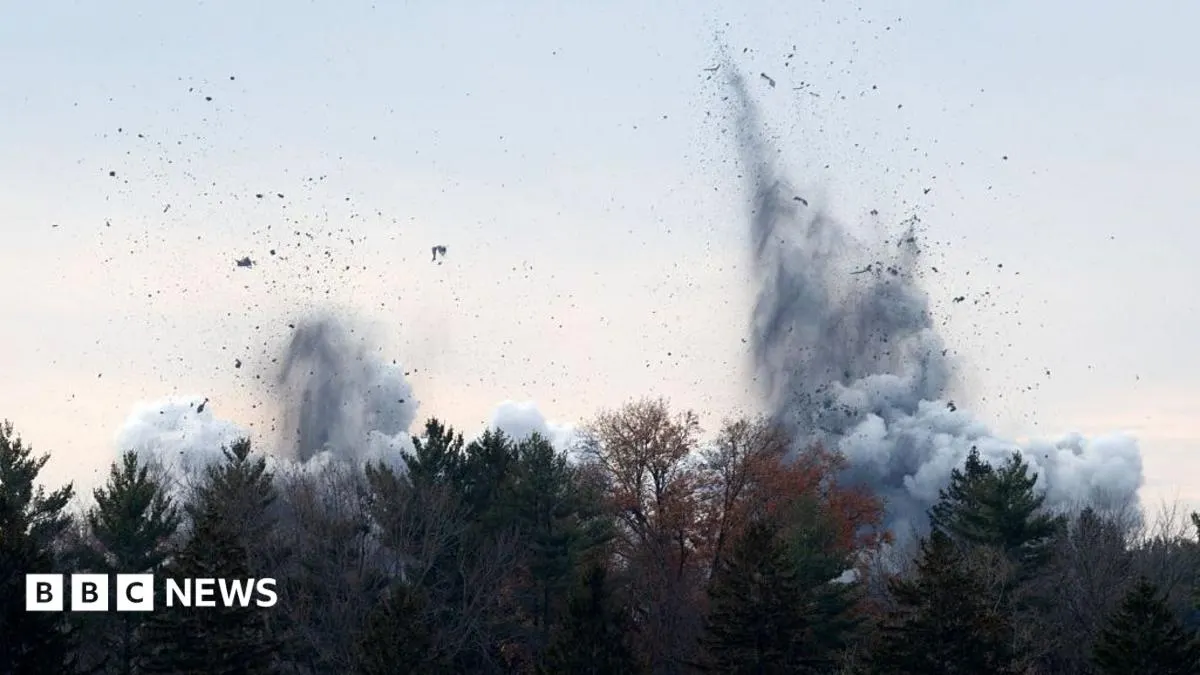
New monitoring after the US Army’s detonation of nearly five tonnes of lead azide in Iowa has found no airborne lead, and officials have issued an all clear around the ammunition plant. The early results ease immediate concerns about exposure, but surface testing is still under way and the Army has yet to report those findings.
The explosives had been stored for about 20 years and had degraded, increasing the risk of accidental detonation. The blast took place near Middletown, about 10 miles from the Illinois border; residents nearby reported little or no impact, while Illinois officials said they had seen little to none. Iowa’s governor-elect called for transparency about the chaotic lead-up and said anyone affected should be fully supported.
- Sources
- 3
- Outlets
- 3
- Left · Centre · Right
- 0 · 3 · 0
In short
- No airborne lead has been detected so far.
- Surface sample results are still pending.
- Iowa’s governor-elect called for transparency and support.
How this story developed
- 2 hours ago The Army called the detonation a “huge success” and reported no lead readings above zero so far, as officials continued monitoring after residents reported little noise or movement.
- 3 hours ago The US Army said a controlled blast near Middletown, Iowa, had destroyed nearly five tonnes of lead azide stored for about 20 years, while warning that further tests were needed to assess health and environmental risks.
Explained simply
Lead azide is a chemical explosive that can become more dangerous if it is stored for a long time. The US Army had kept nearly five tonnes of it near Middletown, a small community in south-east Iowa, for about 20 years before carrying out a controlled blast.
Lead can harm health and contaminate soil or water, so the blast raised concerns about people living nearby and the local environment. Iowa state officials and the Army are responsible for informing residents and assessing any effects; the governor-elect has called for openness and support for anyone affected.
Monitoring can detect lead in the air, but assessing possible effects may also require further checks over time and in other places. The issue matters to nearby communities because they need clear information about any risk and what to do if contamination is found.
Coverage · 3 sources
Bias meters
From 3 rated sources.
Read the full article at the source →
Originally published by BBC Science as “US Army says controlled blast of explosives in Iowa was ‘huge success’”.