US Escalates Iran Strikes as Pentagon Seeks $87 Billion in Additional Military Funding
Developed over time first seen 3 months ago
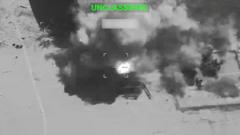
The United States has resumed intensive military strikes against Iran for an eleventh consecutive night, marking a sharp escalation following the collapse of a ceasefire agreement from April. President Trump has intensified the campaign by threatening to strike "Pickaxe Mountain," a suspected underground nuclear enrichment facility near Natanz, as the two nations compete for control of the strategically vital Strait of Hormuz. The renewed bombardment signals the complete breakdown of previous diplomatic arrangements and a return to open military confrontation.
The conflict carries substantial financial consequences, with US Defence Secretary Pete Hegseth informing the Senate Appropriations Committee that military operations have already cost $37.5 billion. The Pentagon is requesting an additional $87 billion in funding to sustain the campaign, with $67 billion specifically earmarked for Middle East operations. Hegseth's testimony marked his first appearance before Congress since fighting resumed, underscoring the significance Congress is placing on the ongoing military commitment.
- Sources
- 2
- Outlets
- 1
- Left · Centre · Right
- 0 · 2 · 0
In short
- US executes 11th consecutive night of airstrikes as April ceasefire agreement collapses
- Trump threatens to target suspected underground nuclear facility near Natanz; both sides contest Strait of Hormuz control
- Pentagon seeks $87bn additional funding; existing Iran conflict has cost $37.5bn to date
How this story developed
- 3 months ago The United States has resumed intensive military strikes against Iran for an eleventh consecutive night, marking a sharp escalation following the collapse of a ceasefire agreement from April.
Steelman: both sides, in good faith
The strongest fair case each way — we don't pick a winner.
The case for
Supporters of the campaign argue that a nuclear-capable Iran poses an intolerable threat to regional and global security, and that decisive military action against facilities such as the suspected site near Natanz is necessary to prevent that outcome once diplomacy has failed. They contend that the collapse of the ceasefire shows restraint was not reciprocated, and that securing the Strait of Hormuz protects vital global energy supplies and allied nations. On this view, the $87 billion request is a justified investment in finishing the job properly rather than leaving American forces under-resourced in a prolonged and dangerous conflict.
The case against
Critics argue that resuming and escalating strikes risks a wider regional war with unpredictable consequences, including retaliation against US forces, civilian casualties, and further destabilisation of the Middle East, while the collapse of the April ceasefire suggests military pressure alone has not produced a durable solution. They question whether Congress and the public have been given a clear strategic endpoint or exit plan, and view the $87 billion request, on top of $37.5 billion already spent, as an enormous and open-ended commitment of taxpayer money that ought to be weighed against domestic priorities and subjected to rigorous oversight before further funds are approved.
Explained simply
Escalating strikes between the United States and Iran have followed the collapse of a ceasefire agreed earlier this year, ending a fragile pause in hostilities. At the centre of the dispute is Iran's nuclear programme, including sites suspected of enriching uranium, alongside a wider contest for influence over the Strait of Hormuz, a narrow waterway through which a large share of the world's oil shipments pass.
Key figures include US President Trump, who is directing the military campaign, and US Defence Secretary Pete Hegseth, who oversees the Pentagon and answers to Congress on how operations are funded. Congress controls military spending, so its scrutiny of these costs matters for how long and how intensively the campaign can continue.
The financial scale of the conflict is significant because military action of this kind is expensive and ongoing, requiring repeated approval of public funds. How Congress responds to funding requests can shape the duration and intensity of the campaign, while the outcome of the wider standoff carries implications for regional stability and global oil markets.
Coverage · 2 sources
Bias meters
From 2 rated sources.
Americas Government Middle East Politics World