World news and discussion on TalkFuse.
US faces another major Middle East troop withdrawal, but threat remains
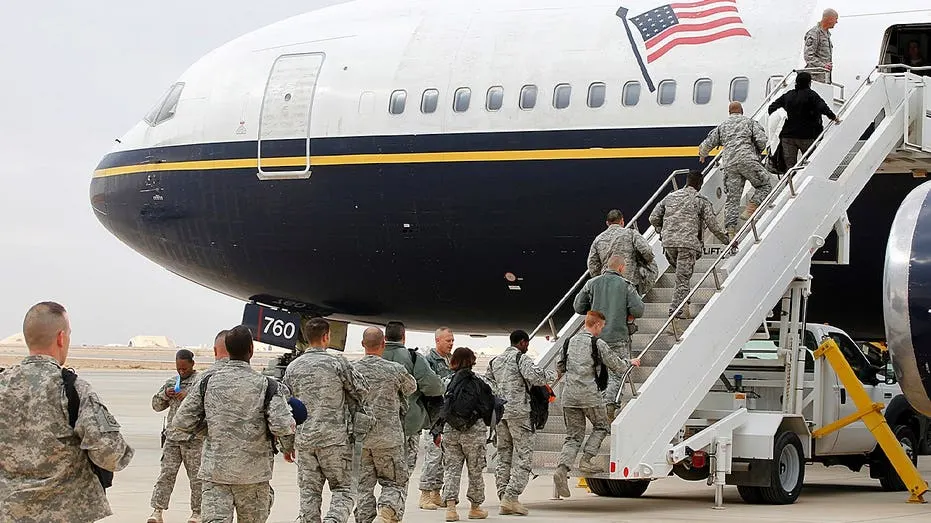
The US military is scheduled to end its mission in Iraq on Wednesday, closing an operation that began with the 2003 invasion and later focused on defeating Islamic State (ISIS). The withdrawal follows a 2024 agreement with Baghdad, made before the US-Iran conflict began; the article says the changed security situation raises questions about how the US will respond to threats after the mission ends.
Around 2,500 US troops remained in Iraq as part of the coalition mission, which had shifted towards training, advising and intelligence support as Iraqi forces took on more counterterrorism work. ISIS is assessed as severely weakened, and its attacks in Iraq and Syria have fallen 70% since 2023, according to a US military commander. However, Iran-backed armed groups remain a concern, and a US soldier was killed at Erbil Air Base in July during the controlled detonation of an Iranian drone.
In short
- The US mission in Iraq is scheduled to end after more than two decades.
- Iraqi forces have assumed more responsibility as ISIS has weakened.
- Iran-backed armed groups remain a security concern.
Steelman: both sides, in good faith
The strongest fair case each way — we don't pick a winner.
The case for
The withdrawal follows a planned 2024 agreement with Iraq's sovereign government, reflecting recognition that Iraqi forces have developed sufficient capacity for counterterrorism operations. With ISIS attacks down 70% since 2023 and the militant group severely degraded, the conditions exist for a reduced US military presence. Continuing an indefinite mission runs counter to principles of Iraqi sovereignty and the recognised need for counterterrorism operations to transition to local forces—a transition that appears substantially achieved.
The case against
Whilst ISIS has been significantly weakened, Iran-backed armed groups remain active and dangerous, as demonstrated by the killing of a US servicemember in July, and the withdrawal removes strategic presence precisely when regional tensions with Iran are escalating. Withdrawing before achieving fuller stability risks creating a security vacuum that adversaries could exploit, potentially requiring more costly re-engagement later, and removes critical training and intelligence capabilities that may still be necessary for Iraq's long-term security.
Explained simply
The United States has maintained a military presence in Iraq for over two decades, beginning with the 2003 invasion to overthrow Saddam Hussein and continuing through years of military operations against Islamic State (ISIS). This long engagement has shaped American strategy throughout the Middle East.
Roughly 2,500 US service personnel currently remain in Iraq, where they train and advise Iraqi security forces taking on greater counterterrorism responsibilities. Islamic State has been significantly weakened, with attacks in Iraq and Syria declining by around 70 per cent since 2023, though the group retains the ability to conduct strikes. Armed groups backed by Iran also operate in Iraq and continue to present a security concern.
An agreement reached with Baghdad in 2024 will conclude this American military mission, a change negotiated before US-Iran tensions escalated dramatically. The altered security environment raises questions about how regional stability will be maintained once the American military presence withdraws.
Americas Art Culture Middle East World