Iran strikes back after US hits dozens of IRGC targets
Developed over time first seen 2 months ago
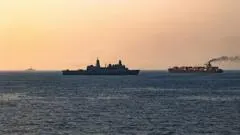
The United States carried out a “heavy wave” of strikes on dozens of Iranian Revolutionary Guard targets after Iran attempted ballistic missile attacks on US forces in Jordan and targeted shipping in the Strait of Hormuz. The action marks a renewed escalation in the US-Iran conflict after a short period of relative calm and undermines hopes that diplomatic contacts might reduce tensions.
US Central Command said the roughly hour-long operation struck command centres, missile and drone facilities, coastal surveillance and defence sites, and maritime capabilities; it said all Iranian missiles were intercepted. Iranian media reported that three members of one family, including a two-year-old child, were killed on Qeshm island, while strikes also hit other southern and western locations; Egypt also said a drone attack caused a fire at a port.
- US strikes hit dozens of IRGC targets after Iranian attacks.
- Iran reported civilian deaths on Qeshm island.
- The confrontation has again intensified across the region.
New here? Start with this
Iran and the United States have been in an escalating military confrontation for around five months, far longer than President Trump initially predicted. The latest events centre on Iran's Islamic Revolutionary Guard Corps (IRGC), an elite branch of Iran's armed forces that also controls key military and economic assets, and on US bases and shipping in the wider Gulf region. US Central Command (Centcom), which oversees American forces in the Middle East, has been the main source of official information on strikes and their targets.
The immediate flashpoint involves attacks on US military bases in Jordan and on vessels passing through the Strait of Hormuz, a narrow waterway between Iran and the Arabian Peninsula through which much of the world's oil is shipped. Any disruption there matters well beyond the region, since it can affect global oil supplies and prices. Iraq has also been drawn in, as Iranian-backed armed groups operating there, notably the Popular Mobilisation Forces, have been targeted, prompting Baghdad to object that its sovereignty is being violated.
Saudi Arabia has emerged as a notable third party, having reportedly taken part in joint action with the US while its defence minister has also signalled a wish to de-escalate the situation. This reflects the broader risk at stake: a conflict originally centred on Iran and the US now touches multiple countries and vital shipping and energy routes, raising the possibility of wider regional instability.
Both sides, in good faith
The strongest fair case each way — we don't pick a winner.
The case for
Supporters of the US strikes argue that, after Iran launched ballistic missiles and naval attacks on American bases in Jordan and on shipping in the Strait of Hormuz, a forceful military response was a legitimate act of self-defence and deterrence rather than reckless escalation. They contend that failing to respond decisively to direct attacks on US forces and international shipping lanes would signal weakness and invite further aggression from Tehran and its proxies. On this view, striking IRGC command, missile and drone infrastructure directly reduces Iran's capacity to launch future attacks, and intercepting all of Iran's retaliatory missiles shows the operation was militarily effective and proportionate to the threat faced.
The case against
Critics warn that the strikes risk tipping an already five-month conflict into a far wider and less controllable regional war, especially given reports that Saudi Arabia was actively pushing for de-escalation through diplomatic channels. They point to the joint US-Saudi strikes on Iranian-backed proxies in Iraq, which killed at least twenty Popular Mobilisation Forces fighters and which Baghdad itself denounced as a violation of Iraqi sovereignty, as evidence that military action is spilling into third countries and straining relations with a nominal partner. They also note that Trump's early prediction of a swift, weeks-long conflict has proven badly wrong, suggesting that further strikes may deepen the impasse rather than resolve it, at continuing cost to regional stability, shipping security and civilian lives.
More coverage
Read the full article at the source →
Originally published by BBC World as “US launches ‘powerful’ strikes on Iran after attempted attack on American troops”.