US removes Syria from list of state sponsors of terrorism
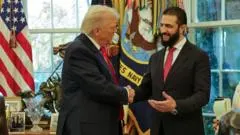
The United States has removed Syria from its list of state sponsors of terrorism, ending a 47-year designation and clearing what officials called the "final major barriers" to private investment and Syria's reintegration into the global economy. The decision reflects Washington's embrace of Syria's new president, Ahmed al-Sharaa, a former Islamist militant once wanted by US authorities, whose group Hayat Tahrir al-Sham (HTS) led the offensive that toppled Bashar al-Assad in late 2024 and was also removed from the US list of terrorist organisations. The move signals a US bid to draw Syria into its sphere of influence rather than Russia's or China's, though the country remains unstable and lacks representative government.
Secretary of State Marco Rubio said the change recognised Syria's efforts to distance itself from international terrorism, while Treasury Secretary Scott Bessent said it would encourage investment to promote stability. Syria's foreign minister called it a "historic step". The designation, in place since 1979, leaves only Cuba, North Korea and Iran on the list, and its removal lifts financial sanctions and restrictions on US aid, defence exports and trade.
- US ends 47-year terrorism designation for Syria, easing sanctions
- Syrian President al-Sharaa's group HTS also delisted as terrorist organisation
- Only Cuba, North Korea and Iran remain on the US list
New here? Start with this
Syria has been under some form of US sanctions or restrictions for decades, largely because of the rule of the Assad family, which controlled the country from 1971 until it was overthrown in late 2024. The new leader, Ahmed al-Sharaa, previously led an Islamist militant group and was once wanted by the United States; his rise to power marks a dramatic shift from the old order to a government still finding its feet.
Being labelled a state sponsor of terrorism carries serious practical consequences, including bans on US financial dealings, defence exports and aid, and it discourages foreign companies from investing. Syria has carried this label since 1979, alongside a small group of countries that included Cuba, Iran and North Korea, so removing it is a significant change in how the US treats the country.
This matters because it affects Syria's ability to rebuild after years of civil war and to attract international investment and support. It also reflects a broader contest for influence in Syria, with the US, Russia and China all having interests there, even as the country's political situation remains fragile and unsettled.
Both sides, in good faith
The strongest fair case each way — we don't pick a winner.
The case for
Supporters argue that engagement, not isolation, is the best way to steer Syria toward stability and away from Russian or Iranian influence at this pivotal moment. They contend that maintaining a Cold War-era designation forged under Assad no longer reflects reality now that his government has fallen, and that lifting sanctions unlocks the reconstruction investment ordinary Syrians desperately need after years of war. Rewarding the new leadership's stated break from international terrorism, they say, gives Damascus a tangible incentive to continue moderating and cooperating with the West rather than reverting to isolation and extremism.
The case against
Critics caution that removing the designation is premature given that President al-Sharaa leads a group, HTS, with a recent history of jihadist violence and that Syria still lacks any representative government to hold accountable. They worry the move normalises a leadership whose long-term intentions remain untested, potentially legitimising figures with troubling records before genuine reforms, minority protections or democratic structures are in place. For them, sanctions and the terrorism designation are leverage that should be relinquished gradually and conditionally, not handed over as an upfront gesture of trust that Syria's rulers have yet to earn.