World news and discussion on TalkFuse.
US Republicans accuse Canada of wildfire inaction
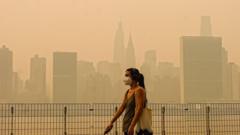
US President Donald Trump has threatened fresh tariffs against Canada, accusing it of "willful negligence" over wildfires whose smoke has blanketed much of the northern United States. The threat follows complaints from Republican lawmakers and comes despite Ontario's premier Doug Ford urging Washington to send firefighting help rather than criticism, highlighting fresh strain in an already tense US-Canada relationship that has been dominated by unresolved trade disputes over the past year.
As of the weekend, around 955 wildfires were burning across Canada, most out of control, with over 190 in Ontario alone and nearly three million hectares destroyed so far. The resulting smoke triggered "hazardous" air quality alerts across US states including Michigan, Minnesota, Pennsylvania, Ohio and New York, with Detroit ranked the world's worst city for air quality on Friday. Canadian officials responded by pointing to roughly C$12bn invested in forest sustainability and fire prevention, and to long-standing bilateral firefighting agreements, while some Republicans revived talk of Canada becoming the 51st US state.
In short
- Trump threatens new tariffs over Canadian wildfire smoke reaching US cities
- Nearly 955 fires burning in Canada, hazardous air quality declared in US
- Canada cites C$12bn fire prevention spend and existing cross-border agreements
Steelman: both sides, in good faith
The strongest fair case each way — we don't pick a winner.
The case for
Canada faces an unprecedented wildfire crisis with over 950 uncontrolled fires across the nation, and the resulting smoke has triggered hazardous air quality alerts across multiple US states—yet despite claimed investments in prevention, this scale of crisis suggests current measures are inadequate. When a neighbouring nation's environmental failure directly harms millions of Americans' health and air quality, it is reasonable to expect that nation to accept responsibility and increase its response urgently; Ontario's own request for American firefighting assistance indicates that Canada's capacity is insufficient. External pressure, including through trade mechanisms, is a legitimate tool to compel a neighbour whose crisis directly affects your citizens' wellbeing to prioritise solutions more aggressively.
The case against
Wildfires are uncontrollable natural disasters that occur regardless of prevention spending, and Canada already invests billions annually in forest management and maintains formal bilateral firefighting agreements with the United States. Ontario has not refused assistance but has explicitly requested American help, demonstrating active collaboration rather than negligence or refusal. Responding to environmental crises with trade threats inappropriately politicises natural disasters and damages the cooperation that actually solves such problems; no nation can perfectly prevent wildfires or control where smoke drifts, so holding Canada accountable through tariffs for cross-border smoke represents an unreasonable standard that confuses environmental challenges with trade disputes.
Explained simply
Wildfires have spread across Canada, with around 955 fires currently burning and most out of control, destroying nearly three million hectares. The smoke has drifted into the northern United States, affecting air quality in multiple states and triggering hazardous air alerts.
In response, US President Trump and Republican lawmakers have accused Canadian authorities of negligence and threatened fresh tariffs against Canada. Ontario's premier has responded by pointing to billions invested in fire prevention and by requesting firefighting assistance from Washington, rather than criticism.
The dispute highlights existing tensions between the two countries, which have been at odds over trade disagreements for the past year. Cross-border environmental challenges can quickly become entangled with political tensions between neighbouring nations.
Americas Climate Science World