US sanctions more Cuban companies and officials
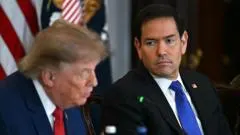
The United States has imposed a fresh round of sanctions on Cuban state-run companies and officials, Secretary of State Marco Rubio announced. The move targets nine state-owned mining, metal and construction firms, the Ministry of Construction, and figures linked to a Cuban international institute, as Washington continues to escalate economic pressure on Havana under the Trump administration.
Rubio accused those sanctioned of bringing "international sympathizers" to Havana to coincide with Fidel Castro's 100th birthday and of exporting "Marxism, racial resentment, and Communist violence". Among those named is Fernando Gonzalez Llort, president of the Cuban Institute of Friendship with the Peoples and a former member of the "Cuban Five" spy ring. Cuba's foreign minister condemned the sanctions as an attempt to further damage an economy already strained by a US oil blockade that has caused prolonged power cuts and rare public protests.
- US sanctions nine Cuban state firms, ministry and officials
- Rubio links move to Castro's 100th birthday and "subversive activities"
- Cuba says sanctions worsen crisis from ongoing US oil blockade
New here? Start with this
The United States and Cuba have had a tense relationship since Fidel Castro’s 1959 revolution brought a communist government to power. Washington has maintained a trade embargo for decades, and the two countries have imposed restrictions and sanctions on people and organisations they accuse of undermining their interests.
Cuba’s government owns much of the country’s industry, including mining, construction and metal firms. The Cuban Institute of Friendship with the Peoples promotes ties with groups and individuals abroad; its president, Fernando González Llort, was one of five Cubans convicted in the United States of spying and later returned to Cuba.
US sanctions can restrict travel and access to money or property under US jurisdiction. They matter because Cuba’s economy relies on trade and energy imports, while the two governments disagree over its political system and US policy towards the island.
Both sides, in good faith
The strongest fair case each way — we don't pick a winner.
The case for
Supporters of the sanctions argue that targeted measures against regime-connected entities and officials are necessary to pressure Cuba's authoritarian government on human rights and democratic freedoms. They contend that state-owned companies primarily enrich regime cronies rather than ordinary citizens, making them legitimate targets for economic pressure, and view such measures as appropriate responses to what they consider Cuba's problematic regional activities and export of revolutionary ideology.
The case against
Critics argue that six decades of US sanctions have demonstrably failed to change Cuban policy whilst systematically harming ordinary citizens through shortages and economic hardship, making additional measures counterproductive. They contend that the US embargo itself bears primary responsibility for Cuba's economic crisis and that diplomatic engagement and trade would prove more effective than further isolation at promoting the political change the US seeks. They also question the consistency of applying such stringent measures to Cuba whilst maintaining relations with numerous other authoritarian governments.