US states sue to halt Trump’s forced-labour tariffs on 60 nations
Developed over time first seen 2 months ago
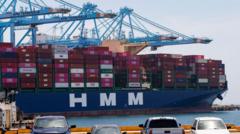
Twenty-five Democratic-led US states sued the Trump administration in an attempt to block new tariffs of 10% to 12.5% imposed on goods from 60 trading partners, arguing in a legal filing that the levies are "arbitrary, capricious, and contrary to law". The tariffs, which took effect in July and cover countries including the UK, China and the European Union, were imposed under Section 301 of the 1974 US Trade Act on the grounds that these partners had failed to properly tackle forced labour; the states argue this justification is merely a "pretext" for an unlawful tariff scheme, noting the underlying investigation took just two months compared with eight months when Section 301 was used against China in 2018.
The White House rejected the challenge, with spokesman Kush Desai insisting the administration was "using its lawful authority" and that Section 301 tariffs "have proven to be a legally durable tool" since surviving court challenges during Trump's first term. The duties cover 99.4% of US imports according to the Office of the US Trade Representative, with Brazil, Japan and China among those calling the measures "unjustified" or politically motivated. Analysts, including business lecturer Alex Capri, said the lawsuit poses a "formidable challenge" given a lack of credible evidence of forced-labour harm to US firms, predicting eventual "carve outs and walk-backs", while state officials such as New York's Kathy Hochul and Oregon's Dan Rayfield framed the tariffs as an unlawful tax on ordinary households.
- 25 US states sue to block Trump's new forced-labour tariffs on 60 nations
- Tariffs of 10-12.5% cover 99.4% of US imports, effective since July
- White House defends levies as lawful; analysts expect eventual carve-outs
New here? Start with this
US states are taking Donald Trump's administration to court over a fresh round of tariffs, which are taxes charged on goods imported into the country. The states argue the tariffs, applied to imports from 60 different trading partners including the UK, China and the EU, were brought in unlawfully and unfairly raise costs for ordinary households and businesses. The Trump administration says the tariffs are a justified response to trading partners failing to tackle forced labour in their supply chains.
Tariffs have become a defining feature of Trump's second term, used as a tool to pressure other countries on trade and other policy goals. Courts have already pushed back on some of his earlier tariff measures, including a separate set known as "Liberation Day" tariffs, so this case is being watched as another test of how far a president can go in imposing them without approval from Congress. The states bringing the lawsuit are largely led by Democratic politicians, setting up a political as well as legal dispute with the Republican administration.
The outcome matters well beyond America's borders, since the tariffs affect the vast majority of goods the US imports and touch major economies such as Japan, Brazil, Taiwan and the EU. Businesses that trade with the US, and consumers who buy imported goods, could see costs rise or fall depending on how the case is decided, and other countries are watching closely as they weigh their own responses.
Both sides, in good faith
The strongest fair case each way — we don't pick a winner.
The case for
Supporters of the tariffs argue that trading partners have had ample opportunity to address forced labour in their supply chains and that Section 301 gives the executive lawful authority to act when trade practices are deemed unreasonable. They contend that consistent, broad-based tariffs create leverage to compel meaningful reform abroad, protect American workers from goods made under exploitative conditions, and that courts should defer to the executive's judgement on foreign trade and national economic strategy. From this view, the lawsuits are seen as an attempt by political opponents to obstruct a legitimate and overdue enforcement tool.
The case against
Opponents argue that the tariffs amount to an unlawful and arbitrary tax that raises costs for working families and businesses without clear, consistent justification, given that they sweep in 99.4% of US imports and partners with varying human rights records alike. They point to the Supreme Court's earlier rejection of similar tariff actions as evidence that the administration is exceeding its statutory authority under the guise of forced-labour enforcement, using it as a pretext for a broader protectionist agenda. From this perspective, the states' lawsuits uphold the rule of law and the separation of powers by insisting that sweeping economic measures affecting ordinary consumers require proper legal grounding and congressional oversight rather than unilateral executive action.
More coverage
Read the full article at the source →
Originally published by BBC World as “US states sue to block Trump tariffs impacting dozens of countries”.