US strikes Iranian oil tankers as Tehran targets American base in Jordan
Developed over time first seen 2 months ago
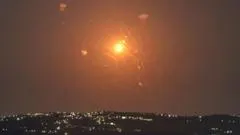
Oil prices surged past $100 a barrel as the US-Iran conflict escalated sharply, with Washington striking five Iranian oil tankers and Tehran retaliating with attacks on shipping and a US airbase in Jordan. The clashes, which also drew in Saudi Arabia and Yemen's Houthi rebels, disrupted the Strait of Hormuz, a waterway that normally carries a fifth of the world's oil and gas, and pushed petrol prices higher for motorists worldwide.
US Central Command said it destroyed the tankers Kaviz, Charminar, Horizon 1, Riesco and Derya, warning crews to abandon ship first; the Riesco later sank in the Gulf of Oman. Iran's Revolutionary Guards claimed to have struck eight tankers and two US warships (denied by Washington), seized a US underwater drone Washington said had simply malfunctioned, and fired missiles at Jordan's Muwaffaq Salti air base, 20 of which were intercepted with no casualties. US Secretary of State Marco Rubio warned Iran would keep "losing tankers" for further attacks, while Brent crude, which had traded around $70 before the war began with US and Israeli strikes on 28 February, peaked near $100.70 before easing slightly to $99.90.
- Sources
- 4
- Outlets
- 4
- Left · Centre · Right
- 1 · 1 · 2
In short
- US-Iran conflict escalated as oil prices topped $100 a barrel
- US destroyed five Iranian tankers; one, the Riesco, sank
- Iran hit a US Jordan airbase; Rubio warned of more losses
How this story developed
- 1 month ago Oil prices climbed past $100 a barrel on Wednesday as the US-Iran conflict escalated further, with new details emerging that one of the five Iranian tankers struck by the US, the M/T Riesco, sank in the Gulf of Oman, and that Iran's navy claimed to have seized an uncrewed US submarine drone in the Strait of Hormuz beforehand, which Washington said had merely malfunctioned.
- 1 month ago Oil prices surged past $100 a barrel as the US-Iran conflict escalated sharply, with Washington striking five Iranian oil tankers and Tehran retaliating with attacks on shipping and a US airbase in Jordan.
- 1 month ago Oil prices pushed past $100 a barrel on Wednesday, their highest since late July, after the US struck five Iranian oil tankers and Iran retaliated by firing missiles at a US base in Jordan, while Yemen's Houthi movement also attacked Saudi oil facilities.
- 1 month ago US forces sank an Iranian oil tanker and struck four others on Tuesday after Iran twice targeted an American warship with ballistic missiles, prompting Tehran to fire missiles at a US base in Jordan and claim strikes on American vessels and multiple oil tankers in the Strait of Hormuz.
- 2 months ago US forces struck five Iranian oil tankers on Tuesday, sinking one, in retaliation after Tehran twice targeted an American warship with ballistic missiles.
- Daily Mail Tehran attacks US targets in Middle East in retaliation for American strikes on Iranian tankers, sparking jump in oil prices as war deepens
- The Hill Iran attacks vessels, US base in Jordan after tankers sunk
- HuffPost U.S. Strikes Iranian Oil Tankers After Attempted Attacks On Navy Warship
- BBC World US strikes Iranian oil tankers as Tehran targets American base in Jordan
Full account
US forces struck five Iranian oil tankers on Tuesday, sinking one of them, after Tehran twice targeted an American warship, US Central Command said. Four of the vessels hit were in the Gulf of Oman and were said to be linked to Iran's Revolutionary Guards Corps, while a fifth was struck near Kharg Island, the terminal through which the vast majority of Iran's crude oil exports pass. Washington said the tankers formed part of a shadow fleet funnelling billions of dollars to the Guards and its regional allies, and added that a ballistic missile attack on one of its warships had been successfully intercepted with no American casualties.
Iran responded by firing around twenty missiles at a US air base in Jordan, with Jordanian forces reporting that eighteen were shot down and the remainder fell in unpopulated areas. Iranian state media said the Revolutionary Guards had carried out a 'punitive operation' against the base, causing damage to maintenance facilities and aircraft shelters. Tehran also claimed to have struck American vessels and a large number of oil tankers attempting to pass through the Strait of Hormuz, though the two outlets gave differing figures for the scale of this action, and Iran further warned that shipping off Kuwait and Bahrain would also be targeted, urging crews to abandon their vessels.
The exchange marks a sharp escalation in hostilities that have simmered since US and Israeli strikes on Iran roughly six months earlier, with the two sides now described as locked in a prolonged standoff over control of the Hormuz shipping lane. Oil markets reacted immediately, with Brent crude and the main US benchmark both climbing to close to 100 dollars a barrel in Asian trading as investors weighed the risk to Gulf supply routes. US Secretary of State Marco Rubio, speaking during a visit to Colombia, said the dynamic was straightforward: each Iranian attempt to strike US naval assets would be met with the loss of further tankers.
The confrontation unfolded against a backdrop of wider regional turbulence, including a Houthi drone and missile assault on Saudi energy infrastructure that reportedly injured dozens of people and briefly disrupted operations at oil facilities. There were also unverified Iranian claims of having seized an unmanned American submersible, adding a further point of friction. With both sides signalling readiness for further retaliation, the risk of continued disruption to global energy supplies appeared set to remain elevated in the days ahead.
Where outlets differ
From the full account, which is AI-written from the sources:
The two reports give different tallies for Iran's claimed strikes on shipping in the Strait of Hormuz: one cites two US vessels, eight tankers and ten 'non-compliant' vessels, while the other reports a Revolutionary Guards claim of twenty US vessels targeted overall.
One account names the Jordanian base struck as Al-Azraq and details the specific facilities damaged (maintenance and repair buildings, aircraft shelters), while the other refers only generically to 'a US base in Jordan'.
One report includes a claim that Iran's navy said it had seized an uncrewed US submarine, which is not mentioned in the other account.
Oil price figures differ slightly between the two reports (Brent at $99.35 versus $99.46, and US crude at $94.23 versus $94.45), reflecting the different moments each outlet took its market snapshot.
One outlet frames the events within a broader narrative of Iran maintaining a 'stranglehold' over Hormuz amid a six-month war, giving more geopolitical framing, while the other focuses more narrowly on the immediate sequence of strikes and interceptions.
Left-leaning outlets 1
Only here: attempted, navy, warship
Centre outlets 1
Right-leaning outlets 2
- Tehran attacks US targets in Middle East in retaliation for American strikes on Iranian tankers, sparking jump in oil prices as war deepensDaily Mail
- Iran attacks vessels, US base in Jordan after tankers sunkThe Hill
Only here: middle, east, retaliation, sparking, jump
Every side used: strikes, iranian, tankers
Headline columns compared word for word; nothing in them is AI-written.
Steelman: both sides, in good faith
The strongest fair case each way — we don't pick a winner.
The case for
Supporters of the US response argue that after Iranian forces twice targeted an American warship with ballistic missiles, a firm military reply was both justified and necessary to protect service personnel and deter further attacks. They contend that striking tankers linked to the Revolutionary Guards, rather than Iranian territory or civilians, sends a proportionate but unmistakable signal that continued aggression carries a direct cost to the regime's oil revenues. Failing to respond robustly, on this view, would risk emboldening Tehran and its regional allies, as the subsequent Houthi strike on Saudi facilities may already illustrate.
The case against
Critics of the strikes argue that hitting Iranian oil tankers, including one near a terminal handling the vast majority of Iran's crude exports, risks tipping a dangerous cycle of retaliation into a full-blown regional war, with unpredictable consequences for global energy markets and civilian populations. They point out that this exchange follows an initial US and Israeli strike on Iran months earlier, suggesting the current escalation is not simply defensive but part of a longer chain of action and reaction that military force alone cannot resolve. On this view, prioritising deterrence through strikes over diplomatic de-escalation makes a wider conflict, and further attacks like the one on Saudi energy infrastructure, more rather than less likely.
Explained simply
Iran and the United States have been trading direct military blows since February, when the US and Israel first struck Iranian targets. What began as those initial strikes has grown into a cycle of retaliation, with each side now hitting the other's ships, military assets or infrastructure in response to the last attack.
The latest exchange centres on the Gulf region, a vital corridor for the world's oil supply. The Strait of Hormuz and nearby waters carry a huge share of the crude that Iran and other Gulf states export, so any fighting near tankers or terminals like Kharg Island can affect oil prices and global energy supplies. Jordan, home to a US military base, and Saudi Arabia, whose energy facilities have also come under attack from Iran-aligned Houthi forces in Yemen, have both been drawn into the wider confrontation.
Key figures include US Central Command, which oversees American military operations in the region, and Iran's Revolutionary Guards Corps, an elite branch of Iran's armed forces with its own naval and missile capabilities. US Secretary of State Marco Rubio has been the public voice of Washington's response. The dispute matters beyond the two countries involved because further escalation could disrupt oil markets, threaten shipping routes used worldwide, and risk drawing in other regional players.
Coverage · 4 sources
Bias meters
From 4 rated sources.
- BBC WorldCentreUS strikes Iranian oil tankers as Tehran targets American base in Jordan
- Daily MailRightTehran attacks US targets in Middle East in retaliation for American strikes on Iranian tankers, sparking jump in oil prices as war deepens
- The HillRightIran attacks vessels, US base in Jordan after tankers sunk
- HuffPostFar leftU.S. Strikes Iranian Oil Tankers After Attempted Attacks On Navy Warship