World news and discussion on TalkFuse.
Van Gogh painting with complex Nazi-era history sells for record $190M at auction
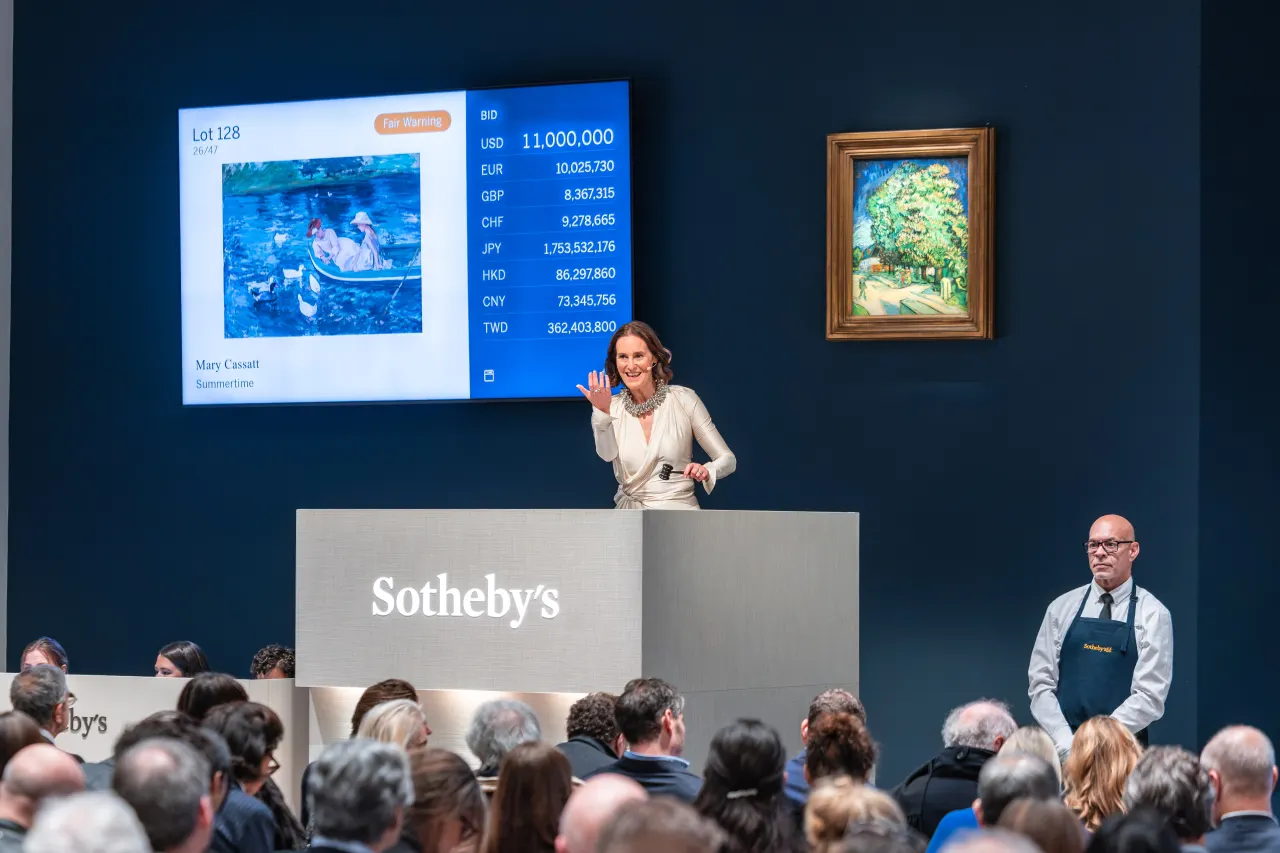
Vincent van Gogh’s landscape “Châtaigniers en fleurs” sold for $190.4 million at auction in New York, setting a record for the artist. The sale proceeded after the painting’s current owners and the heirs of the Jewish family who sold it in Nazi-era Germany reached an agreement, following a request to postpone the auction while its history was examined.
The Blaquier-Arrieta family had owned the painting since 1975; Hedwig and Samuel Fischer sold it in 1936. Sotheby’s did not disclose the agreement’s terms, but both families described the resolution as satisfactory and acknowledged the suffering of the Fischer family during the Nazi era. Painted in 1890, weeks before Van Gogh’s death, the work surpassed its $180 million estimate and the previous artist record of $117.2 million; a dozen works in the sale raised $412 million.
In short
- Van Gogh’s painting sold for a record $190.4 million.
- The sale followed an agreement with the Fischer family’s heirs.
- Twelve Impressionist and post-Impressionist works raised $412 million.
Steelman: both sides, in good faith
The strongest fair case each way — we don't pick a winner.
The case for
The sale can be defended as a fair resolution because the current owners and the Fischer heirs reached an agreement after the painting’s history was reviewed, and both families described the outcome as satisfactory. Proceeding also allowed the work to remain in public view and recognised its artistic and historical significance.
The case against
The sale can be questioned because a private agreement, whose terms were not disclosed, leaves outsiders unable to assess whether the Fischer heirs received a just remedy for a sale made during Nazi-era persecution. Allowing the auction to proceed may also be seen as placing the value and marketability of the painting ahead of fuller public scrutiny of its provenance.
Explained simply
“Châtaigniers en fleurs” is a landscape painted by Vincent van Gogh in 1890, shortly before his death. Van Gogh was a Dutch artist whose paintings became among the best-known works of the 19th century.
The painting was owned by Hedwig and Samuel Fischer, a Jewish couple who sold it in Germany in 1936, during the Nazi era. It later came into the Blaquier-Arrieta family’s possession, and questions about its ownership history brought the two families’ heirs into discussions.
The history matters because art sold under Nazi rule may be connected to persecution and the loss of property by Jewish families. Disputes over such works can involve both the circumstances of an earlier sale and the claims of later owners.