Venice 2026 Emerges as Premier Documentary Festival With Diverse International Slate
Developed over time first seen 2 months ago
Paris-based sales agent MMM Films has picked up international rights to Ukrainian director Mykyta Gibalenko's debut feature Camouflage, which will have its world premiere in Venice's Giornate degli Autori strand. The film draws on Gibalenko's own experience of emigrating from Ukraine to Germany, using a personal story to explore migration, identity and displacement against the backdrop of Russia's full-scale invasion, and forms part of a strong international lineup at this year's festival.
The drama follows 22-year-old Vitaly, played by Arthur Aliiev (Forever Forever), who moves to Munich a year before the 2022 invasion, leaving behind his mother and sister; when war breaks out, they flee to join him, bringing unresolved family tensions with them. It is produced by Katharina Kolleczek and Leu Neu of Munich's kalekone film with ZDF, and is one of 10 titles in Giornate degli Autori's main competition, alongside Mia Wasikowska's Agata the Writer and opening film My Notes on Mars starring Mackenzie Davis and Rupert Friend.
- Sources
- 3
- Outlets
- 3
- Left · Centre · Right
- 0 · 0 · 0
In short
- MMM Films acquires sales rights to Ukrainian drama Camouflage
- Film premieres in Venice's Giornate degli Autori section
- Story mirrors director's own migration from Ukraine to Germany
How this story developed
- 2 months ago Paris-based sales agent MMM Films has picked up international sales rights to Ukrainian director Mykyta Gibalenko's drama "Camouflage", which will have its world premiere in Venice's Giornate degli Autori sidebar.
- 2 months ago The 2026 Venice Film Festival is establishing itself through an emphasis on prestige documentary programming rather than red-carpet celebrity moments, reflecting industry recognition that Venice has become the leading venue for high-profile nonfiction works, surpassing established competitors like Cannes and Berlin.
- 2 months ago Paris-based sales agent MMM Films has picked up international rights to Ukrainian director Mykyta Gibalenko's debut feature Camouflage, which will have its world premiere in Venice's Giornate degli Autori strand.
- Deadline Ukrainian Drama ‘Camouflage’ Set Sales With MMM Films & Drops First Clip – Venice
- The Hollywood Reporter Forget the Red Carpet — Venice’s Real Stars Are in the Documentaries This Year
- Variety The Life of Gerda Taro, the First Female Photojournalist to Be Killed on the Battlefield, Captured in Venice’s ‘The Girl With the Leica’
Full account
The 2026 edition of the Venice Film Festival is shaping up as a landmark year for documentary filmmaking, with industry figures suggesting nonfiction work may overshadow even the star-studded red-carpet premieres. Emilie Spiegel, co-head of the prestige publicity agency Cinetic Marketing, described it as "a phenomenal year for docs" and argued that the world's oldest film festival is making an unmistakable statement that documentary belongs at the heart of cinema. She framed the programming choice as both a principled and a shrewd one, coming at a time of budget pressures and consolidation across the film industry. Commentators noted that Venice has increasingly distinguished itself from its rivals on this front, contrasting with Cannes' more inconsistent embrace of nonfiction and Berlin's tendency to prioritise volume over standout quality.
Among the documentaries generating the most attention is Alex Gibney's four-hour examination of Elon Musk, alongside a Disney-backed film chronicling the reunion of Britpop band Oasis. Also drawing notice are NAZA, a documentary addressing Israel's conduct in Gaza, and They're Here, Laura Poitras' film focused on US immigration enforcement agency ICE. A further high-profile entry is Wim Wenders' documentary portrait of Swiss architect Peter Zumthor, designer of the new Los Angeles County Museum of Art building, which has been in production for some fourteen years and now counts actor Brad Pitt among its executive producers. The wider nonfiction slate spans established names and fresh territory alike: two-time Oscar winner Barbara Kopple examines New York delivery workers in Union Town; Free Solo directors Jimmy Chin and Elizabeth Chai Vasarhelyi turn to a north-face Everest climbing and skiing attempt; Truffle Hunters filmmakers Michael Dweck and Gregory Kershaw head to Burgundy's wine country; director Takashi Miike makes his documentary debut with a study of Japanese Kabuki theatre; and Julia Loktev continues her chronicle of independent Russian journalists with a follow-up feature.
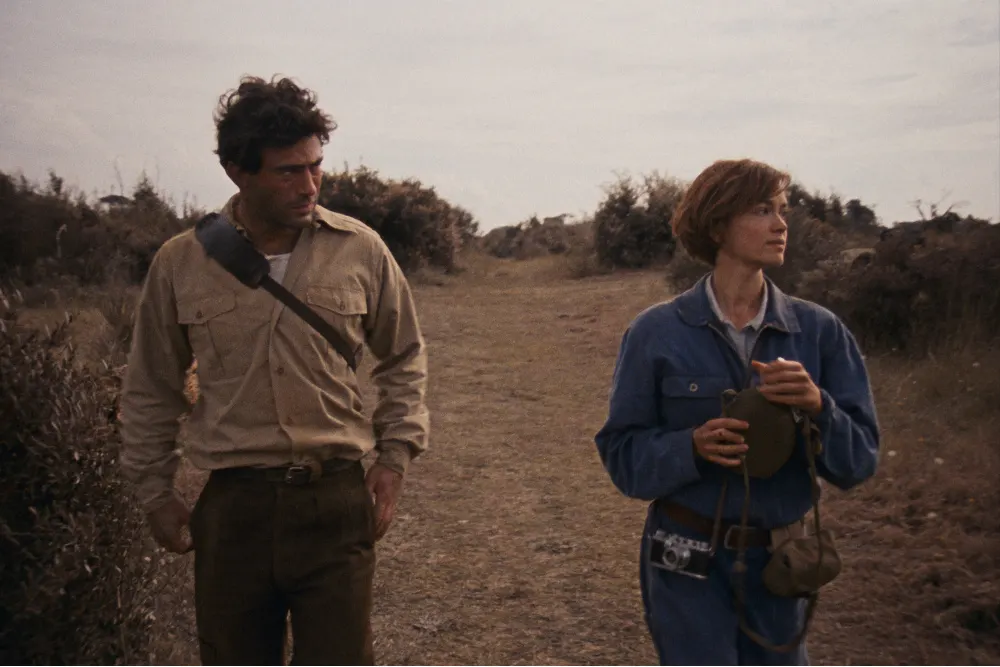
Venice's programming extends well beyond documentary into narrative drama, illustrated by two titles with strong historical and political roots. The Girl With the Leica, which opens the festival's Horizons section, dramatises the short life of Gerda Taro, the photojournalist who died at 26 while covering the Spanish Civil War and became the first woman to be killed reporting from a battlefield. Director Alina Marazzi, working from a screenplay co-written with Valia Santella and inspired by Helena Janeczek's 2018 novel about Taro, chose to centre the film on Taro's own perspective rather than the book's structure of friends recalling her decades later. Emilia Schüle, known for playing Marie Antoinette, takes the title role. The film traces Taro's path from Leipzig political activism to Paris, where she and her partner Endre Friedmann invented the pseudonym Robert Capa to sell their photography, and touches on the wider circle of émigré photographers, including David Seymour, who later co-founded the Magnum agency, and whose Spanish Civil War negatives were lost for decades before resurfacing in 2007.
A further notable premiere is Camouflage, a drama by Ukrainian director Mykyta Gibalenko screening in the Giornate degli Autori parallel section, for which Paris-based MMM Films has now acquired international sales rights. The film follows a young Ukrainian man who relocates to Munich shortly before Russia's 2022 invasion, joins a local theatre group, and is later reunited with his mother and sister after they flee the war, bringing unresolved family tensions with them. Gibalenko has said the project draws on his own experience of emigrating to Germany in 2013 and reflects broader questions of migration and identity rather than a single coming-of-age story. Producers Katharina Kolleczek and Leu Neu of Munich's kalekone film, working with backing from German broadcaster ZDF, praised the director's clarity of vision. Camouflage is one of ten films in the Giornate degli Autori main competition, a line-up that also includes Kuba Dorabialski's Agata the Writer, starring Mia Wasikowska, and the section's opening film, Lili Horvát's My Notes on Mars.
Where outlets differ
From the full account, which is AI-written from the sources:
Source 1 is a broad trend piece asserting that documentaries are the dominant story of Venice 2026, featuring industry commentary on the festival's standing relative to Cannes and Berlin; Sources 2 and 3, by contrast, are focused profiles of individual narrative dramas, showing the festival's range extends well beyond nonfiction.
Source 2 covers The Girl With the Leica in the Horizons section with a historical, biographical emphasis on Gerda Taro and Robert Capa, drawing on a named novel and biography as sources, and includes direct quotes from director Alina Marazzi.
Source 3 is framed as a trade/sales exclusive about Camouflage in the separate Giornate degli Autori section, emphasising the distribution deal (MMM Films) and quoting the director and producers on the film's autobiographical origins, rather than critical or festival-wide context.
Only Source 1 addresses the festival's overall documentary strategy and includes named details like the Oasis reunion film, the Musk documentary, NAZA, and Poitras' ICE film — these titles do not appear in Sources 2 or 3.
Explained simply
Venice has traditionally been known for star-studded premieres, but the 2026 edition is drawing attention chiefly for its documentary line-up. Non-fiction filmmaking has grown into a major part of the festival calendar in recent years, and Venice is increasingly seen as challenging Cannes and Berlin for the top spot in showcasing serious, high-profile documentary work, covering subjects from tech industry figures to large-scale music events.
Alongside the documentaries, the festival is also presenting notable fiction films from newer and international directors. Among these is "The Girl With the Leica," which tells the story of Gerda Taro, widely regarded as the first female photojournalist to die while covering a war, and whose contribution to the field has often gone unrecognised. Another is "Camouflage," a Ukrainian drama from director Mykyta Gibalenko that draws on his own move from Ukraine to Germany to explore themes of migration and identity.
These strands sit within Venice's wider programme structure, which includes sections such as Horizons and Giornate degli Autori, set up to spotlight emerging talent and independent voices outside the main competition. Together they reflect how the festival is positioning itself in 2026, balancing established prestige cinema with a broader, more international range of storytelling.
Coverage · 3 sources
- The Hollywood ReporterForget the Red Carpet — Venice’s Real Stars Are in the Documentaries This Year
- VarietyThe Life of Gerda Taro, the First Female Photojournalist to Be Killed on the Battlefield, Captured in Venice’s ‘The Girl With the Leica’
- DeadlineUkrainian Drama ‘Camouflage’ Set Sales With MMM Films & Drops First Clip – Venice
Americas Art Celebrity Culture Entertainment Europe Film World