Culture news and discussion on TalkFuse.
Venice Chief Alberto Barbera Under Fire for Lack of Female Directors in Competition: ‘It Is a One-Dimensional Selection’
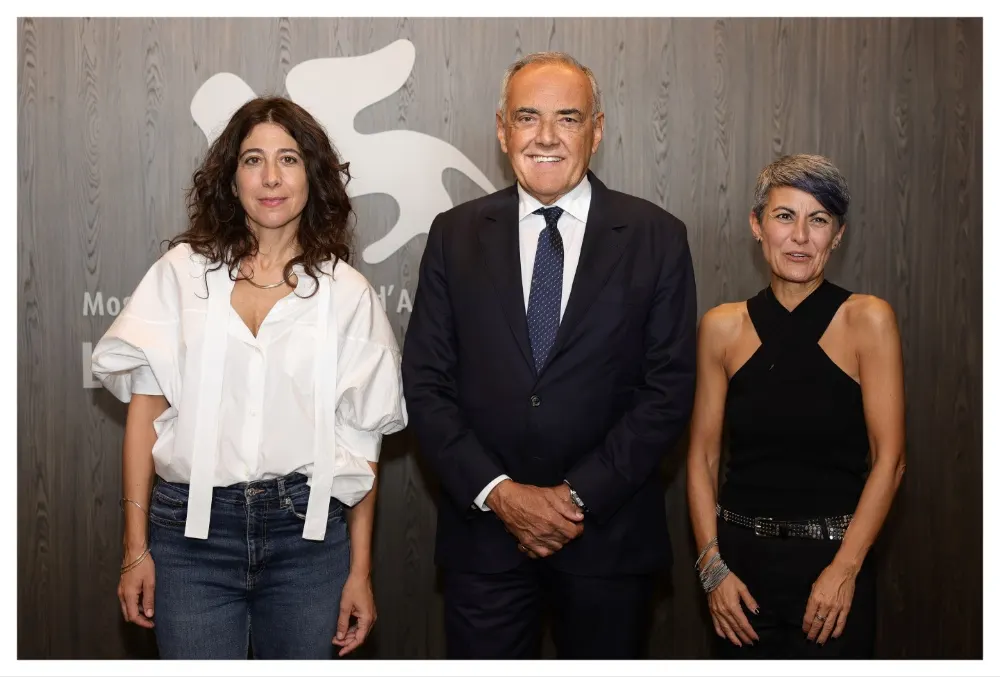
Venice Film Festival artistic director Alberto Barbera has come under criticism from several Italian film organisations, including Women in Film Television and Media Italia, after this year's competition line-up featured only one female-directed film out of 20 titles. In an open letter published in La Repubblica, the groups argued that such a heavily skewed selection cannot simply be attributed to women directors "not being good enough", and called for the criteria used to judge cinematic quality to be re-examined, describing this year's Italian selection as "one-dimensional" and "entirely male".
The sole woman-directed film in competition for the Golden Lion is "Woman Unknown" by Danish-Egyptian director May El-Toukhy, a sharp fall from last year's roughly 29% (six of 21 films) directed by women. The signatories also include directors' associations ANAC and 100autori, guild Air3, the European Women's Audiovisual network and documentary body Doc/it, and they noted that seven male directors represent Italian cinema across the festival's main strands with no female counterpart. By contrast, the Venice Horizons sidebar, which spotlights emerging talent, features eight female directors among its 19 films.
In short
- Only one woman-directed film features in Venice's 20-title competition this year.
- Italian film bodies say quality judgments, not talent, are to blame.
- Sharp drop from last year's 29% female-directed competition films.
Steelman: both sides, in good faith
The strongest fair case each way — we don't pick a winner.
The case for
The dramatic fall from 29% to 5% representation, coupled with 42% female directors in the Horizons section, suggests systemic selection bias rather than natural variation in submissions. Critics argue that given the substantial pool of talented female filmmakers globally, such skewed representation likely reflects implicit biases embedded in selection criteria or curatorial judgement—not because women's films are inferior, but because unconscious assumptions about what constitutes artistic excellence may systematically disadvantage women's work. Examining and broadening these criteria, they suggest, would strengthen rather than compromise the festival's artistic credibility.
The case against
A festival's fundamental obligation is selecting the artistically strongest films according to the artistic director's genuine curatorial vision, not meeting demographic targets. Barbera's selections should reflect his honest assessment of the best work submitted, and comparing the main competition to Horizons is misleading since that section serves different curatorial purposes and draws from a different submissions pool. If fewer exceptional female-directed films aligned with this year's artistic direction, then 5% reflects the correct outcome; imposing gender balance would risk elevating weaker work over stronger films and undermine the festival's integrity as a serious arbiter of cinematic excellence.
Explained simply
The Venice Film Festival is one of the world's most prestigious annual film competitions. The festival's artistic director selects a small number of films from hundreds of submissions for the main competition, where they compete for the festival's top prize, the Golden Lion.
Gender representation in major film competitions has become an important issue in the cinema industry in recent years. Some film organisations argue that women directors often have their films selected at lower rates than male directors for prestigious competitions, and that this may reflect systemic barriers rather than differences in film quality.
This year's main competition includes 20 films, with only one directed by a woman. By comparison, last year roughly one in four films in the main competition was directed by a woman. Different sections of the same festival, including a programme showcasing emerging talent, sometimes feature different levels of gender representation, raising questions about how selection criteria are applied.
Art Culture Elections Entertainment Film Music Politics