World news and discussion on TalkFuse.
Venice Film Festival Scraps Jury Press Conference
Developed over time first seen 3 months ago
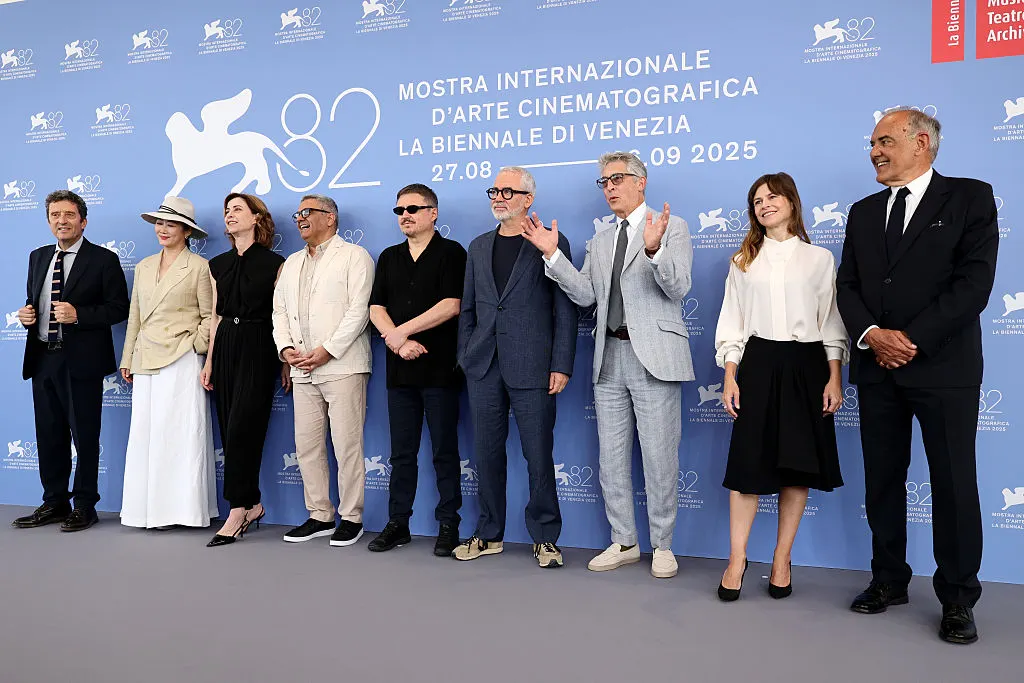
The Venice Film Festival has confirmed it will scrap its customary main jury press conference ahead of its 2026 edition, an unusual break with protocol that organisers attribute to a "scheduling conflict." The decision comes as jury and talent press conferences at major festivals have become increasingly charged, with journalists repeatedly pressing participants on global politics, particularly the Israel-Gaza war, though Venice organisers denied that these tensions influenced the move.
Maggie Gyllenhaal chairs this year's international jury, joined by Kaouther Ben Hania, Daniel Blumberg, Francesco Casetti, Xavier Giannoli, Shahrbanoo Sadat and Johnnie To. Last year's Venice jury press conference saw president Alexander Payne admit he was unprepared for questions on Gaza, while similar flashpoints hit Berlin and Cannes this year. Venice's 2026 edition, running from 2 to 12 September, already carries political weight through the inclusion of Israel-Gaza documentary NAZA and Russian film DAU, alongside an open letter from figures including Annie Ernaux and Roger Waters urging the festival to support Palestine.
- Sources
- 2
- Outlets
- 2
- Left · Centre · Right
- 0 · 0 · 0
In short
- Venice scraps its main jury press conference, citing scheduling, not politics
- Move follows politically charged jury press events at Cannes and Berlin
- Maggie Gyllenhaal-led jury takes over as festival runs 2-12 September 2026
How this story developed
- 3 months ago The Venice Film Festival has confirmed it will cancel its customary main jury press conference ahead of its 2026 edition, citing a scheduling conflict.
- 3 months ago The Venice Film Festival has confirmed it will scrap its customary main jury press conference ahead of its 2026 edition, an unusual break with protocol that organisers attribute to a "scheduling conflict." The decision comes as jury and talent press conferences at major festivals have become increasingly charged, with journalists repeatedly pressing participants on global politics, particularly the Israel-Gaza war, though Venice organisers denied that these tensions influenced the move.
- 3 months ago The Venice Film Festival has cancelled its customary main jury press conference ahead of its 2026 edition, an unusual departure from festival protocol.
Full account
The Venice Film Festival is set to forgo its customary opening press conference for the international competition jury, an unusual departure from the event’s established format. The festival begins on 2 September and runs until 12 September. Organisers have attributed the change to a scheduling conflict, while indicating that journalists may instead be invited to a welcome cocktail gathering with the jury.
The decision comes amid growing scrutiny of how major film festivals handle questions about war and international politics, particularly Israel’s war in Gaza. Venice’s jury launch last year was heavily focused on Gaza, when then-president Alexander Payne said he had not been prepared for such questions. Political exchanges have also featured prominently at recent Berlin and Cannes jury appearances.
This year’s seven-member Venice jury is chaired by actor and filmmaker Maggie Gyllenhaal. Its other members are Tunisian director Kaouther Ben Hania, English composer Daniel Blumberg, Italian academic Francesco Casetti, French filmmaker Xavier Giannoli, Afghan director Shahrbanoo Sadat and Hong Kong director Johnnie To. Ben Hania’s film The Voice of Hind Rajab, centred on the killing of a Palestinian child in Gaza, received a major prize at Venice last year.
Pressure around the festival has increased before its opening. A Venice4Palestine letter signed by cultural figures has called on the Biennale and festival to take action in support of Palestine, while artistic director Alberto Barbera has characterised the programme as especially political. The selection includes films addressing conflict, migration, climate issues and civil liberties, as well as the newly added documentary NAZA.
Where outlets differ
From the full account, which is AI-written from the sources:
Deadline reports that the press conference has been definitively scrapped after seeking confirmation from the festival, whereas Variety says it will “probably not” happen, suggesting the decision may not yet have been final.
Deadline concentrates on the wider pattern of politically charged festival press conferences and says Venice denied that political considerations lay behind the change. Variety gives greater prominence to current pro-Palestinian pressure on Venice, the Venice4Palestine letter and the festival’s political programme.
Variety identifies Danny Boyle’s Ink as the opening-night world premiere and notes the proposed replacement cocktail event. Deadline does not mention the opening film or the cocktail.
Variety says Ben Hania’s The Voice of Hind Rajab won the Silver Lion Grand Jury Prize; Deadline refers more generally to it as an acclaimed drama shown at Venice last year.
Steelman: both sides, in good faith
The strongest fair case each way — we don't pick a winner.
The case for
Supporters of the cancellation can reasonably argue that a film festival’s jury should be able to focus on judging films rather than being drawn into live political disputes for which it has no shared mandate or expertise. If there is a genuine scheduling conflict, dispensing with one ceremonial media event is a practical way to protect a demanding programme and avoid putting individual artists under pressure to speak for institutions, nations or conflicts. This view prioritises artistic independence, orderly festival management and the right not to make public political declarations.
The case against
Critics can reasonably argue that cancelling an established press conference, particularly after recent political questioning, risks appearing to shield the festival and its prominent jury from legitimate scrutiny. Major cultural institutions shape public debate through whose work they platform and how they respond to humanitarian crises, so journalists may fairly seek transparent answers even when those questions are uncomfortable. This view prioritises accountability, open press access and the principle that cultural prestige should not create an exemption from difficult public discussion.
Explained simply
The Venice Film Festival is one of the world’s oldest and most prominent film events. Held each year in the Italian city of Venice, it brings together new films, actors, directors, critics and industry figures from many countries.
A main international jury watches films competing for the festival’s top prizes, including the Golden Lion, and decides the winners. The jury is usually led by a chair and includes film-makers, performers and other cultural figures; its members are often introduced to journalists before the festival begins.
Major film festivals can also become places where wider public issues are discussed, because they attract international media and artists. In recent years, the Israel-Gaza war has led to questions and disagreements at cultural events, including over public statements and how organisers respond to political concerns.
Coverage · 2 sources
Americas Cricket Entertainment Film Offbeat Sport Weird & Viral World