Venice Jury President Maggie Gyllenhaal Says Films Are ‘Fundamentally, Unavoidably Political’ and Questions Lack of Female Directors in Competition: ‘There’s a Systemic Problem’
Developed over time first seen 2 months ago
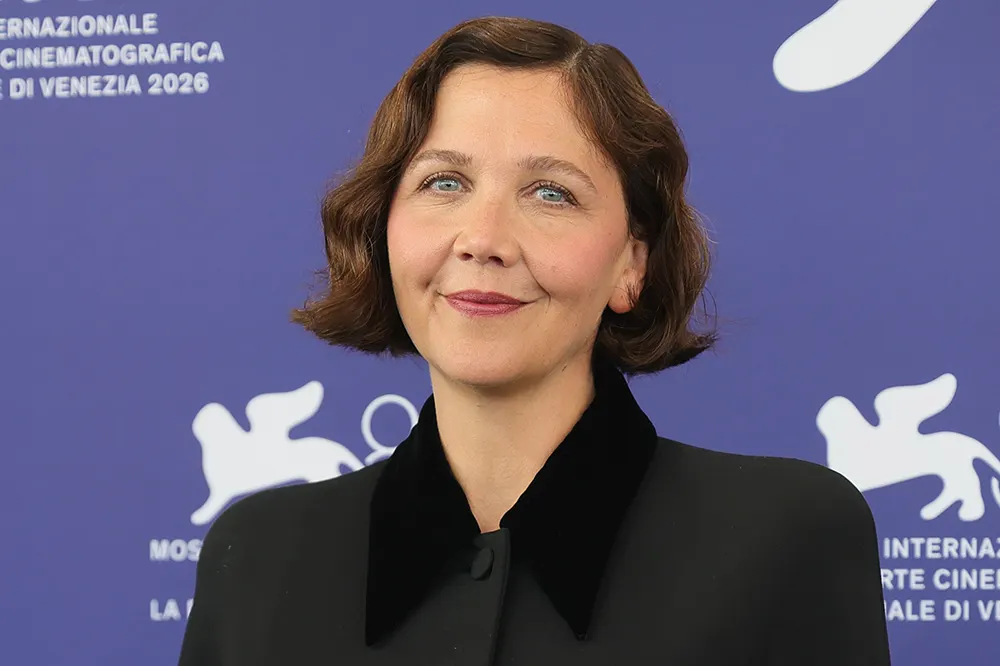
Maggie Gyllenhaal, president of the jury at the Venice Film Festival, used the event's opening press conference to argue that cinema is "fundamentally, unavoidably political" and to challenge festival organisers over the scarcity of female directors in this year's competition, telling them "there's a systemic problem" in getting women's films financed. The remarks came after Venice briefly considered scrapping the traditional jury press conference, citing "scheduling issues" — a move critics saw as an attempt to shield jury members from being questioned on politics — before reinstating it following backlash.
Only one film in the Golden Lion race, May El-Toukhy's "Woman Unknown", was solely directed by a woman, prompting Gyllenhaal to sarcastically remark that "men make better movies than women do" before artistic director Alberto Barbera noted a co-directed documentary had been added late to the lineup. Gyllenhaal, who leads a seven-person jury including Kaouther Ben Hania, Johnnie To and Xavier Giannoli, made her comments amid a wider politically charged festival season; at Berlin earlier this year, jury president Wim Wenders was heavily criticised for saying filmmakers should "stay out of politics" on Israel and Palestine, while Venice itself opened under pressure from an open letter, signed by figures including Annie Ernaux and Roger Waters, urging the festival to take concrete action in support of Palestine.
- Sources
- 2
- Outlets
- 2
- Left · Centre · Right
- 0 · 0 · 0
In short
- Gyllenhaal called film "unavoidably political" at Venice's jury presser.
- She said a "systemic problem" limits financing for women directors.
- Row followed Venice nearly axing the press conference over "scheduling issues".
How this story developed
- 2 months ago New details have emerged on the political backdrop to Maggie Gyllenhaal's Venice Film Festival jury press conference, including that the event was nearly scrapped altogether.
- 2 months ago Maggie Gyllenhaal, president of the jury at the Venice Film Festival, used the event's opening press conference to argue that cinema is "fundamentally, unavoidably political" and to challenge festival organisers over the scarcity of female directors in this year's competition, telling them "there's a systemic problem" in getting women's films financed.
- 2 months ago Speaking at the Venice Film Festival's opening jury press conference, jury president Maggie Gyllenhaal argued that cinema is "fundamentally, unavoidably political" and cannot be separated from real-world events such as the wars in Gaza and Ukraine or unrest in the United States.
Full account
The Venice Film Festival opened on 2 September with its traditional jury press conference, at which the event's political dimension quickly came to the fore. Asked directly whether cinema ought to engage with politics, given the backdrop of war in Gaza and Ukraine and unrest in the United States, jury president Maggie Gyllenhaal responded that films are, in her view, fundamentally and unavoidably political. She suggested that the value of cinema in such a fraught moment lies in its capacity to foster empathy, describing film as an opening through which audiences might discover empathy within themselves that they did not know they had.
Gyllenhaal, who is also known as a director in her own right, argued that no subject or filmmaker should be excluded from being heard, including those telling stories about corrupt or morally compromised figures. She said such storytelling could push audiences to recognise uncomfortable impulses in themselves, describing an honest engagement with even the darkest characters as valuable precisely because it might reveal a little of that corruption in everyone. She framed her stance as one of openness and curiosity rather than judgement, and concluded that if cinema is truly an honest reflection of other people's experiences, it cannot help but be political, among other things.
The conversation also turned to the composition of this year's Golden Lion competition, in which only one entry, the Danish-Egyptian director May El-Toukhy's drama Woman Unknown, was solely helmed by a woman. Gyllenhaal initially responded with a dry, sarcastic remark implying that men had simply proven themselves the better filmmakers, before festival artistic director Alberto Barbera pointed out that a documentary co-directed by No Other Land filmmakers Yuval Abraham and Rachel Szor had been added to the lineup shortly before the festival began. Pressed further, Gyllenhaal gave a more considered answer, stating plainly that a systemic problem exists and that women continue to find it harder to secure financing for their films. She went on to question who gets to decide what counts as valuable or high art, suggesting that work reflecting women's distinct experiences of life may be undervalued by those making such judgements, and noted the significance of her own appointment to lead the main jury, which also includes Kaouther Ben Hania, Johnnie To, Shahrbanoo Sadat, Xavier Giannoli, Daniel Blumberg and Francesco Casetti.
The press conference itself had been the subject of some controversy in the run-up to the festival, after organisers initially floated cancelling it, citing scheduling issues, a move some observers read as an attempt to spare jurors questions on current affairs; the event was reinstated following criticism. This year's openness contrasted with last year's edition, when jury head Alexander Payne declined to discuss Palestine, saying he felt unprepared to do so. Political pressure on the festival has persisted regardless, with more than 100 artists, including Roger Waters, signing an open letter urging organisers to take concrete action in solidarity with Palestine. The festival runs until 12 September and features a high-profile programme including Danny Boyle's opening film Ink, Primetime starring Robert Pattinson and Phoebe Bridgers, and the Oasis documentary Don't Look Back in Anger.
Where outlets differ
From the full account, which is AI-written from the sources:
Only Source 1 covers the exchange about the shortage of female directors in competition, Gyllenhaal's sardonic remark, Barbera's clarification about the added documentary, and her 'systemic problem' comments — Source 2 omits this entirely.
Only Source 1 details the pre-festival controversy over whether the jury press conference would be held at all, attributing it to disputed 'scheduling issues'.
Only Source 2 draws the explicit comparison with jury president Alexander Payne's refusal to discuss Palestine at last year's festival, and reports the open letter signed by 100+ artists (including Roger Waters) demanding action on Palestine.
Only Source 2 lists the festival's headline programme (Ink, Primetime, Don't Look Back in Anger) and gives the festival's running dates.
Source 2 attributes some of Gyllenhaal's quotes to Deadline as an intermediary source, while Source 1 presents them as directly reported.
Steelman: both sides, in good faith
The strongest fair case each way — we don't pick a winner.
The case for
Advocates of Gyllenhaal's stance would argue that festival juries and their presidents have always shaped public conversation, and that pretending cinema exists apart from politics is itself a political choice that tends to favour the status quo. They would say that raising the near-absence of female directors in competition is a legitimate exercise of the platform's moral authority, aimed at accountability and fairer representation rather than partisan point-scoring. From this view, scrapping the press conference under the guise of "scheduling issues" looked like an attempt to insulate organisers from scrutiny, and reinstating it was a vindication of transparency and artists' right to speak freely.
The case against
Those who share Wenders' caution would argue that festival juries are convened to judge craft, not to arbitrate geopolitics or social policy, and that jury presidents wading into contested issues risks politicising an institution meant to unite audiences across differing views. They would contend that press conferences framed around advocacy can overshadow the films and artists actually in competition, and that organisers floating a change to the traditional format may have been a genuine, defensible attempt to manage a fraught news cycle rather than a cover-up. On this view, festivals retain credibility by staying neutral platforms for storytelling, leaving political advocacy to other forums so that art is not reduced to a proxy battle for causes unrelated to the works themselves.
Explained simply
Cinema festivals have increasingly become flashpoints for political debate, with directors, actors and jury members facing questions about conflicts such as the war in Gaza, and sometimes clashing over whether film events should engage with politics at all. The Venice Film Festival, one of the world's oldest and most prestigious, is the latest to find itself in this position, with its jury press conference becoming a focal point for wider tensions. Maggie Gyllenhaal, an actress and director, leads this year's jury, which also includes filmmakers such as Kaouther Ben Hania and Johnnie To.
Two separate issues have converged around this year's festival. One is pressure from campaigners, including a group called Venice4Palestine backed by well-known artists and writers, who want the festival to take a public stance on Palestine. The other is longstanding criticism of film festivals for including too few women directors in their main prize competitions, with this year's Venice lineup featuring only a small number of films made by women.
These debates matter because major festivals like Venice help decide which films get noticed, praised and eventually seen by wider audiences, giving them real influence over the film industry. How organisers and jurors respond to questions about politics and representation can shape public perception of the festival itself, as well as expectations for how such events should be run in future.
Coverage · 2 sources
Americas Entertainment Europe Film Government Middle East Politics World