Verity Review: Anne Hathaway and Dakota Johnson Can’t Salvage Another Failed Colleen Hoover Adaptation
Developing story first seen 1 hour ago
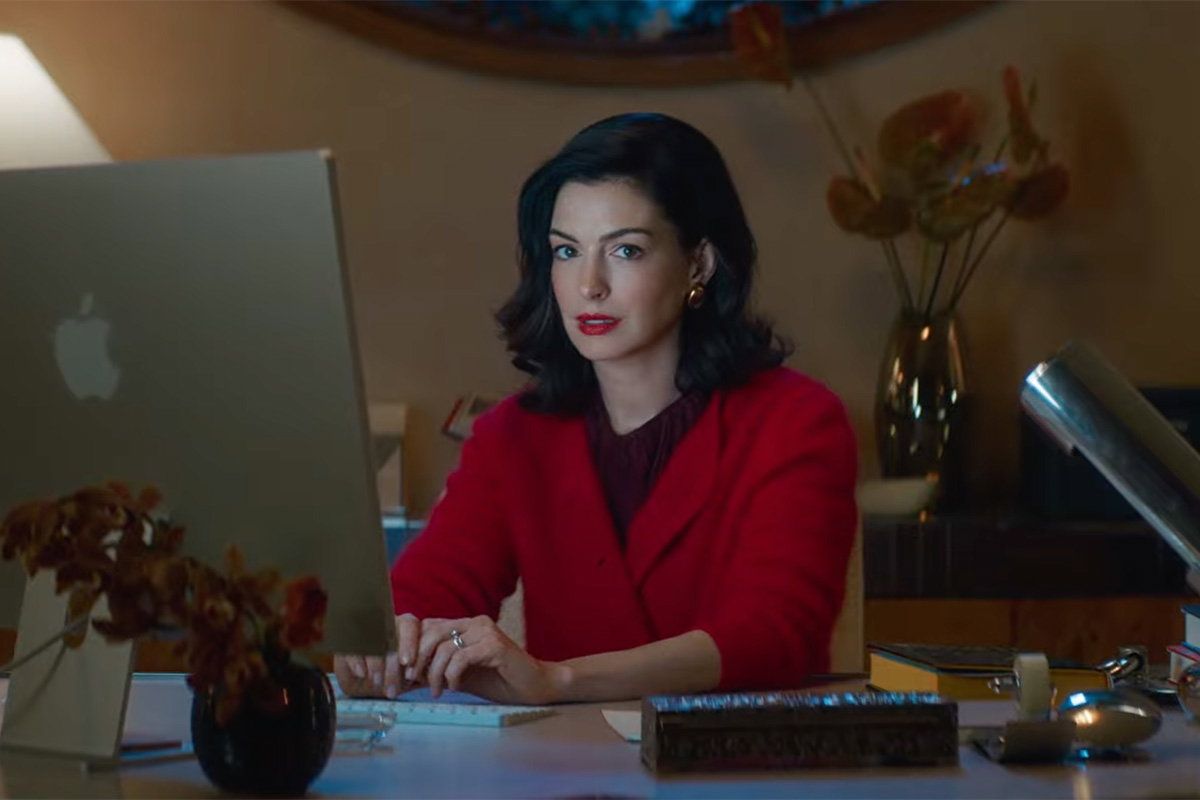
Michael Showalter's film adaptation of Colleen Hoover's psychological thriller *Verity* represents the fourth attempt to bring a CoHo novel to screen, following unsuccessful outings for *It Ends with Us*, *Regretting You*, and *Reminders of Him*. Despite boasting an acclaimed creative team—director Michael Showalter and screenwriter Nick Antosca—and a powerhouse cast including Anne Hathaway, Dakota Johnson, and Josh Hartnett, the film reportedly fails to recapture the unsettling, campy essence of Hoover's source material, opting instead for a safer, more conventional approach to the twisted narrative.
The plot follows Lowen Ashleigh (Johnson), a struggling writer hired to ghostwrite bestselling author Verity Crawford's (Hathaway) remaining novels after a car accident leaves her catatonic. Whilst working in the Crawford family's Vermont home, Lowen discovers a secret manuscript that raises disturbing questions about Verity's true character and intentions, particularly regarding her relationship with her husband Jeremy (Hartnett). Whilst the film adheres closely to the novel's plot structure and the cast fully commits to their roles, critics consensus indicates the adaptation lacks the sinister, seductive energy that distinguished Hoover's book, resulting in a competent but ultimately underwhelming thriller that squanders its potential.
- Fourth Colleen Hoover adaptation struggles despite strong cast and acclaimed director
- Film plays too safely, missing the unsettling and campy tone of the source material
- Plot faithfully adapted but lacks the psychological intensity readers found compelling
New here? Start with this
Colleen Hoover is one of the world's most widely read authors, whose romance and thriller novels have found enormous audiences among readers worldwide. Publishers and film studios have moved quickly to adapt her work for cinema in recent years, keen to capitalise on her popularity.
Verity is a psychological thriller centring on a struggling writer hired to complete the novels of a famous author who has fallen into a coma following a car accident. The film adaptation features Anne Hathaway and Dakota Johnson and was directed by Michael Showalter, a respected filmmaker, indicating the substantial resources invested in bringing the story to screen.
This represents the fourth attempt to adapt one of Hoover's novels for film, following It Ends with Us, Regretting You, and Reminders of Him. The difficulty these adaptations have faced in winning critical approval suggests a consistent challenge in translating what appeals to Hoover's readers into effective cinema.
Full account
Verity, the latest screen adaptation of Colleen Hoover's work, represents the fourth film drawn from the bestselling author's catalogue within the past two years. Following the box-office success of It Ends With Us in 2024, the moderately received Regretting You, and the more critically praised Reminders of Him earlier in 2026, Verity marks Hoover's second adaptation to reach cinemas this year. The film represents the author's foray into psychological thriller territory, a departure from the romantic narratives that established her literary reputation across sixteen previous novels. Though Hoover herself produced the film, its handling by mainstream Hollywood suggests the studio remained cautious about translating her deliberately dark material to screen.
The narrative centres on Lowen Ashleigh, a writer struggling to gain commercial traction, who receives a lucrative offer to ghostwrite novels for Verity Crawford, an enormously successful author rendered mute and paralysed following a devastating motor accident. The two leads—Dakota Johnson and Anne Hathaway—bring notable star power to proceedings, with Josh Hartnett rounding out the principal cast as Verity's husband Jeremy. The film engineers their meeting through a deliberately theatrical accident: Lowen witnesses a cyclist struck by a vehicle, resulting in blood-soaked clothing, whereupon Jeremy offers his own shirt as a sympathetic gesture. What follows is ostensibly a gothic romance structured around literary suspicion and romantic entanglement, positioned in proximity to Hitchcock's Rebecca, complete with the mysterious woman residing in the family home.
Critical assessments highlight a fundamental misalignment between the film's aspirations and its execution. Director Michael Showalter, previously demonstrating competence with romantic comedy material in The Idea of You, appears uncomfortable navigating the genre's demands for transgressive sensuality and melodramatic excess. Whilst Hathaway and Johnson demonstrate willingness to embrace the material's pulpier dimensions, Showalter's restraint undermines any potential for genuine provocation or scandal. Johnson's characteristic screen detachment—she observes of herself that she possesses 'resting bored face'—which functioned acceptably within the ironic register of the Fifty Shades films, registers here as disengagement. Hathaway, meanwhile, finds herself constrained by a role that offers limited scope beyond registering static incomprehension, save for scattered flashback sequences.
The underlying material itself presents substantial obstacles. Hoover's prose, when showcased through textual excerpts within the film, disappoints through its blandness, suggesting more commercial formula than literary sophistication. The screenplay, adapted by Nick Antosca, clutters its central mystery with clumsy revelations and contrived twists rather than generating genuine narrative suspense. Comparisons to Gone Girl prove unflattering, as does the admixture of Brontë-influenced gothic sensibility with contemporary thriller conventions. Reviewers characterise the final product as competent yet uninspired—neither achieving the pulpy propulsiveness one might anticipate from such material nor the satirical self-awareness that might justify its contrivances. The overall effect suggests a production that treats its source material as worthy of literal adaptation rather than as a vehicle for creative reimagining, resulting in something closer to dutiful entertainment than compelling cinema.
Where outlets differ
Source 2 emphasises Showalter's unfitness for the erotic thriller genre, attributing failures to the director's comedic background; Source 3 credits Showalter with straightforward competence but finds him insufficiently engaged with the material's potential
Source 1 remains incomplete but suggests Hathaway and Johnson's performances partially redeem the film; Sources 2 and 3 offer more measured assessments of their contributions, with Source 2 suggesting passive disengagement and Source 4 noting Hathaway's limitation to a largely immobile role
Source 4 provides industrial context regarding Hoover adaptations' commercial success and compares Verity unfavourably to The Housemaid (2024); other sources focus primarily on the film's internal failings rather than its position within adaptation cycles
Sources 1 and 3 offer slightly more charitable initial impressions of the film's premise and opening movements; Sources 2 and 4 adopt more thoroughly dismissive stances from the outset
Coverage
- Polygon — Verity Review: Hathaway and Johnson Have Fun. The Movie Doesn’t
- Variety — ‘Verity’ Review: Dakota Johnson and Anne Hathaway Drift Through Another Listless Colleen Hoover Adaptation
- The Hollywood Reporter — ‘Verity’ Review: Anne Hathaway, Dakota Johnson and Josh Hartnett Try and Fail to Slink Their Way Through a Dumb Mystery
- Deadline — ‘Verity’ Review: Dakota Johnson And Anne Hathaway Play Authors In Psychological Thriller But Are They Really Alter Egos For Colleen Hoover?
- Collider — Anne Hathaway’s ‘Verity’ Is a Mostly Faithful Book Adaptation That Still Plays It Too Safe | Review
Art Celebrity Culture Entertainment Film Paranormal Weird & Viral