Villagers are left with a ’roundabout to nowhere’ after developers ditch plans to build 300 new homes
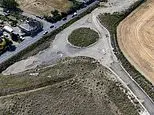
Villagers in a UK village have been left with an unused roundabout after developers abandoned plans to build 300 new homes nearby, dubbing it a "roundabout to nowhere". The junction was constructed as part of the infrastructure for the proposed housing development, but with the scheme now scrapped, residents say the road feature serves no purpose and stands as a costly, visible symbol of the collapsed project.
Locals have expressed frustration at the wasted expenditure and disruption caused by building the roundabout only for the associated homes never to materialise. The episode has fuelled wider concerns about developers committing to infrastructure works ahead of securing final approval or funding for housing schemes, leaving communities with unwanted leftover construction and unresolved questions over the site's future use.
In short
- Developers scrapped plans for 300 homes near a village
- A roundabout built for the scheme now leads nowhere
- Residents angry at wasted infrastructure spending
Steelman: both sides, in good faith
The strongest fair case each way — we don't pick a winner.
The case for
From the perspective of those sympathetic to developers and the practicalities of housebuilding, constructing infrastructure like a roundabout ahead of the homes it will serve is often a sensible and necessary sequencing decision, since access roads and junctions typically need to be completed and safety-approved before construction traffic and new residents can use a site at all. Housing schemes can collapse for reasons genuinely beyond a developer's control, such as changed market conditions, rising build costs, funding withdrawal or shifts in planning requirements, and it would be unreasonable to expect firms never to invest in early infrastructure simply because a project might later fail. Those who share this view would argue the roundabout is not evidence of bad faith but a normal, if unfortunate, feature of how large developments are phased and financed.
The case against
From the perspective of residents and critics of current planning practice, the episode reflects a deeper problem in how housing schemes are approved and sequenced, allowing developers to commit public-facing infrastructure and disrupt a village before there is any binding guarantee the homes will actually be built or funded. They would argue this leaves communities bearing real costs, including construction disruption, wasted public or private money, and an unresolved eyesore, while the risk of the scheme collapsing falls entirely on residents rather than the developer. Advocates for this view would likely call for stronger safeguards, such as phased approvals tied to confirmed funding, so that infrastructure is not built speculatively ahead of homes that may never materialise.
Explained simply
A village in the UK had a roundabout built as part of the road infrastructure for a planned housing development of 300 homes. The development has now been abandoned by its developers, leaving the roundabout with no purpose. Residents have called it a "roundabout to nowhere" because there are no homes for it to serve.
The abandoned development has frustrated villagers over wasted money and disruption caused by building the roundabout for homes that will never be constructed. The situation has raised broader concerns about how developers approach planning and infrastructure, particularly whether they commit to road works before securing final approval and funding for housing schemes, potentially leaving communities with costly unused structures.