Culture news and discussion on TalkFuse.
Vulnerable Democrats flip on women’s sports vote after opposing similar bills as midterms loom
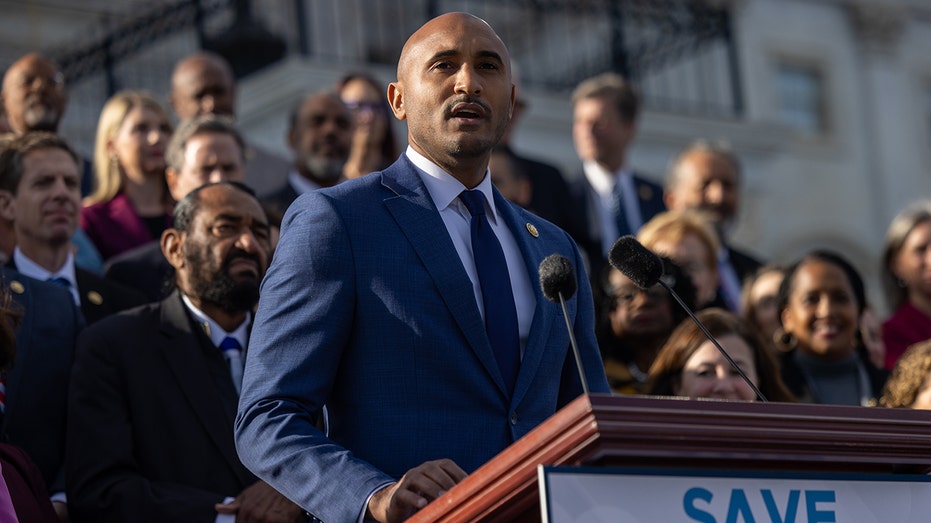
Several vulnerable House Democrats are breaking with their party to support measures barring transgender athletes from women's sports, as Republicans keep the issue prominent ahead of November's US midterm elections. The shift comes after some of these same lawmakers had previously opposed similar legislation, suggesting growing unease among Democrats in competitive districts about the political risks of their party's prior stance on the issue.
The report notes that Alabama Democrats backed an NDAA amendment barring men from competing in women's sports, part of a wider pattern of House Democrats siding with Republicans on the issue as party unity frays. The move follows the Supreme Court's decision upholding state bans on transgender athletes in girls' sports, and comes as Republicans continue to press the topic as a wedge issue in competitive races.
In short
- Vulnerable House Democrats now back barring trans athletes from women's sports.
- Marks reversal from earlier opposition to similar bills.
- Comes as Republicans push the issue ahead of the midterms.
Steelman: both sides, in good faith
The strongest fair case each way — we don't pick a winner.
The case for
Supporters of barring transgender athletes from women's sports argue that fairness and competitive integrity in women's athletics require sex-based categories. They contend that transgender women typically retain physiological advantages even after hormone therapy—including differences in bone density, muscle mass, and lung capacity—that provide material benefits in competition. They emphasise that women's sports emerged as a protected category precisely to ensure girls and women have genuine opportunities to compete fairly and to pursue scholarships and athletic development. Recent legal vindication through the Supreme Court's decision reinforces their view that this position reflects sound policy grounded in biological reality and the interests of female athletes.
The case against
Opponents of such bans argue that transgender women are women and deserve equal social recognition and participation in all spheres, including athletics. They contend that evidence on performance advantages is more contested and nuanced than commonly portrayed, noting that hormone therapy substantially diminishes many physiological differences over time, and that individual variation within sexes often exceeds variation between them. They emphasise the profound moral importance of treating a small and vulnerable population with dignity and inclusion rather than exclusion. They argue that the practical number of transgender athletes competing is minuscule relative to the principle at stake, and that exclusionary policies risk entrenching stigma against transgender individuals already facing significant discrimination.
Explained simply
The debate concerns rules on which athletes can compete in women's sports categories. At the centre of the issue is whether transgender women should be eligible to compete, with those who support restrictions arguing this protects the fairness of women's sports, whilst opponents contend that exclusion is discriminatory.
Some vulnerable House Democrats are now supporting bills that would bar transgender athletes from women's sports, despite having previously opposed similar bills. These lawmakers are responding to political concerns as the November midterm elections draw near.
Republicans have positioned this issue as a defining difference between the parties in the lead-up to the midterms. A Supreme Court ruling upholding state-level bans on transgender athletes in women's sports has bolstered Republican arguments and added pressure on these Democrats to take a tougher stance.
Art Culture Elections Politics World