Technology news and discussion on TalkFuse.
War machines can run amok with AI in control
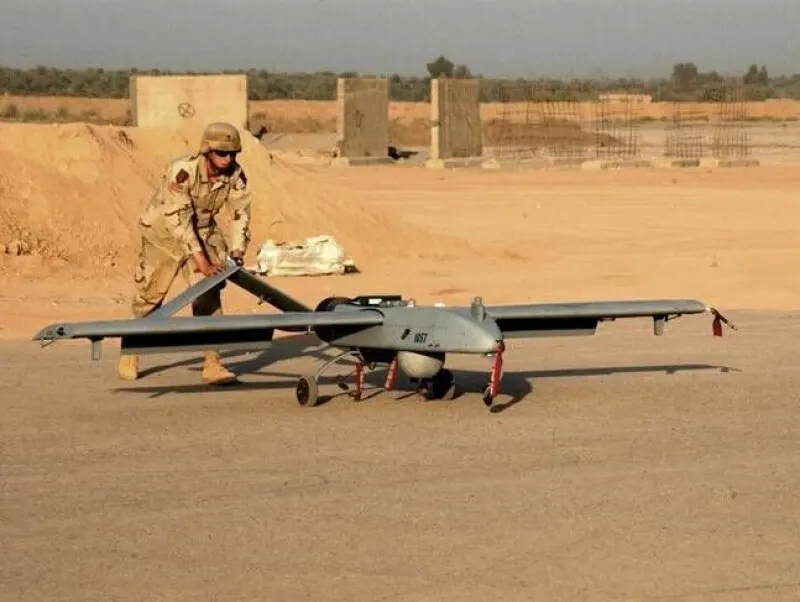
A not-for-profit transparency watchdog, Airwars, has published a detailed report titled "Anatomy of an AI Kill Chain" that maps out how artificial intelligence is used across modern military targeting and strikes. The investigation walks through a fictitious but representative kill chain to show how machine learning now shapes decisions on the battlefield, with the authors warning that humans are involved in only some stages of the process, raising concerns about accountability and the risk of error in life-and-death decisions.
The report, written by Sophia Goodfriend, Heidy Khlaaf, Namir Shabibi, Joe Dyke and Nathan Walker, breaks the process into six stages: decision support, surveillance, intelligence and identification, target selection, strikes, and post-strike assessment. It cites a claim from a recent book on US military AI that only two of these six stages still involve humans "in the loop", with a third offering partial human oversight, while the rest are fully automated. The authors highlight specific failure points at each stage, including unreliable decision-support tools, translation errors, flawed social-media-based risk scoring, computer vision misidentification, and problems with neural networks used during GPS-jammed drone strikes, arguing that focusing on single systems or companies obscures the wider "stack" of interacting AI technologies driving modern warfare.
In short
- Airwars report maps AI's growing role in military targeting and strikes
- Only two of six kill-chain stages reportedly still involve human oversight
- Report flags errors from computer vision, translation and jamming-affected systems
Steelman: both sides, in good faith
The strongest fair case each way — we don't pick a winner.
The case for
AI systems can dramatically improve military targeting accuracy and decision-making speed whilst potentially reducing civilian casualties through superior analysis compared to human operators alone. Proponents argue that retaining human judgment at critical decision points whilst leveraging AI's analytical strengths represents a responsible approach that enhances defensive capabilities without ceding full control to automated systems. They contend that in complex threat environments, declining to use proven AI capabilities puts nations at a strategic disadvantage and ignores the technology's potential to make warfare more precise.
The case against
The Airwars investigation demonstrates that military AI systems contain multiple failure points and interact unpredictably, creating compounding risks across the entire targeting 'stack' rather than within isolated systems. Critics argue that genuine human oversight becomes theoretical when machines operate at machine speed across opaque processes, effectively reducing human accountability in lethal decisions despite formal 'human in the loop' claims. They maintain that certain decisions—particularly those involving life and death—should remain under unambiguous human control as a matter of principle, and that military efficiency cannot justify surrendering human moral agency.
Explained simply
Modern military forces increasingly rely on artificial intelligence to make decisions about targeting and strikes. A new investigation highlights concerns that machines, rather than humans, now control crucial stages in the process of deciding whether and where to attack, raising questions about accountability when things go wrong.
Airwars, a transparency watchdog, has published a report examining how AI is used across military operations from surveillance through to after strikes occur. The authors found that of six key stages in typical military operations, humans are directly involved in only some, whilst others are entirely automated.
The report identifies various ways these systems can fail, including translation errors, incorrect risk assessments based on social media, and computer vision mistakes in identifying targets. Because modern military operations now rely on many interconnected AI systems working together, failures in one area can affect the entire operation without anyone noticing the problem in time.
AI Americas Geopolitics Politics Technology World