Welsh county becomes global hotspot for carbon emissions after wildfires
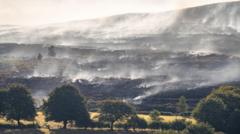
Torfaen in south Wales recorded some of the world's highest wildfire-related carbon emissions per square kilometre in July, according to data highlighted by the charity Save the Children. A major fire above Blaenavon, described by the fire service as one of the largest and most challenging in south Wales in recent years, contributed to the county ranking behind only Malanje in Angola, Ávila in Spain and Annaba in Algeria for wildfire emissions that month, raising concerns about the health impact on local residents, particularly children and those with respiratory conditions.
The blaze, covering around 80 hectares of common and pasture land on Mynydd Garnclochdy, was roughly the size of 300 football pitches, with smoke reportedly smelt as far away as Cardiff, 30 miles distant. It formed part of a wider spate of fires that led to a major incident being declared, eventually requiring military assistance. Local councillor Janet Jones said smoke had been particularly bad on 13 August, though she was not aware of any rise in respiratory complaints reported by GPs. Torfaen council said it was unaware of the EU's Copernicus data underpinning the comparison, but confirmed its own monitoring had detected "elevated particulate concentrations" during the wildfire period.
- Torfaen wildfires ranked among world's worst for carbon emissions in July
- Blaenavon blaze needed military help; smoke reached Cardiff, 30 miles away
- Charity and council flag air quality concerns, especially for children