Wes Streeting refuses to say whether he trusts Donald Trump
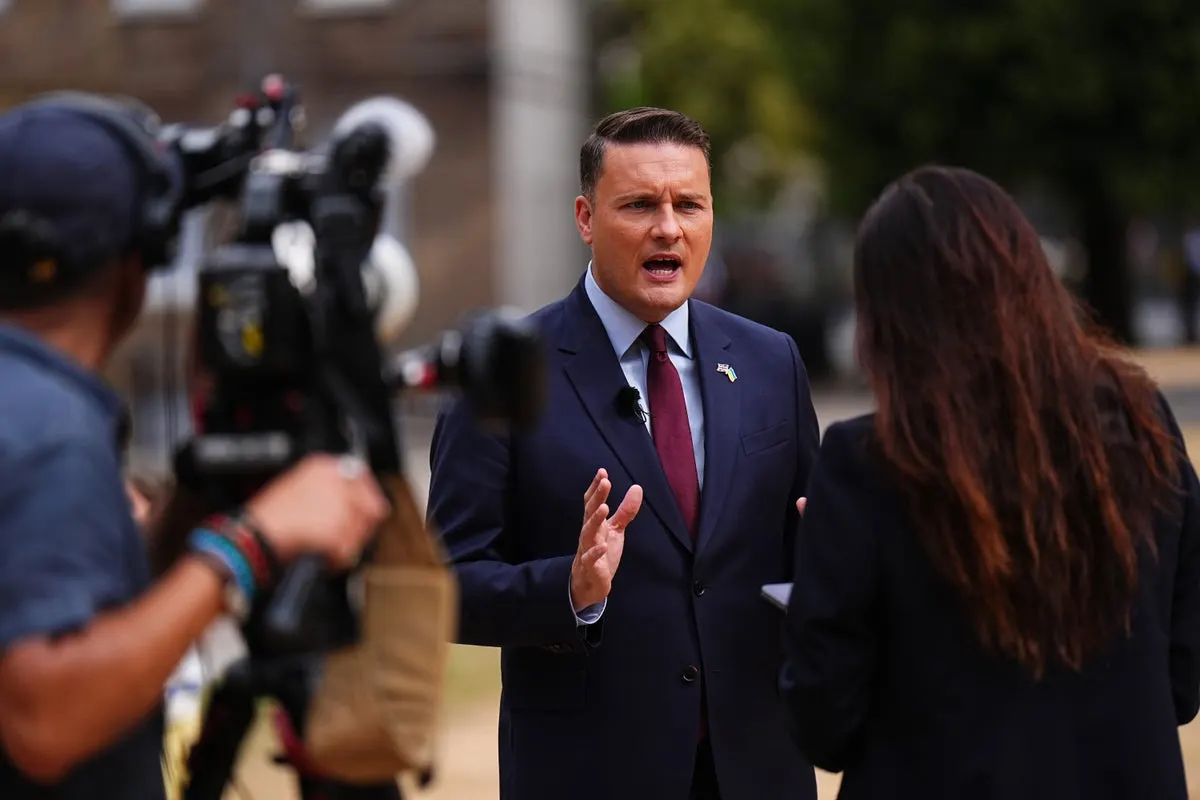
Defence secretary Wes Streeting has declined to say whether he trusts US president Donald Trump, telling Sky News' Sir Trevor Phillips that he is still forming his views less than a week into the role. Despite this, he argued that Trump's pressure on Europe to take greater responsibility for its own defence would ultimately be viewed favourably by history, saying it had shaken European nations out of complacency and over-reliance on the United States.
Streeting said he trusted the United States even if he could not yet judge Trump personally, and stressed that the US-UK alliance remained unmatched despite occasional disagreement over Trump's rhetoric and methods. He also revealed details of his first call with US defence secretary Pete Hegseth, confirming the UK would not support offensive action against Iran but would cooperate on preventing Iran from developing nuclear weapons. Separately, Streeting said he was appointed to the defence brief by Andy Burnham due to his record as a reforming health secretary, and suggested that with John Healey now chancellor, defence spending would rise following a reported £13bn shortfall and £4.7bn black hole in the previous Defence Improvement Plan.
In short
- Streeting won't confirm trust in Trump, citing "first impressions" territory
- Says Trump's pressure has forced Europe to boost its own defence
- UK won't back offensive action against Iran, Streeting confirms
Steelman: both sides, in good faith
The strongest fair case each way — we don't pick a winner.
The case for
Streeting's approach reflects diplomatic maturity: he preserves the essential US-UK alliance by emphasising institutional trust whilst declining premature personal judgements. Recognising legitimate strategic value in Trump's challenge to European defence complacency, he positions Britain to cooperate effectively on vital interests—Iran policy, military capabilities, security coordination—without surrendering principled independence. This is prudent realpolitik.
The case against
Streeting's carefully hedged position appears contradictory and risks undermining British credibility. If Trump's strategic positions genuinely warrant support, a Defence Secretary should commit to them forthrightly; if reservations exist, they merit honest articulation rather than praise-with-caution. The approach may appear weak to Washington decision-makers and European partners alike, whilst leaving voters uncertain whether Britain authentically supports its own defence policy or is simply accommodating an American administration.
Explained simply
Wes Streeting is the newly appointed Defence Secretary of the United Kingdom. The Defence Secretary is responsible for the country's military affairs and defence policy, a role that gives him a key position in managing Britain's most important international alliance.
The United States and United Kingdom share one of the world's closest military and political partnerships. This transatlantic relationship has long been a cornerstone of British defence strategy and security.
Donald Trump, now the US President, has recently been calling on European nations to increase their own defence spending rather than relying so heavily on the United States. This reflects broader debates about how much responsibility European countries should take for their own security and how they should manage their relationship with Washington.
Europe Government Politics World