We’ve seen helium baked off a rocky exoplanet’s atmosphere
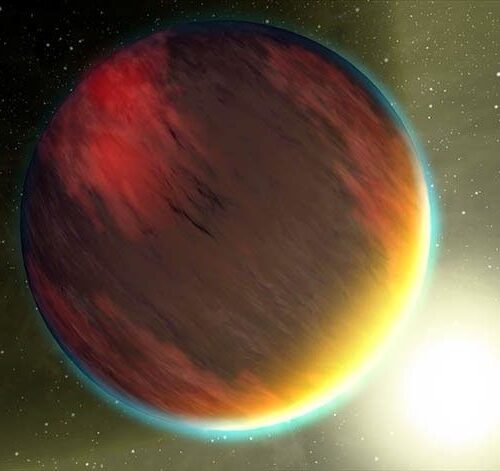
Astronomers have detected helium being stripped away from the atmosphere of a rocky exoplanet orbiting the red dwarf star LHS 1140, roughly 50 light-years from Earth. The findings, published in Nature, offer a rare glimpse into how planetary atmospheres evolve over billions of years, as radiation and heat from a host star gradually erode lighter gases such as hydrogen and helium, potentially transforming a planet's original atmosphere into something quite different, as is thought to have happened with Venus, Earth and Mars.
The planet in question, LHS 1140b, is about five-and-a-half times the mass of Earth with a radius 1.7 times as large, consistent with a largely rocky composition possibly holding water and an atmosphere. It orbits its dim star every 25 days, receiving less than half the light Earth gets from the Sun, while a smaller companion planet, LHS 1140c, orbits much closer and receives about five times Earth's solar radiation. Researchers used near-infrared imaging equipment at the Las Campanas Observatory in Chile to observe the system before, during and after planetary transits, exploiting the fact that red dwarfs' relatively dim, small size makes such atmospheric detections easier than around Sun-like stars.
- Helium detected escaping a rocky exoplanet's atmosphere near star LHS 1140
- Findings published in Nature, observed via Chile's Las Campanas Observatory
- Helps reveal how planetary atmospheres change over billions of years